
Why Does My Story Feel Broken?
by Jaime Buckley
You know the feeling.
You finish the draft, you let it sit for a week, and then you read it again with fresh eyes. Somewhere around the middle, it goes soft. The ending lands with a polite thud.
You can't point to the problem, but you know it's in there. It's a cold draft in an old house and you can't find the open window.
So you hand it to a beta reader.
They shrug. "I don't know. It just didn't grab me."
And you walk away with a vague bad feeling and nothing you can actually fix.
I've been on both ends of that conversation more times than I can count.
What years of fixing broken stories (mine and plenty of other people's) finally taught me is: most of the time, the hole is a decision.
Most holes start before the page
When a story breaks, we go looking in the sentences. We tighten the prose, cut adverbs, punch up the dialogue, and rewrite the opening for the ninth time (for me, the 20th) because, of course, THAT'S the problem.
Sometimes that helps. Usually it doesn't.
Because the problem started somewhere upstream of the page.
It started with something you meant to decide and never did.
- The motive you planned to settle "later."
- The reason your hero can't simply walk away from all this.
- The clue you knew about but never actually planted.
Those are decisions.
Do you know what makes them so hard to see?
You can't fix a decision you haven't made yet.
Chew on that.
No amount of polish will paper over it, because the reader feels the empty space underneath the prose even when they can't name it.
A sagging middle is very often a hero who wants nothing specific. A mystery that feels like a cheat is very often a clue that lived in your notes and never made it into chapter three.
The symptom is always a feeling that something's off. The cause is a blank where a choice should be.
So what's the solution?
Ask the questions an editor would ask.
I've found that the fastest way to find an undecided decision is to ask yourself the questions a sharp editor would ask across the table. Then answer each one in a single sentence.
One sentence.
If it takes a paragraph, or a "well, it's complicated," you haven't decided yet.
Here are a few that break stories open in almost any genre:
- Why can't your hero simply walk away?
What do they lose, specifically, if they quit? - What does your hero believe about themselves that isn't true? And where does the story force them to face it?
- What does your antagonist want, in their own words?
Would they call what they're doing good? - At the big turns, who decides what happens? Your hero, or the plot?
Each genre has its own set, too.
- A mystery writer should ask whether the true culprit appears in the first third of the book.
- A romance writer should ask what wound keeps these two apart, and why it can't be solved with one honest conversation over coffee.
- A fantasy writer should ask what magic costs, and whether the climax uses the rules the reader spent the whole book learning.
Now watch what happens when you try to answer.
Some questions you'll answer in a heartbeat.
Good.
That part of your story is solid, and you can stop worrying about it.
Some questions will make you squirm.
You'll start typing, stop, delete it, and slowly realize you don't actually know the answer. You meant to know. You assumed you knew. But you never decided.
That squirm is the hole.
I think it's the most useful feeling in revision, and most of us have trained ourselves to skip right past it!
The test most writers never run
I want to show you where it gets interesting.
Let's say you answered every question. Clear, confident, one sentence each. You know your villain's motive. You know why your hero can't walk away.
Awesome!
Now, where does a reader see it?
Name the chapter. Name the scene.
I rebuilt the way I revise around this one simple test.
It's brutal in the best way, because there's a second kind of hole, sneakier than the first, and it hides inside the answers you're proudest of.
You decided, yes.
BUT…you never wrote it down where the reader could find it.
Tsk. Tsk. Tsk.
It lives in your head, in your outline, in a note on your phone from two in the morning. You know it so well that you read it into the pages every time you revise.
THINK about that.
Your brain fills the gap so smoothly you never notice the gap was there.
But the reader doesn't have your notes.
They only have the page.
If you can't point to the page, it's still in your head.
So run your answers through it:
- You can't answer the question at all. That's an undecided hole. Go make the decision first, before you touch a single sentence.
- You can answer it, but you can't point to the chapter and scene. That's a decided hole. The choice exists, but the reader never sees it, and this one gets fixed in the draft, often with a single line in the right place.
The second kind is the one that drives writers crazy, because it's invisible to you and completely obvious to everyone else.
Ohhhhh, I personally HATE this one.
It's exactly why the beta reader shrugs.
They felt the gap you can't see.
When your answers argue with each other
There's a third place stories break, and it only shows up when you lay your answers side by side.
Two answers that each sound fine on their own can't both be true.
Say you decided your villain wants to buy the old harbor lighthouse for his shipping company before winter.
Clear motive.
You also decided your hero, a lamplighter's apprentice, wants to clear her name before the town trial.
Also clear.
Now put those two sentences next to each other.
Does he stand in her way? Does she stand in his? If both of them can get exactly what they want without ever crossing paths, you have two people living in the same town and no villain at all.
There's no fight.
The reader feels that as a story with no teeth.
…even if every individual scene is beautifully written.
The fix is usually a single decision
Find the one thing only one of them can have.
Maybe the lighthouse holds the ledger that proves she's innocent. Now his deal destroys her case, and with every page he gets closer to signing, she gets closer to the rope.
I see contradictions like that everywhere:
- An impossible-looking crime with a hand-waved solution. The more impossible the setup, the cleaner the answer has to be.
- A hero who's supposed to change, but whose first scene and last scene describe the same person.
- A magic system the reader learned carefully... that bends the moment the plot needs it to.
None of these show up when you read one chapter at a time. They show up when you put your own answers in a row and make them meet.
How to run this on your draft tonight
You don't need anything fancy for this. A notebook works, and so does a blank document.
Step one: write the questions.
Use the ones above, plus a few for your genre. Fifteen to twenty is plenty for a novel, and fewer for a short story.
Step two: answer each one in a single sentence.
No cheating with "kind of" or "I'll figure it out." If you can't answer, write UNDECIDED in capital letters and move on, and don't stop to fix anything yet.
Step three: prove it.
Next to every answer you're confident about, write the chapter and scene where a reader sees it. If you can't name one, write NOT ON THE PAGE.
Step four: read your answers side by side.
Look for any two that can't both be true, and start with your hero's want against your antagonist's want.
When you're done, you'll have something most revision passes never give you, which is a list of specific, nameable gaps sorted into decisions you need to make and decisions you need to write.
Start with the UNDECIDED ones, because every other fix depends on them. Then work the list from the top.
The part that makes you a stronger writer
I love this part most.
When someone else (or someTHING else) fixes your story, that one book gets a little better while you stay exactly the writer you were. On the next book, you're right back where you started, staring at the same soft middle and wondering why it keeps happening to you.
Book after book.
…after book.
When you find the hole yourself, by asking the question and feeling the squirm, you learn where you personally tend to skip decisions. Maybe you always leave your villain's plan vague, or maybe your clues keep living in your notes instead of on the page.
(I really love this part)
Once you know your pattern, you start catching it while you draft. I've watched it happen in my own books. The holes get smaller with every manuscript, because you're filling them before the reader ever gets there.
So go find your holes.
Then go fill them.
I believe in you.
Which kind of hole do you run into the most: the decision you never made...or the one you never wrote down? Have you ever "known" something about your story that never made it onto the page (and how'd you find out)? Finally, what's one question about your current story that made you squirm just now?
* * * * * *
About Jaime
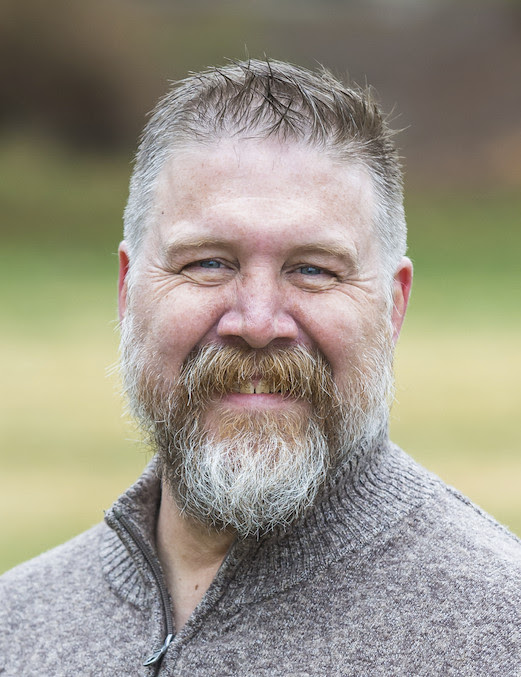
Jaime Buckley is an author, cartoonist, and creator of the Wanted Hero fantasy universe. A father of thirteen, he knows a good story has to compete with real life, hold its own, and leave people wanting more. He helps writers build worlds worth exploring and stories worth sharing, guided by one conviction: “You are MORE than you THINK you are.”
Find practical encouragement for your writing at JaimeBuckley.com, or step into his world and start reading free at Life of Fiction.
Jaime's new tool: FictionProof asks the questions a sharp editor would ask, finds what you haven't decided yet, and hands you the questions that settle it. It runs on your own computer, and your book never leaves it. No AI is used in the analysis.
Leave a Reply
14 comments on “Why Does My Story Feel Broken?”
Tagged as:
Subscribe to WITS



Recent Posts
- Struggling with Character Voice? Check Your Point of View
- Conflict in Fiction Writing, 7 Main Types
- Author Blind Spots: The Gaps You Can't See
- When Is It Okay to Quit a Story?
- Living at the Corner of FEAR and FINE
This is inordinately helpful. I am using it to work through my current manuscript, which is so close but still not there... Thank you!
Thank you, S.M. That “so close, but still not there” stage can be maddening, because you know the story is almost working and you can feel the gap without always being able to name it.
If this helps you find even one of those missing decisions, then I’m genuinely glad I wrote it. And if one of the questions makes you squirm a little, pay attention to that one first. In my experience, that’s usually where the good stuff is hiding.
I hope the manuscript clicks into place for you.
I didn't find myself squirming here, so I'm in good shape for now. But I have great critique partners who ask questions that I answer. And then they say, "Where does it say that?" Sometimes they are small, like what the setting looks like. Others, they are huge, like those mentioned here. I am beginning to see them myself too, little logic flaws, like why doesn't the best friend feel guilty about sharing info he shouldn't have? Duh. Writing that fix today.
That’s exactly it, Debbie.
“Where does it say that?” may be one of the most useful questions a critique partner can ask, because it separates what we know about the story from what the reader actually gets to know.
And I love that you’re starting to catch those logic gaps yourself. That’s the real payoff. Once your brain starts looking for them, you begin seeing them during the draft instead of three revisions later.
Your best-friend example is perfect, too. Small question on the surface, but guilt could completely change how that character behaves in the next scene.
Go fix it. 😄
What I like most about this method is that even though I love AI, this requires none of it and handles a lot of the challenges that people might otherwise turn over to an AI. I do like it whenever humans stay in control and learn new tricks! These questions have already helped me. I ran into them in your FictionProof trials and was stunned by how much I need to fix.
That’s exactly what I wanted, Lisa.
I’m not anti-AI at all, obviously, but I’m very protective of the part of writing that belongs to the writer. I don’t want a tool deciding what your story should be. I want it asking the right questions so *you* can decide.
That’s really the whole idea behind FictionProof. It doesn’t “fix” the book for you. It exposes the places where something hasn’t been decided, hasn’t made it onto the page, or doesn’t quite agree with something else you’ve already said.
And yes... that first pass can be a little rude. 😂
But once you start seeing those gaps yourself, that’s when I think it gets exciting, because now the writer is getting stronger too, not just the manuscript.
I’m really glad the trial questions helped you.
I love this. You put into words the process I've been instinctively developing over the past--we'll say few--years. The questions are very helpful and ones I use, though only recently began asking "who decides what happens next." But it's the squirm test that I have repeatedly found my most useful writing tool. If the answer to any of my questions about my story (from beta readers or myself)causes me to squirm? Yup. That's exactly where the problem is. Even if I don't know what needs fixed, I've identified the place where I need to ask questions until I figure out what I "didn't decide yet."
YES. That squirm is such a useful little warning light.
I’ve learned to stop arguing with it. If I feel myself trying to explain around an answer instead of answering it cleanly, there’s usually something underneath that I haven’t actually decided yet.
And “who decides what happens next?” has become one of my favorite questions too, because it exposes passive protagonists so quickly. Sometimes the plot is dragging the character around while we’re insisting they’re driving the story.
I really like the way you put this: even if you don’t know the fix yet, identifying the place that makes you squirm gives you somewhere honest to start digging.
That alone can save a ridiculous amount of wandering around in revision!
Oh, I definitely squirmed. 🙂
But it also made me want to rush to my manuscript and ask ALL these questions. Because the fact is, I write scenes and stitch them together. (I call it Story Quilting.) This is literally the only way I can get a book from my overly busy brain and onto the page.
But this process allows for holes. This exercise is literally the best "plothole filler" I've come across.
SO THANKS! *lol*
Huh.
I love that...
“Story Quilting” may be one of my favorite descriptions of that process. 😄
And honestly, there’s nothing wrong with building a book that way if that’s how your brain works. The trick is just making sure the seams hold once all the pieces are together.
That’s why I like these questions so much. They don’t tell you how to write the story. They just help you find the places where two pieces never quite got stitched together, or where you THOUGHT you added a patch.
...and it turns out it was still sitting on the sewing table.
So yes, go interrogate that manuscript. 😂
And thank you. “Best plothole filler” is a phrase I may shamelessly cherish.
Cherish away, Jaime!
I found this article incredibly useful. I'm still in the a stage but have a nagging feeling as I slog through the middle. Checking in with these questions seems like a great idea!
I meant I'm still in the draft writing stage.
This is an incredibly helpful article, thank you 🙂 Clear, concise, and well explained, with actionable steps to take.
I can also see how useful this method could be during the drafting process for pantsers like myself, who are still figuring out the important questions to ask (let alone the answers) as we write. I've been stuck in my current WIP for months, both on its own merits and due to a variety of real life challenges, so this gives me a place to start taking a deeper look at where I stand with it. And maybe figure out how to tackle those squirmy questions, too. 😉