Writers in the Storm

A blog about writing

storm moving across a field
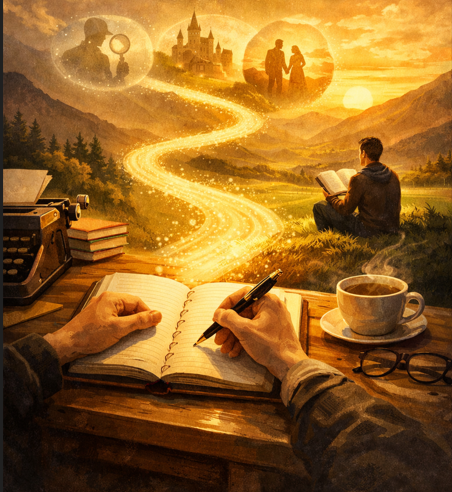
Why "The Story Behind Your Story" is So Important

by Jenny Hansen

I had a great conversation recently with a writer who said something profound: “I understand writing craft…but I don’t know how to connect it to ME for marketing.”

How honest is that? And why don’t more writers talk about this?

The truth is that every time a reader picks up your books, they’re not just deciding whether to read your book. They’re also deciding whether to trust you as a storyteller.

That decision doesn’t come from your plot alone. It comes from what I call “the story behind the story.”

The Shift Many Writers Haven’t Made Yet

We tend to laser-focus in on the goal of writing a great book. That’s a valid goal. No book, no writing career. But once we’ve written a great book (or two or twenty), our long-range goal is to keep readers coming back, book after book

To get this kind of loyalty requires something deeper.

Readers need to feel things like this:

  • “This author gets me.”
  • “I feel like I know them.”
  • “I trust them.”
  • “I know what I’m going to feel when I read their books.”

Let’s put this into "NYT Bestseller List perspective":

  • In The Hunger Games, readers don’t just follow Katniss. They read the books and watch the movies for stories about survival, sacrifice, and moral courage.
  • In Charlotte's Web, we’re tuned in to see how Wilbur gets saved, and what happens to Charlotte. We’re drawn along by friendship, purpose, and what it means to matter.

Different genres. Different themes. But the same kind of reason why we stay: we trust these authors to take us on a journey. We trust their intentions.

Your Core Story: The WHY Behind Everything You Write

Your Core Story answers a not-so-simple question: “WHY do you write these kinds of stories?”

And I’m not talking about the surface “why.” I’m talking about the real why that drives you to write a book or a series.

Maybe you write:

  • Stories where justice wins
  • Stories that explore identity and belonging
  • Stories that find humor in chaos
  • Stories that eradicate shame

Your Core Story becomes the emotional throughline across your work. Your books will often change, but your Core Story doesn’t.

It’s why readers follow YOU, not just your books.

Bestselling Author Core Story Examples

(And yes, I browsed the internet for great examples and picked some favorites.)

1. Suzanne Collins

Core Stories: Exploring the emotional cost of survival, and what it means to stay human in inhumane systems.

How this shows up:

  • The Hunger Games series is about survival vs compassion
  • She also writes about power structures, sacrifice, moral choice

2. Stephen King

King doesn’t just write “horror,” he writes about what happens when people confront fear.

Core Story: Ordinary people are forced to confront extraordinary darkness (in themselves and externally).

How it shows up:

  • It → fear, trauma, childhood vs adulthood
  • The Shining → isolation, inner demons

3. Colleen Hoover

Hoover doesn’t just write romance. She writes about where love and self-worth collide, and how that struggle plays out.

Core Story: Love is powerful, but it must never come at the cost of self-worth.

Note: Hoover was a social worker before she was an author. Her Core Story reflects her prior career.

How it shows up:

  • It Ends with Us → love vs self-respect
  • The characters of that story are forced to choose themselves

4. John Grisham

Core Story: Justice is fragile. Grisham’s characters must decide whether they’re willing to fight for it.

He writes about what it costs to stand for what’s right.

How it shows up:

  • The Firm → integrity vs corruption
  • A Time to Kill → moral justice vs legal system

5. Kristin Hannah

Core Story: Ordinary women are capable of extraordinary strength in impossible circumstances.

She writes about strength, not just survival.

How it shows up:

  • The Nightingale → courage in war
  • The Four Winds (and The Great Alone) → resilience in hardship

6. Fredrik Backman

Core Story: Broken people are still worthy of love, belonging, and redemption.

He writes about the humanity underneath behavior.

How it shows up:

  • A Man Called Ove → grief, connection
  • Anxious People → humanity, empathy

All of these authors are very distinct. Readers may come to their books for the plot, but they stay for the pattern.

Quick summary of the above

Let’s zoom out from these authors’ individual books to their Core Stories:

  1. Suzanne Collins → survival + humanity
  2. Stephen King → fear and human darkness
  3. Colleen Hoover → love + self-worth
  4. John Grisham → justice vs corruption
  5. Kristin Hannah → resilience + the strength of ordinary women
  6. Fredrik Backman → broken people + belonging

They have different genres and different audiences, but each author is exploring a very similar emotional truth across their body of work.

How do you identify YOUR Core Story?

Here are a few questions you can ask.

  • What emotional truth repeatedly shows up in my writing?
  • What do I care deeply about exploring?

 “Core Story” is more than “theme.”

Different books have different themes. But the Core Story is typically something that will show up across multiple books, woven in alongside plot and theme and character. (Once you see your Core Story, you can't un-see it.)

One last question: If someone read ALL your work, what do you think they'd see as your Core Story?

Look for Your “Throughline”

There is absolutely a throughline to your work, and you should know what it is. Instead of asking, “What’s this book about?” ask: “What connects everything I write?”

That throughline is:

  • Your brand.
  • Your voice.
  • The topics you care so deeply about that they show up book to book to book.

These are part of your Story DNA at the author level.

Final Thought

I’ve often told my non-writing friends, “I just want to entertain people with my stories.” And I mean that.

But underneath that surface answer, I’m driven by deeper things.

  • A need for clarity: of feelings and communication.
  • A desire to lift people up and help them feel seen.
  • To speak the hard-to-speak-about things.

There is always a deeper reason behind your work. That’s what “the story behind the story” actually is.

When you understand it, everything changes. Not just how you market, but how you write.

Have you defined your Core Story yet? If so, would you share it with us in the comments? If not, feel free to ask me any questions you have!

About Jenny

By day, Jenny Hansen provides brand storytelling, LinkedIn coaching, and copywriting for accountants and financial services firms. By night, she writes humor, memoir, women’s fiction, and short stories. After 20+ years as a corporate trainer, she’s delighted to sit down while she works.

Find Jenny here at Writers In the Storm, or online on Facebook or Instagram.

Top photo purchased from Depositphotos and edited in Canva.

Read More
Charting Your Course #3: Self-Publish Online (Part 1)

by Gale Leach

This article follows two earlier posts published on the Writers in the Storm blog:

Charting Your Course: How should you publish?
Charting Your Course #2: Self-Publishing in 2025

Together, these posts explore the pros and cons of self-publishing, examine today’s self-publishing landscape, and conclude with the practical steps for self-publishing your book(s).

Much of this article had been written when I happened upon “The big self-publishing checklist” by Rob Fitzpatrick, posted in March. Fitzpatrick explains masterfully what I’d hoped to share with you. I thought about suggesting you read his article and leave it at that, but I won’t; you’ll find good information here. Instead, I ask you to read this post and refer to the Fitzpatrick article for additional information.

Follow the Workflow

The first graphic in Fitzpatrick’s article shows his overview of the process for both ebooks and print.

Correlate the information shown in Fitzpatrick's article with the steps listed below. My numbered steps refer to those in my timeline.

1. Final Manuscript

Self-edit your manuscript using any/all available tools/software. If needed, hire someone to do a developmental edit. Follow all other edits with a line/copy edit. Edits can be pricey, but good edits are worth the money. Readers abhor typos and errors.

2. Ebook, Print, or Both

  • Decide whether you will publish an ebook, a print book, or both. If you are launching both an ebook and paperback, you can create the full wrap cover for the book and then use the front cover for the e-book.
  • Many independent authors publish both ebook and print. Ebooks are easier to create, provide easy global reach, and have higher margins; print books provide perceived credibility and higher revenues. If you plan on selling at events, print is necessary.

Genre–Format Correlation

GenreBest Format
FantasyBoth (strong print presence)
Historical FictionBoth (Print important for credibility)
HorrorEbook (strong) + Print (collector niche)
Mystery/Thriller/CrimeBest format: Both
Nonfiction (General / Narrative)Both
RomanceEbook (strongly); Print (secondary)
Science FictionBoth
Self-Help / Personal DevelopmentBoth (Print is strong)
Young Adult (YA)Both (print slightly stronger)

Note: Many more genres exist, and the list grows as they cross over each other, blending romance with paranormal or horror with romance, as examples. It’s important to be as specific as possible with your genre choices on the KDP metadata list, as they determine where your book will be categorized, helping readers locate it.

Choose a Trim Size

100-150 pages: choose 5.5” x 8.5”

150 or more pages: choose 6” x 9”

  • Your genre should suggest which trim size and look of the cover might be most appropriate (see the table above). You should choose an appropriate trim size even if you only have an ebook—it will display correctly on Amazon along with the other books in your genre.
  • If print, choose the trim size (physical dimensions of the book). Trim size refers to the book dimensions in inches. Most authors choose 6” x 9” because it costs less to print than  smaller sizes. With fewer pages, pick 5.5” x 8.5” to create a good-looking book that’s not too thin (KDP requires your book to have a spine label). Determine the approximate number of pages based on typical word count/page for that size.
  • An 80,000-word manuscript usually produces a book around 300–330 pages, depending on trim size and layout elements. If you have many graphics or photos, the page count could be much more. Amazon’s Printing Costs & Royalty Calculator will help you make the most sensible choice.

3. Cover Design

Most people recommend you hire a skilled cover designer. You can use many programs to create cover artwork, but I strongly recommend that you take advantage of the knowledge a skilled cover designer can offer. Their cover might cost from $100 to $500, depending on complexity. Look at other covers in your genre for help with design. You don’t want to copy their covers, but neither do you want to stray too far from what readers expect.

The cover is your most important marketing tool. Readers should recognize the genre immediately. Start designing your cover as soon as your title is certain. For a full-wrap cover, use a template downloaded from KDP (absolute spine width must wait until page count is final). Get an ISBN and apply it (as an ISBN-13 barcode) to the lower right corner of the back cover. Add your metadata to the back print cover at the top left and to the copyright page of the interior.

Fitzpatrick says to start designing the front (ebook) cover and extend it to wrap around the spine and to the back for print. I’ve always done this the other way around, making a complete wrap cover and then selecting only the front image (in the trim size) for the ebook. Do whatever works best for you.

ISBN, Metadata, Pricing, Keywords

ISBN

  • You can buy ISBNs from the official source in the United States: Bowker. Purchasing an ISBN means you'll be your own publisher and the owner of a unique number that can never be republished. If you choose to produce your publication in multiple formats (e.g., hardcover and paperback), each will need its own ISBN. The same rule applies if your publication is an updated version of a previous edition.
  • The same ISBN you purchased separately can sometimes be used with multiple companies. For example, you can use your own ISBN with an upload to KDP and again to D2D. The recommendation is that you upload to KDP first (without choosing Expanded Distribution—it will conflict with IngramSpark), then upload to IngramSpark to handle widespread distribution. It’s best to upload to both KDP and IngramSpark prior to your publication date to help avoid conflicts.
  • If you get the free ISBN from KDP, D2D, or IngramSpark, the ISBN belongs to them and cannot be used anywhere else.

Metadata

Metadata identifies and describes your book to retailers (e.g., title, author, keywords, subject). Good metadata helps retailers bring your book to the right readers. An ISBN is necessary for print books but not ebooks. Fitzpatrick’s description of the other elements is worth a look (see below and his Section 5).

Title

Shorter titles are usually better than long ones. Also, think about where the book’s name will fall in the alphabet: if it begins with “Z,” the book will appear in lists after all the other titles.

Description

Besides having a fine cover design, you need a great book description. Writing the description is the hardest thing you’ll do after writing the book. Be sure your description is excellent, as it will lure your potential reader to learn more and buy. Check the internet for information on how to create a great book description. Reedsy has good information on writing a book description that sells.

BISAC Categories

All sites ask that you choose categories within which your book fits. For a book about teaching children to play chess, you might choose “Games & Activities/Chess” and “Juvenile Nonfiction/Games & Activities/Board Games,” among others.

Keywords

Keywords are phrases readers might type into search engines when looking for books. Amazon allows seven keyword phrases to help readers discover your work. These can be single words or many words, as you wish—for example, “pickleball” and “advanced pickleball strategy.” For my first children’s book, I chose “adventure,” “animals,” “caterpillar,” “friends,” “courage,” and “family.” I then added “Charlotte’s Web, believing that children who liked that book might also like mine.

4. Interior Design—Ebooks

Interior design is the process of attractively arranging text and images, if any, on a page in order to create a pleasant reading experience. The cover attracts buyers; the interior design keeps them reading through consistency, readability, good use of white space, and a visual style that matches the genre.

For an Ebook

 If your book is mostly text, an ebook should be simple to format and lay out. The goal with ebooks is to keep things simple. They must look good on so many different devices—that means you should not format your text in elaborate ways. Look at other ebooks you like and emulate what they do. If your ebook has many graphics, it would be wise to find help.

Most platforms accept Word documents and can convert them automatically to EPUB, the standard ebook format. (MOBI, the older Kindle format, has largely been phased out in favor of EPUB, and PDF is not recommended.)

If you have images or designs, you will still need to work on the layout, which can be complicated. I suggest getting help with this.

Ensure your file is clean: consistent chapter headings, proper scene breaks, no manual tabs or extra spaces, and a linked table of contents where appropriate. Keep your ebook file neutral; nothing fancy. Fitzpatrick writes more about this in his Section 3.1.

After upload, ebooks typically appear on Amazon within 24–72 hours.

Ebook Pricing Strategy

Typical debut pricing ranges:

Ebook novel: $2.99 – $4.99
Ebook nonfiction: $5.99 – $9.99


Print Books

Good interior design can be difficult for the uninitiated. You can do a good job of layout/design using Microsoft Word, but it wasn’t created for this type of work, and it’s tough to make it behave. Page layout programs have a learning curve (a week or more) and aren’t free, but the money is a good investment if you plan on writing more books. The alternative is to hire a designer to do the job. You can find great designers at fiverr.com and reedsy.com. Fitzpatrick speaks to this in his Section 2.1, “Layout complexity and DIY vs. delegation”:

At its simplest, interior layout means taking your manuscript and formatting it with the proper page size, margins, page breaks, page numbers, and a title page. However, there’s a lot of fiddly detail to get right.

In general, interior layout goes one of two ways:

  1. For prose-heavy books that are able to be prepared with the DIY tools of either Vellum or Atticus, it's trivially easy and should be done yourself
    1. For design-heavy books that require custom page layouts, it's extremely tedious and will probably involve a freelancer

Fitzpatrick suggests using Atticus (Windows) or Vellum (Mac) for DIY interior layouts because these programs are simpler and less costly than the big name in the business, InDesign. I’ve long used other powerful and less-expensive alternatives to Adobe’s tools made by Affinity.

About Affinity

However, while researching this article, I learned that Affinity was acquired by Canva in 2024 and subsequently made its entire professional creative suite (Photo, Designer, Publisher) FREE on Mac, Windows, and iPad as of October 30, 2025. Despite initial user fears regarding potential subscription models, Canva has committed to keeping the software as a high-quality, non-subscription, and perpetual-license-based product. Affinity is now a single product comprising software for professional page layout, graphic design, and photo editing. The most amazing thing is that these programs really are FREE. Read more at Affinity.studio.

Of course, I must say that Adobe’s InDesign is by far the best layout program on the market. If you plan to write more than one book, it might be a wise investment.

Specifications. Make your margins no smaller than 0.75 inches, use running headers, and set page numbers in the center or outside of all pages except the first few.

If these DIY options don’t work for you, I’ve had good luck hiring freelancers from Fiverr; other authors have said they liked using Reedsy. Both groups offer services covering the gamut of everything you might need.

Proofreading

Ebooks: Use Kindle Previewer. This app, available for Windows PC and Macintosh, allows you to visualize your ebook on many different platforms.

Print Books: Reviewers have traditionally proofread PDF files at this point, but Fitzpatrick argues that it is hard to track notes in the PDF file, so errors often persist. He suggests proofing the document file in its native state and transitioning to PDF when ready to upload (see his section 2.2).

To Be Continued . . .

I wrote too much for a single blog post—the rest will follow soon. I hope this much has been helpful and that you’ll let me know in the comments.

Reference:

Fitzpatrick, Rob. “The big self-publishing checklist.” Useful Books, March 4, 2025.
https://www.usefulbooks.com/learn/self-publishing-checklist

* * * * * *

About Gale

Writing The Art of Pickleball in 2005 launched Gale Leach’s career as an award-winning author. From 2011 to 2020, she also managed her own company, Two Cats Press, which published the works of six Arizona authors, including seven of her own fantasy adventure novels for children and teens. Currently, she’s at work on a fantasy trilogy involving magic, technology, multiple worlds, and creatures you only thought were mythological.

Gale and her hero husband live in Arizona, accompanied by two cats and a bearded dragon. Gale’s interests outside of writing include singing, playing music, genealogy, reading, crafting, and many types of puzzles and games. You can connect with Gale on social media or her website.

Top Image created by Gale Leach using ChatGPT.

Read More
Want Stronger Writing? Start Writing Less.

by Janice Hardy

Cutting unnecessary words helps your best moments stand out.

A few years ago, I dipped my toe into writing chapter books. It was a new market for me and I looked forward to stretching my creative wings a bit. The publisher had a hard max word count of only six thousand words, but I wasn’t too worried about the count during the first draft, because I wanted to get the story down first. I just wrote what felt right.

Imagine my horror when my first draft came in at just over 7,300 words.

Yikes.

For context, that’s 18% of the novel, so don’t think a small book is any easier to cut than a large one. In a lot of ways, it’s much harder.

Clearly, I had to cut a lot to fit the required word count, and some of those words were going to be ones I loved. Sentences I’d slaved over, descriptions I’d tweaked so they evoked the perfect image, dialogue that flowed off the tongue.

It was time to kill some darlings, and that was gonna hurt. But it had to be done, because…

Every word in your manuscript should earn its place on the page.

Think of it this way. The more words you use, the more diluted your story becomes. All your great hook lines lose impact because they’re surrounded by filler. Your tense moments take too long to unfold and lose their urgency. Powerful descriptions get missed as readers start skimming for the action. The novel you worked so hard writing gets in its own way and lessens the experience for the reader (again, yikes!).

Edit for Focus

Cutting your unnecessary words puts the focus on the parts of the story that matter most.

Let’s look at an example of a snippet that’s not bad, but could be better:

When Maria got home, the phone for Antonio’s consulting business was ringing. He’d wanted the landline so he could appear more professional, even though she’d thought it was a waste of money. Nobody used landlines these days. She dashed across the living room and picked up the receiver from the rolltop desk.

“Hello?” She winced, because Antonio had told her a hundred times to answer with “Salvatore Consulting, what can I do for you today?” but she’d always felt stupid saying that.

“Tony around?” a man asked casually.

Her heart clenched tight as a fist. Tony would never be around again, and she was surprised he hadn’t forwarded his calls to his cell. “I’m sorry, he’s out. Can I take a message?” Maybe then she’d have a reason to call him, just to see if he missed her as much as she missed him. They’d barely spoken since he left three months ago.

“Yeah, tell him we’re meeting the twins for drinks at Bruno’s Taproom at seven instead of The Pit Stop at six. Leslie has a late customer at the salon.”

Shock nearly drove her to her knees. She gripped the phone so tight her knuckles went white, and her tight throat wouldn’t let any words out. Antonio was meeting a woman for drinks? Was that a date? It sure sounded like a date. How could he be dating already? They’d only been separated since Christmas. The divorce papers hadn’t even been filed yet.

“I’ll tell him,” she squeaked, her voice barely louder than a whisper. “Thank you for calling.”

She put the phone back in the cradle and wrapped her arms around herself. This couldn’t be happening. As the tears welled in her eyes, she slid down to the navy carpet and sobbed. She’d always thought he’d come back, but one phone call had dashed her dreams to bits. (311 words)

This snippet has a lot of common first-draft issues—it’s overwritten in parts, has a lot of telling, and no strong sense of the character.

Now let’s tighten it up and see how it reads:

Ringing greeted Maria as she entered the house—the stupid landline Antonio insisted would look professional, but just added a bill they hadn’t needed every month. They’d have been better off using the cash for a monthly date night. They might still be married.

She snatched up the receiver. “Hello?” No way was she answering with “Salvatore Consulting, what can I do for you today?” like Antonio told her to.

“Tony around?” a man asked.

His words punched her in the gut. Tony would never be around again. Hold it together. “No, can I take a message?” If so, she’d have a reason to call him that wasn’t “I miss you, do you miss me?”

“Yeah, tell him we’re meeting the twins for drinks at Bruno’s Taproom at seven.”

Her skin flushed hot, then icy cold. Antonio was meeting a woman for drinks? After only three months? The divorce papers hadn’t even been filed yet.

“Sure,” she squeaked, her throat tight. She dropped the phone back in the cradle and hugged herself. This couldn’t be happening. He was supposed to come back.

Bruno’s at seven? She glanced at the clock. Five-seventeen. (191 words)

Cutting the unnecessary words saves 120 words and gives a better sense of who Maria is and how she feels about Antonio dating again. Tastes may vary, but I think the shorter version makes readers care more about Maria because her reactions are clearer without all the overdone emotional tells.

Now for funsies, let’s look at why I cut the words I did:

Original:

When Maria got home, the phone for Antonio’s consulting business was ringing. He’d wanted the landline so he could appear more professional, even though she’d thought it was a waste of money. Nobody used landlines these days. She dashed across the living room and picked up the receiver from the rolltop desk. (52 words)

Trimmed:

Ringing greeted Maria as she entered the house—the stupid landline Antonio insisted would look professional, but just added a bill they hadn’t needed every month. They’d have been better off using the cash for a monthly date night. They might still be married. (44 words)

The important details are the ringing phone, the fact it’s a landline, and Maria’s feelings about it. The type of desk doesn’t matter, and I’d assume the room was probably already described prior to this scene. I combined several sentences into one with “the stupid landline Antonio insisted…” which also showed more of Maria’s voice. It also felt important to show hints of their relationship and why it failed, so I added the “…monthly date night” line.

Original:

“Hello?” She winced, because Antonio had told her a hundred times to answer with “Salvatore Consulting, what can I do for you today?” but she’d always felt stupid saying that. (30 words)

Trimmed:

She snatched up the receiver. “Hello?” No way was she answering with “Salvatore Consulting, what can I do for you today?” like Antonio told her to. (26 words)

“Wincing” in the original version was ambiguous, since you can wince for several reasons, but “Snatching up” the phone implies annoyance or irritation, which shows she had issues with the cost of the phone, and having to answer it annoyed her. I also put the reasons for not answering the phone in her voice, which supports her annoyance.

Original:

“Tony around?” a man asked casually. (6 words)

Trimmed:

“Tony around?” a man asked. (5 words)

The dialogue itself is casual, so we don’t need the adverb.

Original:

Her heart clenched tight as a fist. Tony would never be around again, and she was surprised he hadn’t forwarded his calls to his cell. “I’m sorry, he’s out. Can I take a message?” Maybe then she’d have a reason to call him, just to see if he missed her as much as she missed him. They’d barely spoken since he left three months ago. (65 words)

Trimmed:

His words punched her in the gut. Tony would never be around again. Hold it together. “No, can I take a message?” If so, she’d have a reason to call him that wasn’t “I miss you, do you miss me?” (40 words)

The question blindsides Maria and causes an immediate emotional reaction. The extra explanations about why the call came to the landline and how long it had been since they’d spoken weakens that “gut punch” of emotion. If she’s rational enough to think those other thoughts, how thrown could she be?

Original:

“Yeah, tell him we’re meeting the twins for drinks at Bruno’s Taproom at seven instead of The Pit Stop at six. Leslie has a late customer at the salon.” (29 words)

Trimmed:

“Yeah, tell him we’re meeting the twins for drinks at Bruno’s Taproom at seven.” (14 words)

This is a straight up “infodump through dialogue” fix. The original tells readers unnecessary details about the date, because the caller has no reason to tell her anything more than the time and location change. I kept the “Bruno’s Taproom” since I want to show Maria might go there, adding a bit more narrative drive to the scene.

Original:

Shock nearly drove her to her knees. She gripped the phone so tight her knuckles went white, and her tight throat wouldn’t let any words out. Antonio was meeting a woman for drinks? Was that a date? It sure sounded like a date. How could he be dating already? They’d only been separated since Christmas. The divorce papers hadn’t even been filed yet. (63 words)

Trimmed:

Her skin flushed hot, then icy cold. Antonio was meeting a woman for drinks? After only three months? The divorce papers hadn’t even been filed yet. (26 words)

The original is full of clichés and verges on melodrama. What matters here is that she has an emotional reaction as she processes that Antonio has a date three months after moving out.

Original:

“I’ll tell him,” she squeaked, her voice barely louder than a whisper. “Thank you for calling.”

She put the phone back in the cradle and wrapped her arms around herself. This couldn’t be happening. As the tears welled in her eyes, she slid down to the navy carpet and sobbed. She’d always thought he’d come back, but one phone call had dashed her dreams to bits. (68 words)

Trimmed:

“Sure,” she squeaked, her throat tight. She dropped the phone back in the cradle and hugged herself. This couldn’t be happening. He was supposed to come back.

Bruno’s at seven? She glanced at the clock. Five-seventeen. (36 words)

The last two paragraphs pour on the melodramatic reactions and don’t give a sense of how Maria is handling this news. It also makes Maria look like she can barely function, and if she’s that thrown, she won’t be answering in complete sentences. Barely squeaking out “Sure” shows she’s a bit speechless, but still in control of herself.

I also added the bit at the end to show she might act on hearing Antonio had a date, because it just felt like that’s where the scene was going after I tightened it up. The edits not only picked up the pace, but gave it a stronger narrative drive.

Could I have elaborated and used up more of those 120 extra words? Absolutely. If it was important to add in some of the other details, or expand more on Maria’s thoughts or emotions, I could have easily done that.

But here’s the thing—did I need to? I'd say no.

Readers don’t notice what you cut, but they absolutely feel what you didn’t.

That’s the difference between a “Wow, you’ve got to read this book!” and a “Oh, yeah, I read that. Not bad” reader reaction.

Final Thoughts

Remember…you’re not deleting words you like, you’re clearing away the clutter and revealing the story you love. Every unnecessary word you cut makes the important ones stronger, and every trimmed sentence sharpens your pacing. Tossing out all the chaff gives your best moments more room to breathe.

I get it, it hurts to cut words you worked hard writing, but if your story will be stronger for it, then grit your teeth and do it. A story readers can clearly read is one that they’ll fall in love with.

If you want to learn more ways to trim your manuscript, check out my book Revising Your Novel: First Draft to Finished Draft. It’s full of tips, examples, and strategies to tighten your draft and let your story shine.

Is it easy or hard for you to trim words from your manuscript? What tips would you give someone struggling with this?

About Janice

Janice Hardy

Janice Hardy is the award-winning author and founder of the popular writing site Fiction University, where she helps writers improve their craft and navigate the crazy world of publishing. Not only does she write about writing, she teaches workshops across the country, and her blog has been recognized as a Top Writing Blog by Writer’s Digest. She also spins tales of adventure for both teens and adults, and firmly believes that doing terrible things to her characters makes them more interesting (in a good way). She loves talking with writers and readers, and encourages questions of all types—even the weird ones.

Find out more about writing at www.Fiction-University.com, or visit her author’s site at www.JaniceHardy.com. Subscribe to stay updated on future books, workshops, and events and receive her ebook, 25 Ways to Strengthen Your Writing Right Now, free.

Website | Facebook | Twitter | Pinterest | Goodreads | Amazon | Barnes & Noble | iTunes | Indie Bound

Top Image by Jan Vašek from Pixabay

Read More
1 8 9 10 11 12 819

Subscribe to WITS

Recent Posts

Search

WITS Team

Categories

Archives

Copyright © 2026 Writers In The Storm - All Rights Reserved