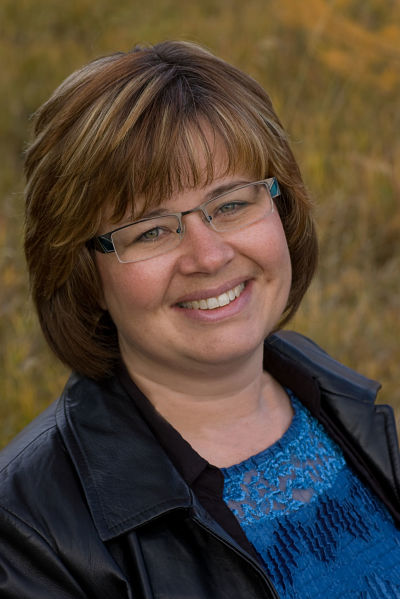
by Karen DebonisSipping my coffee in the dining room one recent morning, I checked my email, and my life and identity changed with a click.
“Michael,” I yelled to my husband in the kitchen. “I got an offer of publication.”
He joined me in the dining room, and I pointed to my computer screen and read aloud:
"Thank you for submitting your work, Growth: A Mother, Her Son, and the Brain Tumor They Survived, to Apprentice House Press. We have reviewed your manuscript and feel it is a great fit for our press. Is the manuscript still available for publication? If so, we will prepare and share a contract for your review.”
That was fast, I thought, before I turned into a blubbering mess.
Except it wasn’t fast. Yes, I’d sent my latest batch of queries to fifteen agents and five small presses only weeks before. But I’d started the process over twenty years before.
Perspective
When I announced my good news on social media, several writers reached out to me to inquire about my success. “How did you get such an impressive number of Twitter followers?” one writer asked.
I have less than 7,000 followers. That doesn’t feel impressive and certainly hadn’t been big enough to attract an agent. But I get it. Compared to a newbie, I am in the big leagues.
But in October 2016, when I joined Twitter—something I never imagined doing—I had zero followers. At the time, I couldn’t imagine having even 100 followers. Why would anyone follow me, a #TwitterNobody?
Six years later, with my signed contract as real as the Velveteen Rabbit, I’m no longer a newbie. I have experience to share.
My Publication Timeline
Here is a loose timeline of the journey from everyday mom to pubbed. I went from knowing nothing to knowing enough to get a book deal. I’ll include wisdom and tips I learned along the way and gained in hindsight.
If you are in your “know nothing” stage as a writer, I hope this gives you encouragement that someday you, too, will meet your writing and publishing goals.
1997 – The Beginning
My eleven-year-old son, Matthew, was diagnosed with a brain tumor after three years of misdiagnoses of his cognitive, physical, and emotional deterioration. He survived. We all did, but in many ways, our story had just begun.
1999-2001 – The First Step to a Memoir
After repeatedly hearing “You should write a book” from well-meaning friends, I saw an ad in the local newspaper about a memoir writing class taught by Marion Roach, then an unknown to me. I hadn’t written anything more creative than a resume since high school, but, with dreams of sitting on Oprah’s stage, I signed up.
I knew nothing. And I had unexpected pockets of ignorance.
- I didn’t know that “its” to show possession had no apostrophe. (I must have been absent that day in high school.)
- I had to re-learn what a gerund was.
- I didn’t know, what “point of view” meant
- I learned the difference between a protagonist and an antagonist.
- I wouldn’t have known a cliche if it hit me over the head.
Practice Makes Perfect
I took Marion’s class three times over the next two years, gaining a little ground each time. I read and studied memoirs to learn my craft and squeezed writing in when I could.
But I never considered myself a writer.
I loved my career as a health educator, and I had no intention of wearing any other hat. Even when I had two short personal essays published in the local paper, I knew writing wasn’t my calling. I was simply a person with a story to tell, and my chosen medium was prose.

Lessons Learned in Hindsight
You’ll likely never appear on a set with Oprah or a podcast with Brene Brown. You probably won’t achieve the success of Cheryl Strayed (Wild) or Stephanie Land (Maid). But if having those dreams motivates you, keep them alive and use them to your advantage.
If you prove me wrong, let me know and I’ll buy you a drink.
2001-2005 – The Story Continues
Matthew’s recovery was more difficult than expected, so I left my full-time school counseling job in 2001 to coach and mentor him through his graduation from high school.
I wrote during the day when he and my younger son Stephen were in school, and I joined a critique group that met at Barnes & Noble. The other writers—all retired men writing fiction—were very nice and well-intentioned as they critiqued my writing, then analyzed my life’s story.
I often left there and went on a chocolate binge. A few years later, I attended a five-day writing retreat, which I left in tears after day three. My story was too painful, too fresh to be so fully immersed in it.
Hindsight Tips:
- Memoir and personal stories often dredge up the worst of our lives, the worst of our selves. Be gentle with yourself as you write, and, while it’s good to write about your experience while it’s fresh, know that you’ll need distance to fully understand the deeper story.
- Be sure your critique group adheres to the guideline of commenting on the writing, not the writer or the writers’ life.
- Some writers who pen only fiction (present company here at WITS excluded) don’t fully grasp the nature of memoir. Find a memoirist-only critique group if possible.
2006-2008 – The Step-Away
We moved and the dinosaur of a computer containing my 300-page manuscript got stashed in the attic for some reason.
I stopped writing. Completely.
Matthew had graduated from high school and, although he still struggled with short-term memory and information processing, he attended college away from home. There is a recovery period needed for traumatic situations, and I was in one. I couldn’t bring myself to relive these painful years on the page.
Hindsight Tips:
- If you are a serious writer who practices your craft regularly, you probably have at least one WIP in the drawer. (Translation for newbies: a Work In Progress saved somewhere where you seldom look at it.) As long as you’re writing something, there’s no rush to revive an old manuscript.
- If you have not yet claimed the “writer” moniker and stopped writing completely, like I did, don’t let years go by without opening the drawer for a cursory look. I wish I had written an annual life update of even one page during my long hiatus.
2008-2016 – The Writing-Less Years
I happily rejoined the workforce, and Matthew graduated from college. For him, adulting was a revolving door of jobs, his poor executive functioning getting him fired or causing him to quit. I rarely thought about my book; it was enough to live the story every day.
Hindsight Tips:
- In memoir, often the story ain’t over til’ it’s over and done and processed. If you’re avoiding working on your WIP, it could be that you still haven’t gained enough perspective on it.
In The Situation and the Story: The Art of Personal Narrative, author Vivian Gornick says, “Every work of literature has both a situation and a story. The situation is the context or circumstance, sometimes the plot; the story is the emotional experience that preoccupies the writer: the insight, the wisdom, the thing one has come to say.”
Your insight and wisdom about your story need time to develop.
2016-2020 – Starting Again
Matthew finally landed his first full-time job with good benefits at about the time my ongoing health issues forced me to quit my job,
The universe had given me time to finish my book!
I told friends I’d need six months to revise and update my manuscript and got started.
[You can stop laughing now.]
I took virtual classes on writing personal essays, query letters, loglines, and pitches. My essay rejections accumulated, interspersed with rare acceptances from low-tiered publications.
What the heck is a Writing Platform?
Now, in addition to learning how to write better, I also took on the endless task of creating a writing platform online. I read and studied and bought a domain and created a website called The Well Nested Life.

I didn’t really know what a blog was, but I started one, posting a story every week for a year. My audience was family and friends and a handful of others writers on Medium.
I had a Facebook page but needed a friend to show me how to use it. I bought a book to learn Twitter, and I watched YouTube videos on Instagram. Remember, everyone starts somewhere with zero followers. I was just like everyone else.
I learned the difference between an em dash and an en dash, discovered that two spaces after a period was now taboo, and became pro-Oxford comma.
Hindsight Tips:
- You will quickly learn how much you don’t know. Be a sponge.
2020 – Learning to be a “Real Writer”
By now, I had a website under my own name, which makes it far easier for people to find me. It still took me time to call myself a writer, as you can see on my calling cards.

Spending time on social media, my platform inched along. One thousand Twitter followers, then two, then three. A few hundred on Facebook. A few dozen on Instagram.
The Agent Hunt
I had culled a list of literary agents and started querying in batches.
By the end of 2020, I’d received a smattering of form rejection letters, which I printed and folded into origami roses. At the same time, I joined a memoir critique group.
When I reread my first chapter to submit to the group, the writing that seemed so good now looked amateurish. It wasn’t “done” as I had thought. So, chapter by chapter, I revised, submitted, and revised again.
I hired a manuscript editor, and who knew there were so many types of editing?
I learned, grew, engaged, connected. Boosted other writers. Took more classes and webinars. Submitted. Created a webinar and a newsletter.
And through it all I Liked and Shared and Retweeted. Four thousand followers, then five.
2022 – Published at Last
My twenty-plus years of pre-published due diligence ended when I signed my contract this month.
Now, I’m embarking on a new journey with new tasks: marketing and PR. Once again, I’m starting from scratch. I know nothing, and I can’t afford a publicist. The more I read about positioning and promotion and sales, the more I panic and negative thoughts try to take over.
I can’t do this! I don’t know anything! I’ll never do it right and my book will be a flop.
But the long journey to get here helps me breathe. It virtually slaps my face. The voice of writerly wisdom tells me: You wrote a book. Your book is going to be published.
You can do anything.

How long has your publication journey taken? What are milestones from your own life stand out to you after reading this post? Do you have any "hindsight tips" to share?
About Karen

Karen DeBonis writes about motherhood, people-pleasing, and personal growth, the entangled mix told in her memoir Growth: A Mother, Her Son, and the Brain Tumor They Survived, forthcoming from Apprentice House Press in spring 2023.
A happy empty-nester, Karen lives in an old house in upstate New York with her husband of forty years. You can find more of her work at www.karendebonis.com.