Writers in the Storm

A blog about writing

storm moving across a field
Scrivener and Plottr for Outlining

by Kris Maze

Hello Fellow Writers,

Fall. The time of getting down to author business and outline your novel. Nanowrimo is right around the corner and the end of the year push to finish those goals comes next. As I consider my writing journey, there are tools that have helped me get the words on the page and outline what I want for my novel. Let’s look at a few popular writing tools, Scrivener and Plottr, as I list my pros and cons from each. Perhaps, you use these and can share your tips as well, for readers in the comments.

Scrivener was one of the first adaptations in my writing toolbox, but it was not an easy transition. It came with complexity and a steep learning curve, but I had to figure out the detailed features through a paid course. Although it seemed like a helpful tool, back then it also seemed to require more effort than the creative writing process itself. After the muddling through, it is now a mainstay of my writing process.

Scrivener Pros and Cons

As I built my manuscripts on this new platform, it freed my desk from paper piles of rewrites. As in most fields, having an organized process leads to a cohesive product, and I was able to focus on my writing more.

Scrivener, for all its structure, needed some practical interior decorating to accomplish my goals.

The amount of features was overwhelming and I still worked out my detailed story structure on paper. It was hard to stare at the blank walls of Scrivener when building the plot took a lot of consideration, and it brought me back to my hands-on methods. Sticky notes all over my writing space walls, a scroll of paper around the house, and multiple word or Google files in various places, made my writing process cumbersome, but functional. I was not getting the most from this software and was frustrated by not accessing its potential.

Here is a breakdown of the software and the reasons I decided to stick with it despite my struggles.

Scrivener - Pros

  • Available for Mac and Windows
  • Versatile and capacity to build various writing structures. According to their website, here are the formats for exporting your work when finished:
    • “Export to a wide variety of file formats, including Microsoft Word, RTF and PDF. Save screenplays to Final Draft format with script notes intact. Create Epub and Kindle e-books to sell on Amazon or elsewhere, or for proof-reading on an e-reader. You can even use MultiMarkdown for LaTeX support and more.”
  • Various views and functionality: binder, corkboard, list, and ability to see multiple screens side by side
  • All features, workspaces, and files are customizable.
  • Places for characters, setting, research, metadata are included in the main templates.
  • It will export into Word.
  • Cost—starting at $49 with a free trial period
  • There is a small cost to upgrade to the newest version which has a less cluttered look.

Scrivener Cons (for me)

  • The main templates were basic and nondescript—I needed more examples and structure for my work
  • Word files were not always compatible and formatting was often off after transferring work to and from Scrivener.
  • I spent a lot of time (and money) playing with the features and learning how to use Scrivener.
  • It is not an easy program to master, but with time and patience, it is possible to set it up to meet your project needs perfectly

Enter a software I didn’t know I needed: Plottr.

Plottr was introduced to me by other writers, as one demonstrated how they used the software to build elaborate worlds. Plottr kept track of details, such as settings and character traits over an entire book series. The visual layout was pleasing and easy to follow, but like Scrivener, required learning to master. As a recent convert to Plottr, here are aspects I considered.

Plottr - Pros

  • Popular Story structure templates are preloaded in the software. The ability to create your own is possible.
  • Each project can contain various plots. One main, one for each character, with a simultaneous view.
  • Adding multiple story structures can accommodate different story types or genre-bending books. Want to make sure your rom-com isn’t missing critical beats? Want the adventure to stay strong? Add Heroes Journey and a romance beats sheet and see how they line up.
  • Colors and cards are customizable. Follow a character through a series with their own color.
  • Creating character cards—and save them. Use them on other projects and save time.
  • Use common profile ideas when building characters (Meyers-Briggs, Enneagram, etc) to build chemistry between characters in realistic ways with more impact.
  • We can view horizontally timeline or vertically. A list view is also an option.
  • Cost—starting at $25 and a free trial period

Plottr - Cons

  • Another software to learn
  • I wasn’t sure I didn’t already have a program capable of this work and didn’t want to replicate the wheel I already had.

My Plottr Takeaways

It turns out that Plottr has a wonderful set of videos available on their home website and on YouTube. There are free training sessions available, too. The program is more intuitive that I first thought and after getting used to it, it is very handy. The save features and the ability to create your own templates make tracking story details through a series much easier. You can bring up your own template from a previous book and build your new manuscript.

What I found most interesting about both software is that…it can work together with Scrivener.

Was spending all this time creating a story in Plottr going to pay off?

The quick answer is yes. This tool allows the writer to organize their story structure using which ever parameters they see fit for their genre and writing type. Time spent on building characters easily filters over to other parts of the manuscript and be saved for other projects without rebuilding. The tutorial videos are quick and informative, using practical examples of the story Pride and Prejudice and the folk tale, the 3 little pigs.

Here's the secret sauce. If Plottr is a place to note card the story’s bones and match it up to the standard plot structures of your genre, then Scrivener has open doors for the work you complete.

Plottr’s export feature saves into a Scrivener file format ready for you to fill in the chapters and scenes. So, it seems, my writer friends, that the question truly isn’t one OR the other, but rather it's AND.

Final Thoughts

Perhaps you can relate to part of my experience with these products. They are well known amongst writers because they are powerful tools. Worth the energy to figure out. These used together may be the combination that can help a writer stitch together the next classic novel, page-turning thriller, or heart-throbbing romance.

Don’t forget to take time for you, writer friends! Learning about new tools and staying current in the latest technology can help writers save time and focus on the creative parts of writing. But our greatest tool is ourselves, our physical being, and our minds.

I hope the dog days of summer are bringing you joy and satisfaction, even amid the stressors of the world today. Here is a picture of a little me-time I spent with my dog Char-Char playing in the water. We fit in extra beach time before the fall busy frenzy sets in. 

What experience do you have with Scrivener? Do you use Plottr? Let us know how either of these have helped or hindered your writing process in the comments below.

About Kris

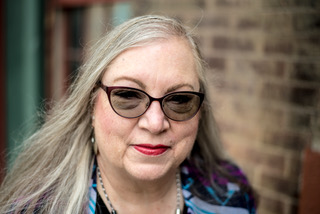
Kris Maze is an author, writing coach, and teacher. She has worked in education for 26 years and writes for various publications including Practical Advice for Teachers of Heritage Learners of Spanish and the award-winning blog Writers in the Storm where she is also a host. You can find her horror stories and keep up with her author events at her website.

A recovering grammarian and hopeless wanderer, Kris enjoys reading, playing violin and piano, and spending time outdoors with her family.


Kris is also writing on Kindle Vella – see her YA dystopian series below.

Athena and the Apocalypse

https://www.amazon.com/kindle-vella/story/B093FFDP6F

Aurora and Watertown

https://www.amazon.com/kindle-vella/story/B096QK9FRR
Read More
5 Things Kids Taught Me About Writing

by Ellen Buikema

Much of my career was spent working with young children and they gave me a different way of viewing and understanding the world. Life lessons from children serve as invaluable resources for writing and life.

Top 5 Lessons

1. Have Patience

When dictating stories for me to transcribe, children either spoke at lightning speed or slowly with great deliberation.  The fast talkers needed to be patient with me. And they were. Each and every one of them. Patient to a fault.

One pair of fraternal twins, sister and brother, were prolific, creative storytellers. Both spoke at a breakneck pace. Sometimes the duo’s words spilled forth with such speed that they tripped over syllables, making them difficult to understand.

After hearing me ask several times, “Can you please say that again?” they chose a different method to get their stories across—one word at a time with a few “one Mississippi, two Mississippi” beats between words. I found this maddening, but eventually we developed a flow that worked for all of us.

Mutual respect allowed for greater student-teacher patience.

Rushing your book-baby out is tempting but unwise. Art cannot be rushed.

Writing and “building a book” requires a lot of patience.

When composing, whether you are a plotter, pantser, or hybrid writer, lack of patience leads to frustration that can hurl you smack into writer’s block. Having patience with oneself is not easy. Remember that a plethora of great writers took many drafts to get their stories just right. After all, first drafts are awful by definition.

2. Be Disciplined

Someone once told me that working with young students was like herding cats. I totally agree!

The attention span of a four-year-old is very short. We’re talking eight to twelve minutes on average-- if they’re interested in the project being presented. Unless you’re well organized with backup plans in case of emergencies, you are toast—burned extra crispy.

It takes discipline to have all the pieces-parts prepared for the day—as well as a bag of tricks.

I’d planned a fantastic lesson. It flopped big time. I could tell by observing the wiggling bodies sitting on the floor with me. Time to punt. Beside me, sat a bag containing several items of different shapes and sizes. I decide to call it "The Mystery Bag." This went over very well. All forty eyes focused on the teacher holding a large, bumpy brown paper bag on her lap.

I asked the wiggliest student to come over and, without peeking, reach into the bag. “Describe the item for us, just from touching it,” I said. The student holding the hidden item chose each of her classmates in turn, following the customs of our classroom (preventative discipline). The students guessed what they thought the mystery item might be. After every classmate participated, the student pulled the item from the bag. The Mystery Bag activity continued until Circle Time ended.

This activity went over so well that the students continued playing the mystery bag game in small groups during free time.

Self-discipline or lack thereof, can make you or break you.

  • Self-discipline helps form positive habits.
  • Successful writers discipline themselves to write, making it habitual.
  • Self-discipline helps you be productive.
  • Commit to a timeline for your writing projects. Be an achiever.
  • Self-discipline helps with focus.
  • Focusing on the writing will get your work completed.
  • Self-discipline increases your self-esteem.

Achieving your writing goals boosts confidence.

3. Notice the Little Stuff

Children notice everything. When sitting on your lap to listen to a story, they may look up your nose and comment upon what they see. There is no such thing as a filter with young children. The social filter doesn’t start until around age seven, thanks to children’s increased capacity for empathy.

Everything a child sees and hears eventually makes its way to school, either with friends or trusted adults. Students write in pictorial form, or dictate stories about things they’ve seen or heard that evoke emotion—both the good and the bad.

Observation is key to great scenes.

My favorite grade school teacher gave us a simple assignment, never graded nor asked about. Find one item on your walk home from school and really look at it in detail. Take time to observe the little things.

I have never forgotten this assignment and have often used it over the years. There is beauty everywhere. Sometimes you need to look a bit closer.

Observation is much more than seeing. When writing scenes, the more senses used, the easier it is for your reader to become part of the story.

  • Choose what you want to observe.
  • Record your observations.

Use a cellphone camera, still or video camera, make a note on paper or an App like ColorNote, or an audio recording App like Voice Recorder for future reference. Sense memories are strong, but life is busy and it’s easy to forget.

4. Use Forgiveness

It’s okay to be angry. It’s not okay to hurt other people or yourself.

When my students hurt each other’s feelings in the classroom or playground, they were responsible to find a way to make the hurt person feel better. It’s easy to say, “I’m sorry.”

Finding a way to make it better takes thought. Forgiveness was implicit in accepting that gift, whatever it may have been. This didn’t happen overnight, but over time made a huge difference in the way students treated each other.

No one has the same writing path.

Mentors can steer you toward new possibilities, challenge you, and expand your imagination, but no one can tell you exactly what your writing process should be. Forgive those that suggest the “right” way. You will develop a system that may borrow from many but become your own.

There will be fantastic days when your writing flows like a bubbly brook. Others are drought days with a blank screen or page. If you lose patience, forgive yourself.

5. Laugh Often

Once our school nurse fell ill and needed to spend time in the hospital. The students made a book for Nurse Rita to help her feel better. Each child received one page to draw a picture, write their names to the best of their ability, and dictate a sentence or two to cheer her.

Rita smiled throughout the book until she found the last page. Then she laughed hard enough to bring tears to her eyes. On the last page was a drawing of an Angry Bird with the caption, Angry Birds will make Nurse Rita feel better.

Laughter is good medicine.

Humor is instinctive. There is a healing quality to humor. Laughter releases feel-good hormones, and a jolly belly laugh is a good workout.

Find more tidbits about humor in writing on the blog. Writing Humor to Heal Mind and Body

And remember that a day without laughter is wasted.

Happy writing!

What do you do to kickstart your writing process? What life lessons have you woven into your writing? What writing lessons have you learned from children? Please share them in the comments!

* * * * * *

About Ellen

Author, speaker, and former teacher, Ellen L. Buikema has written non-fiction for parents, Parenting: A Work in Progress, and The Adventures of Charlie Chameleon, a series of chapter books for children with stories encouraging the development of empathy—sprinkling humor wherever possible. Her Works In Progress are: The Hobo Code (YA historical fiction) and Crystal Memories (YA fantasy).

Find her at http://ellenbuikema.com or on Amazon.

Top Image by Dmitriy Gutarev from Pixabay

Read More
Best Pro Tip For Writing in Deep POV

by Lisa Hall Wilson

Depending on the genre you’re writing, you might’ve been told or heard that you need to know or write in Deep POV. I get it. It’s definitely more popular in some genres than others. However, so many people who join my Facebook group for help learning deep POV and writing emotions, misunderstand the idea of narrative or psychic distance.

Reader’s Digest On POV

Most are familiar with Omniscient POV, where the writer tells a story about a group of characters and shares how all the characters feel or think.

Objective Third Person is a writer/narrator telling a story about one or more characters, but there’s little focus on what the character thinks or feels.

Limited or Close Third Person POV is a writer/narrator telling a story about ONE character, and that character shares thoughts intermittently with readers through free indirect speech. Free indirect speech is when the reader gets thoughts directly from the character (the parts we like to italicize).

Deep POV is one character at a time living out a story with the reader at their side, in their head. The writer will use free indirect speech when writing in deep POV, but the focus of the story is the character’s emotional journey. There is no writer/narrator voice to explain, summarize, or interrupt.

Every Word Comes From Within The POV Character

When writing entirely in deep POV, every word on the page comes to the reader filtered through the point-of-view character. The reader receives all info through the point-of-view character, not the writer (as they would in limited third person).

The POV character will have an opinion about what’s said and the person saying it. Everything that’s said and happen should have an effect on how the character thinks and feels.

The same goes for setting and description, to the beats written to attribute dialogue to another character, how characters move, their expressions, ambient sensory details… EVERYTHING is filtered through the POV character’s perspective. This is a hard mindset shift to make.

This Feels Like Storytelling

The temptation to “storytell” is very strong particularly if your primary instinct is to write in objective or limited third person. In those more distant POV styles, the story comes to the reader through the writer, but because every word on the page comes from within your point of view character, slipping in your author voice adds distance and undermines the goal of immersing the reader in the story.

The Black Forest was known for its gnarled trees, bogs, and unpredictable pits. “It’s not a nice place.” Edric couldn’t suppress the body shiver that rattled his spine.

The italicized part is the storytelling. Would a character describe a place in his own world that he’s familiar with like this? Would he need to explain it to himself (remember, he’s alone inside his own head – he isn’t supposed to speak to the reader). This is acceptable in objective or limited third person, but in deep POV this storytelling becomes author intrusion.

Let’s look at a couple of ways to fix this.

“The Black Forest is not a nice place. It’s full of gnarled trees, bogs and unpredictable pits.” Edric couldn’t suppress the body shiver that rattled his spine.

If the character is speaking to someone unfamiliar with the area, putting the info into dialogue can get the info to the reader. You’ll often see this construction with expert and newbie combinations, with Watson characters that can stand in for the reader and ask questions the POV character might not otherwise have a reason to think about or explain.

His favorite boots were still mired in one of the bogs in the Black Forest. Edric couldn’t suppress the body shiver that rattled his spine. He squinched his toes against the sting of the old scars on the bottom of his feet.

Give the POV character a reason to think about something he otherwise might not ruminate on. Be careful to make sure the thought is organic. We rarely have things come to mind that aren’t triggered by something else in some way.

Movements And Time Passing

Where many writers struggle with this shift into deep POV is where we try to clarify a character moving between scenes or settings or gaps in time.

Two weeks later, Shannon walked into the classroom clutching her books.

The power of deep POV is in immediacy, so most of the time stories written entirely in deep POV span a shorter amount of time. That’s not to say you can’t use deep POV if your story spans generations, or jumps around in time periods, but you should write as though everything is happening right now.

Dialogue is almost always a solid workaround if you need to get info to the reader without breaking deep POV.

You can also note a change in the seasons, things that have piled up or been neglected (dishes, mail, inbox, etc.) They can set a date for something in the future, and when you open the next scene at that event, readers will make that leap with you.

Smaller gaps in time, like morning to afternoon can be noted by the change in the sun, the temperature, the meal they’re eating, their routine. You don’t have to tell readers it’s the next morning, just have your character begin their morning routine.

Where Storytelling Goes Unnoticed

Where the biggest struggle is with removing the author/narrator voice is in the in-between moments. YOU aren’t telling the story, the character is living out the story.

He’d trained his whole life for this moment, as many before him had, but never thought to see it with his own eyes.

So, “thought” adds distance in deep POV. The character is alone in their own head, so just share the thought, you don’t need to signal to the reader that it’s a thought. “As many had before him” is author intrusion. This is the author inserting themselves into the story to give the reader information the character wouldn’t otherwise think of or have.

Let’s look at a rewrite:

Edric scrubbed his face with his hands and stared out the window. War. Wasn’t supposed to have come to this, not in his lifetime.

Do you see the difference? The way the character would think in a situation, the things they see, the consequences and stakes they face – this raw information and emotion. This is what deep POV is all about.

Do you struggle to eliminate the author/narrator voice in deep POV? Do transitions give you problems? Please share your questions and experiences with us down in the comments!

Announcement: Lisa is running her 5 week Deep POV intensive starting Oct 4, 2021. Join the free Facebook group Going Deeper With Emotions In Fiction to learn more about the course and take advantage of free tips and critiques.

About Lisa

Lisa Hall-Wilson is a writing teacher and award-winning writer and author. She’s the author of Method Acting For Writers: Learn Deep Point Of View Using Emotional Layers. Her blog Beyond Basics For Writers explores all facets of the popular writing style deep point of view and offers practical tips for writers. 

She runs the free Facebook group Going Deeper With Emotions where she shares tips and videos on writing in deep point of view. 

Top Photo by Warren Wong on Unsplash

Read More

Subscribe to WITS

Recent Posts

Search

WITS Team

Categories

Archives

Copyright © 2026 Writers In The Storm - All Rights Reserved