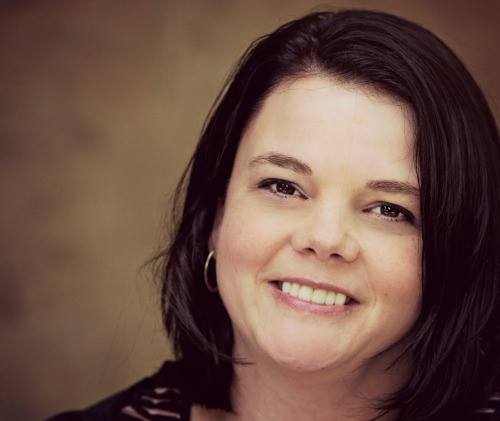
by Tasha Seegmiller
There are a lot of people out there who believe writing is a solitary affair. And to some extent, they are right. As someone who is in her final MFA semester, I can tell you that there are many times when people have asked how they can help and my answer is always they can’t. I have to do the reading. I have to do the writing. The drafting and outlining and brainstorming and editing and revising? That’s all on me.
But there is no way that I write a book on my own. Not even close. No one does.
All you have to do is flip to the acknowledgements section of a book to realize that the act of creation is a collaborative one. Much like the ending credit of a movie, the acknowledgments are where authors share how people helped hone their books (this is also a good place to see who is representing/editing work if you are at that stage of your career).
In order to write well, in order to write authentically, in order to create a story that hits all the markers we hope for, writers need to assemble their villages. I have a few suggestions for how to start or improve a novel’s village.
Writing Neighbors
I have the good fortune of having a writing group in my town. We’ve been meeting *almost* every two weeks for NINE years. We have grown together and our critiques have helped each other with lots of projects, many of which are and will soon be published. These are my critique partners, the ones who help with everything and anything from outline to name choice to diction and tone to plot holes. They are there to help see if the story is on track when I’m writing, to give feedback of where I’ve wandered, to help me see that no, I cannot skip over that moment just because it’s difficult to write.
I have a dear friend who I met through Women’s Fiction Writers Association who I have talked to about all the writing and life things off and on for several years, and we just started working on a “let’s remember how to have fun with writing” collaborative project (if you don’t know what I’m talking about, that’s okay. Those of you who do know, find a project/person to have fun with again).
And then there are beta readers. These are the kinds of people who help writers by reading through a whole manuscript. Some may make line edit kinds of notes, others may point out plot holes. If you don’t know this, please understand that when someone betas for you, you automatically owe them a beta. Neighbors don’t take a cup of sugar, they borrow one, acknowledging that it needs to be returned in kind. Be a good neighbor.
Expert Neighbors
I think most people who have been writing for a while know about the writing neighbors. There are also members of a novel’s village who might be our real-life neighbors, online friends, work associates, casual acquaintances who have a specific set of knowledge or skills that will allow characters to be more authentic.
Right now, I am building my current novel’s neighborhood with a friend whose a therapist, one who has an Instagram shop making custom polymer clay earrings, one who is raising a gay child. I have had heart to heart conversations with friends who came out in high school as a character in my book experiences this and I want to make sure their story is told authentically.
In previous works, I talked to a divorcee who placed a baby through adoption, two people who live with MS, a couple women who have wrestled with infertility, and an organic soap maker.
But not every book or topic needs a person who is an expert. I needed to check a timeline for a high school play production – that’s something I can just throw out on social media to get a pretty good ballpark.
I wanted to see if women of a certain faith felt a strain in their roles as women so I put together an anonymous google form where people could both select a multiple choice option and provide written feedback.
I’m following several people on twitter who are going through life experiences similar to what I intend to have a character go through. Leaning into what they are saying is allowing me to craft a more authentic reading experience.
Some people may categorize these neighbors under research, but for me, research is making sure I’ve got the information correct. This kind of immersion reaches further and deeper – it’s what makes people more interested in watching/listening to Hamilton than reading the biography. It brings the research into 3D.
Nurturing Neighbors
I’ve heard of the elusive individual who can write 8-10,000 words a day, who thrives in creating, who just has stories flow from them with ease.
I. Am. Not. That. Person.
In Elizabeth Gilbert’s well-known TED talk “Your Elusive Creative Genius,” she talks about how she is like a mule, trudging through the work. If ever there was a way to describe my process, it would be that. Writing brings me joy and a sense of accomplishment that little else in my life ever has, and it has brought me frustration and feelings of inadequacy just as often. I have wanted to quit. And I have endured more than one writing crisis.
I have a couple very close friends who are in the same trenches, though maybe at different places. These are people I can talk to when I am certain I’m a fraud, that I’ve wasted so much time and money, that I never had any business pursuing this writing thing in the first place. These are people I can reach out to when the publishing world is hard (it is), when I just don’t understand why something is progressing like I think it should (more than I’d like).
They know that the answer might be “Let me bring you some chocolate” or “Let’s go get a Diet Coke.”
They know the answer might be “What have you got so far?” or “Where are you stuck?”
They know the answer is also “If you weren’t a good writer, would you have experienced ______?”
These kinds of people are those who are neighbors in every novel’s village. They travel from project to project with me because a writer isn’t just an author once (generally). They nurture the progress of the book by helping with the needs of the writer.
Moving Neighborhoods
While there are a few people who help as neighbors in lots of books, if a writer intends for each book to be a little different from the previous one, there is a necessity to rebuild a novel’s village with newcomers as well. Anytime I come across a character who I think could be interesting but who is reading as flat, I start to think about who I know that is similar in some way. And sometimes, I see something or someone in a book, TV show, movie, social media or at the grocery story that makes me wonder. Jot it down, let it set for a while, and the start creating the new cast along with the experts needed to have them come to life.
How have you gathered information to help strengthen your characters or plot? What questions might you have about how to start such a conversation?
* * * * * *
About Tasha

Tasha Seegmiller believes in the magic of love and hope, which she weaves into every story she creates. She is an MFA candidate in the Writing Program at Pacific University and teaches composition courses at Southern Utah University. Tasha married a guy she’s known since she was seven, is the mom of three teens, and co-owner of a soda shack and cotton candy company. She is represented by Annelise Robey of Jane Rotrosen Agency.