Writers in the Storm

A blog about writing

storm moving across a field
5 Tips on Writing a Trauma Backstory

Life is hard and as writers, we aren’t doing our jobs unless our characters struggle. Am I right? Good fiction isn’t borne out in the comfortable and easy living we might dream about, but in the tension and conflict between characters and/or their own desires. Giving a character a backstory that includes trauma (part of their backstory at any rate, because no one wants to be defined by that one awful thing that happened or they witnessed) is a great device to create inner tension, and often leads to conflict. When writing in Deep POV (point of view), the intent is to be as authentic and real as possible. It’s a personal observation that trauma backstory either irreparably cripples a character (think Lisbeth Salander from The Girl Who Kicked The Hornet’s Nest) or doesn’t seem to affect them at all (think any of the principle characters from Criminal Minds – I mean, how much trauma can you witness and still not have it affect outside relationships?)And sure, there are outliers who struggle with severe PTSD and some who seem able to brush anything off, but for the majority of us the reality of a past (or backstory) with trauma is somewhere in the middle. The power of Deep POV is the ability to layer emotion and create realistic reactions.

5 Truths About A Traumatic Past Writers Need To Remember

Trauma Requires Writing Secondary Emotions
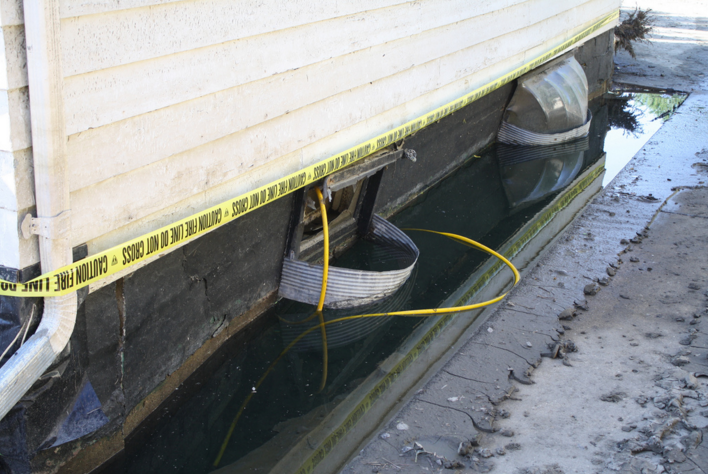
Traumatic events, current or historical, are the equivalent of an emotional tsunami. Primary emotions are the raw, knee-jerk emotional reactions to stimuli we all experience and are the most common emotions given to characters. Some primary emotions that could be triggered by trauma would be: fear, frustration, guilt, self-doubt, hopelessness, loss (physical or psychological), powerlessness, loathing, denial, sad, etc. When someone is hit by a tidal wave of primary emotions like that, secondary emotions are triggered. Secondary emotions are emotions are caused by one or more powerful primary emotion and include things like: anger, anxiety, and shame. Some of the secondary emotions that could be triggered because of trauma might be: anger, shame, anxiety, bitterness, resentment, numbness, and grief. Don’t be lazy. As a writer, you need to dive deep into these secondary emotions and layer the primary emotions so the reader can experience the loss, anxiety and trauma with your character. Writers Helping Writers has a great entry on overcoming abuse that walks through trauma and character motivation. Historical Trauma Needs Authenticity In the Present For someone who’s experienced past trauma, (emotional, physical, sexual, verbal) each time the anxiety is triggered doesn’t mean that the actual events are recalled with any amount of detail except in severe cases (like with combat veterans). For someone with PTSD, unless it’s severe, their body reacts to the past trauma as though it’s happening all over again but they don’t actively recall the event. They’re more likely to avoid thinking of it at all unless they’ve gone to counseling or there’s some other explanation for that level of self-awareness. Writers need to treat this carefully when using trauma as backstory. Physiological symptoms are one way to signal to a reader that the character (or at least their body) is reliving a traumatic event even if they won’t think about it. A woman who was abused as a child will not want to relive the abuse in her mind every time a man larger than her walks into a room. Who would want to live like that? Those who can’t not relive that event often turn to something to numb the memory whether it’s a substance or some other addiction. However, this woman might notice her heart rate accelerate, she might begin to sweat or blush for what feels like no reason. She may maneuver herself to make sure she can make a quick exit if needed or insist on sitting at the end of the row or table. These are all symptoms of anxiety. By providing this evidence of what this woman is experiencing, the reader can draw the conclusion that she’s struggling with something from her past.
With backstory, you want to answer one question and leave the reader with two more.
Past Trauma Has Three Main Lasting Reactions: Fight, Flight or Freeze Most people have heard of the fight or flight survival instinct humans are typically born with. Victims of trauma (or perceived trauma) when the primary emotions from that trauma are triggered, experience the one of three (or an overlap of) survival instincts: fight, flight or freeze. If they choose flight they’ll look to escape the situation or the possibility of a similar situation (numbness, isolation, withdraw from society). Fight usually comes out as anger or rage either directed at themselves or other people. If they choose freeze, they’ll stay when they should run, refuse to acknowledge the effect of the trauma, catatonic, constantly overwhelmed, no energy, etc. Read more about Fight, Flight or Freeze and how they overlap here. Emotional Triggers Caused By Past Trauma Have A Desire At Their Foundation When anxiety is triggered, there’s an immediate flood of primary emotions and secondary emotions that come to the front almost instantly. That’s why much of the time, we aren’t aware of the primary emotions causing the secondary emotion. However, at the base of the emotional trigger is a vow, a promise they’ve made to themselves, or some kind of motivation. Examples of these desires or motivations might be:

never to be a victim again, never let someone hurt me again, not be made a fool of again, never let them see me cry, never let them see I’m hurting, never be hurt emotionally again, never trust a man again, etc.

These inner desires may be expressed through internal dialogue as a vow, but this kind of survival instinct could also be shown through other internal dialogue or choices. What these desires signal is that there’s a wound that’s still festering the character wants to keep covered up and hidden. What they need to do is expose that lie to the air and let it heal, work through the primary emotions causing it all. The Myers Briggs personality tests claims that a large majority of people are equipped with enough introspection to sort these things out, but some personalities do it better than others so it’s unrealistic to think that your character (barring some other obstacle such as psychopathy or narcissism) isn’t capable of this growth. Here’s a great article that talks more about those personalities and how they deal with introspection. There’s a lot of room in these situations for character arc. Let these characters learn as they go through the story. If they begin the story having already overcome the trauma, make sure there’s real justification for giving them the trauma to begin with. Don’t end the story with them as broken and floundering as when readers first meet them, they must grow somehow. Something has to give, right? No one repeatedly signs up to be beaten and abused by their past, either they get over it, they get even, or they find some way to forget about it/numb the pain. Causes of Historical Trauma The thing about PTSD and anxiety is that the effects and consequences are very individual. It’s usually a result of feeling powerless (having no voice), and hopelessness at being unable to change the situation or outcome. Two people can experience the exact same trauma and one person can walk away with PTSD and the other not, they both might, neither of them could have PTSD. They could both have PTSD to differing degrees or have different triggers. Read more about healing from emotional and psychological trauma here. Those feelings of powerlessness and hopelessness can be caused by a wide variety of situations that to some people may not seem all that traumatic at all, so personality can play a large part in this. Having surgery or intrusive medical procedure at a young age can leave someone with anxiety. Neglect, abuse, or simply an unsafe living environment can cause trauma. Loss or separation from a parent at a young age can cause trauma. Basically anything that forces a child to feel insecure can cause trauma.The younger a child is when this trauma is experienced, the more devastating the adulthood anxiety can be. As a writer, you don’t need your character to experience some kind of catastrophic attack (rape, kidnapping, torture) to experience anxiety. Being locked in a pitch-black room as a child just once can cause lifelong anxiety. The degree to which the adult allows this anxiety to define them, or shape their thinking (often trauma leads to shame), the more the consequences will become evident in day to day life. Remember that whatever sort of trauma is given to a character, to layer the emotions the event caused. Make sure to realistically portray how the character thinks or remembers the traumatic event. However, don’t be afraid to make that character uncomfortable, to throw them head first into whatever their worst fear is and let them become stronger because of it. Those are the characters readers cheer for!
What kind of historic trauma have you given your characters? What challenges have you encountered? Finally, if you've discovered any great resources for writing about trauma, please share them in the comments!
Announcement: Lisa is doing a free 5 Day Deep Point Of View Challenge on Facebook starting October 22. It'll be in a closed Facebook group. You can sign up for the waiting list here so you don't miss out.

*  *  *  *  *  *

About Lisa

Lisa Hall-WilsonLisa Hall-Wilson was a national award-winning freelance journalist and author who loves mentoring writers. Fascinated by history, fantasy, romance, and faith, Lisa blends those passions into historical and historical-fantasy novels. Find Lisa’s blog, Beyond Basics for intermediate writers,  at www.lisahallwilson.com.
Read More
The Bikini Wax Theory of Writing

Some people talk about writing like they are chasing butterflies along the pretty garden paths of their manuscripts. Like their words frolic with Disney characters. They speak of churning out pages like a high-end laser printer.

I am not one of those people.

A few times a year I have one of those idyllic days but, most of the time, writing is an uphill grind. A teeth-gnashing session filled with curse words, clock watching and questions like, "Are we there yet?"

But we're writers. Writers persevere. Even if it's only one page at a time--hell, one sentence at a time--we keep going. We are mighty beings formed of stubbornness, creativity and caffeine.

Currently, I'm deep in a memoir about my crazy high-risk pregnancy journey. Rather than a grind, this manuscript is an all-out pain-fest. Instead of making up story lines and black moments for fictional characters, I'm reliving my own.

The only thing getting me through this memoir is my Bikini Wax Theory of writing.

Let me explain...

A few decades back (when I still cared about creative ladyscaping), I'd go to those cutely-named wax joints with names like Pretty Kitty, The Lunch Box, The Sugar Shack. People in those places know their way around a bikini line.

But one day I was in a rush and I needed some emergency ladyscaping.

[Don't judge. You know you've been in a rush to get ready for a date at some point in your life.]

I was at the hair salon and they offered waxing and, well...time was the only thing I had in short supply that day. So, I found myself in a back room with a woman with fluttery hands who asked a lot of questions about how I was doing.

Are you comfortable?
Does that feel okay?
Is the wax too warm?

The people at the cute-name places never asked how I was doing.

They were like moms on a marathon to get the sandwiches done before the school bus arrived. They'd slap and smooth and rip like the pros they were. In the time it took my uber-polite fluttery girl to get ready, they'd have done a full Brazilian on a Sasquatch.

Finally, we got to the main waxing event. She smoothed on the warm wax, pressed her strip of linen over it. I sucked in the quick breath that goes along with having hair ripped out of your body and...

She paused.

That very sweet polite fluttery woman paused when she should have kept ripping. She didn't want to cause me pain. She was afraid she'd done something wrong. She wrung her hands and gushed out her story. The usual waxer was out sick. They'd pulled her over from pedicures.

She was sorry, sorry, so so sorry.

And meanwhile, a hardening strip of wax is hanging off me, my bikini line is on fire and I'm out of time.

I shrieked at her. "There's no pausing!"

More apologies.

I did the quick breathing of insane pain and gritted my teeth. "We can't stop halfway. We've still got to do this. Please, please, just get it over with."

Eventually, with much more pain than necessary, she got through the process. By dragging it out, she'd wrecked my timeline and my dignity. Plus, she caused enough bruising to make me call off the date. I needed to curl up with ice packs instead.

That sweet woman was an epic failure at waxing, but she taught me a very important lesson about writing. I think of her whenever my writing leaves me wrecked and sobbing. Whenever I don't want to finish a scene or a chapter because it hurts it hurts it hurts.

I'm only prolonging that pain by stopping halfway. It will still be waiting for me. It always is.

We all know the pain of the half-finished scene/chapter/novel. It hangs off us like hardening wax, ripping at us more deeply than if we'd just faced the page and gotten through it to the other side.

So, I'm here to remind all of you (and myself):

We're writers. Writers persevere. Even if it's only one page at a time--hell, one sentence at a time--we keep going. We are mighty beings formed of stubbornness, creativity and caffeine.

When in doubt, just keep going, y'all. You've got this. And you're my tribe, so I've got this too.

One last pro tip: If you feel the need for some lady(or man)scaping, especially if you're shooting for edgy mojo, pick the place with the cute naughty name. They've got the skills to get the job done fast.

What gets you through to the other side when "you don't wanna" [fill in the blank]? Share your motivation tips (and any juicy stories) with us down in the comments!

*  *  *  *  *  *

About Jenny Hansen

By day, Jenny provides training and social media marketing for an accounting firm. By night she writes humor, memoir, women’s fiction and short stories. After 18 years as a corporate software trainer, she’s delighted to sit down while she works.

When she’s not at her personal blog, More Cowbell, Jenny can be found on Twitter at JennyHansenCA or here at Writers In The Storm.

Read More
Plot Backward to Move Forward with Your Novel

By Janice Hardy, @Janice_Hardy 

Unless you're playing with a non-chronological story structure, plot unfolds as time marches on in a novel. It starts when the problem is discovered (more or less), and ends when the problem is resolved. But just because the story is in chronological order, doesn't mean we need to plot it that way.

I'm currently working on the outline for a novel a bit outside my normal genre. It's still science fiction, but it's a detective novel at heart, with all the twist and turns and plot requirements that entails. Information needs to be revealed in the right way, otherwise my plot might feel too rushed or too slow, and some of the logic leaps my detective has might not make sense. This holds true of most stories, regardless of their genres.

Luckily, there are pinch points I know I'm going to have, such as finding the body, uncovering the killer, revealing key secrets and clues. These clear moments are "destination points" for me to plot toward.

Pantsers just write their way there and see what happens, but I'm a plotter, and I need to have a solid outline in place before I begin a novel. When I can't find my way forward, I skip to the end and go backward. Because of those destination points, I know exactly where I need to be.

With a genre as structured as a mystery, this is even easier. For example, I know my detective will discover the killer's identity at a certain point. So I start there--what specifically reveals this? What clue leads him to this discovery? How does he find that clue? What is he doing when he discovers this clue? At each point, I figure out what had to have happened to get him there.

Let's look a little closer.

Say I'm working on a major plot point where a clue is found in an abandoned car. I'll brainstorm how my detective happened across that car. I might ask:

  • Was he looking for the car, or something that led to this car?
  • Did he expect to find this clue there or was he looking for something else?
  • Did someone tell him about the car, or did another lead get him here?

These questions let me backtrack and create scenes that would allow these events and reveals to happen.  Let's flesh one of these out:

Was he looking for the car, or something that led to this car?

He was looking for the car. So that leads to my next question...how did he know to look for it? I might ask:

How did he find the car? A witness remembered seeing a dark blue van nearly hit a mailbox on the day of the crime.

What was he looking for when he found this clue? He was trying to determine how the suspects fled the crime scene and decided to go back and re-interview witnesses.

With these answers, I might decide I need a scene where my detective is interviewing the witnesses from the crime. Maybe he missed something or someone might remember something new. Perhaps he has additional clues he can use to jostle their memories. I add the scene, and then work backward again, this time knowing I need a reason for him to return to the witnesses.

Why did he talk to them again? He hit a dead end with his current evidence.

Why did he miss this the first time? One of the witnesses had to leave to go pick up her child from school.

This naturally leads to, "How did he know he missed a witness?" and that will lead to another scene, all the way back to the moment he hit that dead end and had to look for new leads.

Just like you can get stuck while plotting forward, going backward can also leave you stumped and hitting your own dead ends. I do hit moments where I think, "Umm..." and stare at the screen with no idea how to fix it. When this happens, I shift back to the beginning again and see how far I can move forward now with the plot until I reach that moment (or as close to it as I can get). Often, all the work I did on the back end of the story arc is enough to give the beginning the necessary narrative drive and goals to reveal the solution. And when it doesn't, at least I have enough information to let my subconscious mull it over for a while and hopefully figure it out.  

This technique is useful for both the broad strokes of plot, such as your major turning points, as well as the minutia of a scene. I like to start with the major plot points and work my way down to the individual scenes, using the larger points as directions on where to send my plot. If I know I need to find a body, I have a much better sense of what my detective needs to do to get to that point in the plot.

If you're not sure what questions to ask, here are some general scene-driving things to consider:

  • What does the protagonist want? Why?
  • What made her decide to pursue that goal?
  • What's the next big plot moment in the story? How does the protagonist get there?
  • What problems will the protagonist run into getting to that major moment?
  • What doesn't she know about the situation(s) she's facing?
  • What secrets are the other characters she's interacting with keeping that might affect her decisions?
  • What clues might suggest or hint at those secrets? Do they need to be revealed now?
  • What might mislead the protagonist? It is intentional, accidental, or just a mistake on her part?

Move forward and backward as needed, keeping what has to happen in mind. Use your imagination, but keep asking, "How did (or would) my protagonist get here?" in some manner, and you'll find your way from Plot Point A to Plot Point Z.

And for those who'd like a little extra plotting help, today is the last day to receive my free e-book, Plotting Your Novel: Ideas and Structure. Don't miss out on this useful novel developing tool.

How do you like to plot your novels? What are your biggest pain points on the road to The End?

*  *  *  *  *  *

About Janice

Janice Hardy is the award-winning author of the teen fantasy trilogy The Healing Wars, including The Shifter, Blue Fire, and Darkfall from Balzer+Bray/Harper Collins. She also writes the Grace Harper urban fantasy series for adults under the name, J.T. Hardy. When she's not writing fiction, she runs the popular writing site Fiction University, and has written multiple books on writing, including Understanding Show, Don't Tell (And Really Getting It), Plotting Your Novel: Ideas and Structure, and the Revising Your Novel: First Draft to Finished Draft series.

Website | Facebook | Twitter | Pinterest | Goodreads | Amazon | Barnes & Noble | iTunes | Indie Bound

Read More

Subscribe to WITS

Recent Posts

Search

WITS Team

Categories

Archives

Copyright © 2026 Writers In The Storm - All Rights Reserved