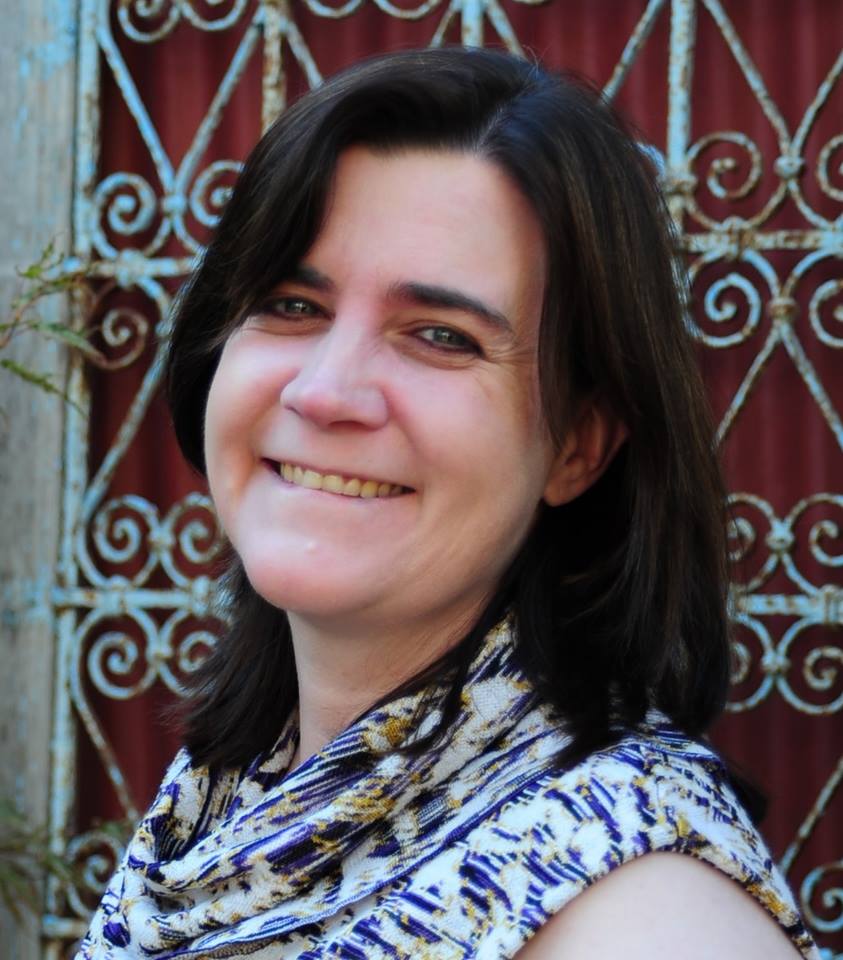
Vaughn Roycroft
I’m a Believer? I always thought I knew what I believed. Don’t you? I always knew I believed in, you know—stuff. Stuff like … um. Well, there’s my longstanding belief that the best way to a championship is still a consistent running game and a great defense; that the first beer is always the best and should be savored slowly; that the end of Calvin and Hobbes was the beginning of the end of the newspaper business. I’m on firm turf with this stuff. This is stuff I can confidently assert to my barber, or my neighbor as our dogs play together.
What? Not serious enough? Okay, then how about long-held beliefs such as: that my father’s generation of Americans really is the last great one, and it’s as much about their humility as their triumph over economic depression and world war; that something one works hard to obtain, something that truly feels earned, is better appreciated than something received by gift or windfall; that one should utilize the opportunity of going to college to study what truly fascinates them, rather than focusing their studies on a specific future vocation; or that the pillar of friendship is as important as the pillar of love in building a solid marriage. Yep, these are a few of my truths, evolved in the course of a life of school and work, living among family, friends, and coworkers.
But how often do we delve into what we really believe? You know, the things that make us tick, that influence who we are and how we live.
My friend and Writer Unboxed colleague Jo Eberhardt recently wrote a wonderful post exploring the importance of understanding our characters’ beliefs. And not just in a general way, but specifically what they believe, and how those specific beliefs influence their behavior, their approach to what life throws their way. I highly recommend the read as it really got me thinking (hence this post). But you can only click over now if you promise to come right back. Okay, go on. See you on the other side.
Letting the Days Go By:
“And you may find yourself behind the wheel of a large automobile
And you may find yourself in a beautiful house, with a beautiful wife
And you may ask yourself, Well...How did I get here?” ~David Byrne (Talking Heads)
Good, you’re back. See how I serenaded your return? Nice, huh?
Anyway, we all know how hectic life can be. And it just keeps speeding by, doesn’t it? I’ll admit that before I left the business world and started writing, I rarely analyzed or questioned my own beliefs. Who has the time for that? Beyond business and family and friends, I admit that my understanding of my own beliefs was fairly superficial—tied to my own work-a-day world.
Politics, world events, history, even religion—they’re all pretty much spoon-fed to us, if we willingly consume what’s offered. Belief becomes mired in how an issue will affect us now, or next week, or by Christmas or the next election. In today’s world, if you mistake tribal opinion for belief, its spouting becomes psychic junk food, readily gobbled on your favorite news channel or website. If we’re not careful, life can slide right by without any thorough analysis. And then we might find ourselves asking: Well, how did I get here?
The Great Instigator:
“There can be no true love of lie without despair of its end.” ~Albert Camus
Death has been called the great leveler, but a better name for me would be “the great instigator.” I’ve written several times before, and probably will again, about the role death played in spurring the life change my wife and I undertook, leaving a successful business to move to our beloved cottage in the Michigan woods. I don’t want to get bogged down on death, but I want to acknowledge its role in getting me here. When we left Chicago, our mantra became “life’s too short,” which at its core is a recognition and an acknowledgment of our mortality. We knew we were living in a blur of activity, and recognized that there should be more to life than accumulating possessions, no matter how nice those possessions might be.
I think this was my first real recognition of one of my core beliefs. And I sensed there would necessarily be more recognition, more analysis and contemplation, to follow.
Who’s That? – Appraising the Writer In Fiction’s Mirror
Questions, Questions: Have you ever been ambushed by your muse? As you’re writing, do you ever find yourself wondering: “Where is this stuff come from?” Yeah, me too.
In fact, this happened throughout the writing of the first draft of my trilogy. I think this is why I never had an issue with getting to “The End” that first time—I just had to find out how it all came out!
So long story not so short, a bunch of stuff was happening to these characters that seemed to have appeared from the ether. Along the way I found myself forced to ask myself a lot of questions. For example: Is war ever justified? If so, is killing another human being justifiable? How would it feel? How would one live with having done it, even if it felt justified? How do warlike cultures evolve? Could one be raised in a warlike culture, brought up to feel that killing others was a part of one’s duty, and still find it morally repugnant? How would they navigate that circumstance?
Just to name a few. Before I finished all three manuscripts, my list of questions had grown long, indeed.
Psychic Excavation: I at least have some idea that my warrior exploration was rooted in the loss of my father, who served in both the European and Pacific theaters during WW2 and never spoke of it. Long after his death I still find myself wondering about his experience. He was such a kind and peace-loving man, and he’d had this brutal—savage, even—experience in his young adulthood.
But that doesn’t explain everything that I unearthed in that first draft.
Again and again, issues which I hadn’t consciously considered in depth appeared as I drafted. Feminism as it applies to the ancient world, racism and cultural jingoism, even the economic reliance and subsequent cultural rationalization versus the injustice of slavery. That’s a lot to find myself pondering in the course of a single story. Even if it is an epic fantasy.
Like one of those farmers in England who goes to dig a simple well and stumbles across the ruins of a Roman outpost, I’d stumbled upon a rich archeological site … my subconscious mind.
Delving Deeper: Once I had a finished draft, I still had a lot to consider. I knew I had a lot of stuff happening (plot), and I’d been ambushed by my muse regarding overriding issues that generated plot (themes). But, getting back around to Jo’s post on WU, I still hadn’t exactly explored why my characters reacted to what was happening the way they did. In order to give the story depth and meaning for readers, I still needed to consider their true goals and motivations, and the conflicts that arose from those goals and motivations. I needed to figure out what they believe—specifically believe—and how those beliefs affect their behavior.
I can see the importance of the incorporation of belief, and how an inner journey springs from belief—how a character’s convictions both incite and conflict with what is taking place. I aspire to master a weave of the inner and outer journeys of my characters in the pursuit of satisfactory story arcs. For me, this is the key to powerful fiction. It’s something worth striving for. But I’ve discovered a side-benefit to the endeavor: self-knowledge.
Fateful Findings:
“Knowing oneself is the beginning of all wisdom.” ~Aristotle
“He who looks outside, dreams. He who looks inside, awakes.” ~ Carl Jung
It can be strange at first, to recognize glimpses of your true self reflected back from the page. I’ve come upon many of my truths though my appraisal of fiction’s mirror. I better understand the importance of loyalty and friendship, of honor and humility. I better appreciate and admire a willingness to sacrifice for others. I’ve examined my thoughts on the influence of societal dogma, on fate versus free will, and the importance of proactive choice.
I hesitate to veer into the mystic, and I readily admit that organized religion hasn’t played a large role in my life. And yet, through writing fiction I’ve come to more deeply consider my own spirituality. I’ve contemplated the existence of evil, and the power of love. I’ve come to know and be at peace in the knowledge that death isn’t the end of love, and never can be.
A Worthy Examination:
“What you leave behind is not what is engraved on stone monuments, but what is woven into others.” ~Pericles
There’s a long road ahead, but I appreciate the distance I’ve come. Through striving to better understand my characters, I’ve come to better recognize aspects of myself, and of those I love, in them. I feel blessed to have had the opportunity for self-exploration. And though I’m a work in progress, I believe that the effort continues to make me a better citizen, friend, and husband—a better person.
But I hope that my exploration might, in some small way, offer even more. At the least, I suspect the effort to understand my own beliefs will make for more engaging fiction. And, with a little luck, someday it might even help someone else to better realize their own beliefs. I’d say that’s a worthy endeavor.
Many thanks to the ladies of Writers In The Storm for the opportunity to share a bit of my journey. I firmly believe they are among the most generous and supportive folks in the writing community!
Your turn! Do you believe in the sustaining power of Calvin and Hobbes? Have you been ambushed by themes, or surprised by your characters’ convictions? Have you found a deeper understanding of your own beliefs through writing fiction?
About Vaughn
In the sixth grade, Vaughn’s teacher gave him a copy of The Hobbit, sparking a lifelong passion for reading and history. After college, life intervened, and Vaughn spent twenty years building a successful business. During those years, he and his wife built a getaway cottage near their favorite shoreline, in a fashion that would make the elves of Rivendell proud. After many milestone achievements, and with the mantra ‘life’s too short,’ they left their hectic lives in the business world, moved to their little cottage, and Vaughn finally returned to writing. Now he spends his days polishing his epic fantasy trilogy.