Writers in the Storm

A blog about writing

storm moving across a field
4 Steps to Happy Writing Productivity

Jamie Raintree

The beginning of the new year is always a great time to step back and reevaluate our routines. Sure, we all have resolutions and goals for the coming year (finally finishing that book probably being one of them) but if we continue to approach our goals and resolutions in the same way we did last year, we'll likely find ourselves on December 31, 2015 in the same position we're in now--no finished book, disappointed in how little progress has been made, or maybe even with a finished product but not very happy about what it took to get there. If the previous tactics haven't worked, it's important to continue trying new things until you find the best system for you.

I actually got a lot accomplished this year. I'm proud of the progress I made, even though there were some setbacks along the way. I'm the kind of person that tends to stick to my commitments to a fault--even the self-imposed ones. It's a great way to get things done but it isn't always the best way to be happy while doing it. Yes, productivity is great, but how meaningful is that progress if the stress of chasing our dreams sucks the happiness out of our daily lives?

Is there a way to have both--productivity and happiness?

This year I'm trying out a new routine myself and I thought I'd share it with you. Here are 4 steps to think about incorporating into your routine for happy productivity:

1. PLAN
The thing about planning is that even if you don't want to do it and don't like to do it, you still sort of have to. If you're not much of a planner, you might not recognize it as planning--it might show up as procrastination when you sit down at your desk to write as you try to figure out what to write next, how much you want to accomplish, etc. That's planning--it's just eating into your writing time now. Taking ten minutes to plan ahead of time--how much your want to write this week, which scene you want to write next, what might happen in that scene--will rescue your writing time because by the time you sit down, you'll be ready to go.

2. TRUST
Trust is not easy for me. I stay at home with my toddler and preschooler all day, every single day, without a relative in a fifty mile radius. I have a lot of anxiety around the idea of accomplishing my writing each day. I spend so much time worrying about whether or not I'm going to hit my goal today, and when, and what it might look like, that by the time I sit down to work I'm out of energy. I build it up in my head so much that it becomes an insurmountable task. This year, I'm adding in trust as a step to my routine--trust that the time will present itself and because I have a plan, I'll be ready to jump on it when it happens.

3. FORGIVE
That being said, some days it still just isn't going to happen. I know a lot of us have the habit of beating ourselves up about the days that life gets in the way or we're just flat tired and can't connect with our creativity. The problem with resenting ourselves about it is that we drag that into the next day's writing and then the day after that. Especially if that resentment prevents us from writing for days on end and it grows into this monster on our shoulders. Life happens. So does writing. Forgiveness and going with the flow gives each days' writing a fresh start.

4. TRACK
Because writing a novel is such a long process, it's important to reward ourselves along the way for a job well done. Unfortunately, having a party for every 500 words isn't exactly feasible and a piece of chocolate for every 50 probably isn't advisable. Still, a daily pat on the back can spur us on to go at it again tomorrow. Rewarding yourself is not something to be ignored if you want your productivity to be happy productivity. The best reward I've found is tracking my progress. It could be something as simple as an X on a calendar to create the famous Seinfeld chain, writing down your word count in a notebook, or if you're visual like me, a pretty progress bar to keep track of the percentage completed. Find a way that gives you a little thrill at the end of the day and easily proves that your work today was meaningful. If you don't have your own way, I'm happy to share my Writing Progress Spreadsheet with you.

These are some steps that have already begun to make a difference in my productivity and happiness this year, but whatever works for you, don't let the New Year's excitement wear off before you take a look at your routines, assess them, and make them work for you. And may you have a fulfilling, prosperous, novel-filled year!

About Jamie

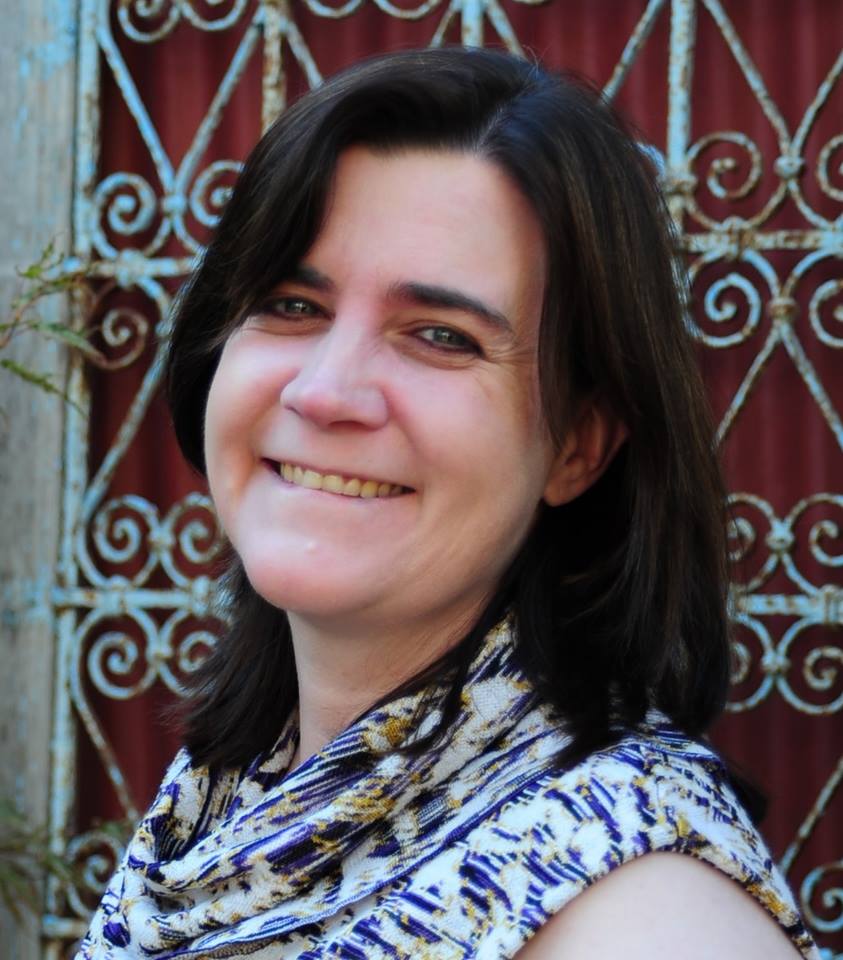
image1

Jamie Raintree writes women's fiction about women searching for truth in life and love. She is currently working on revisions of her first novel in preparation for submission to publishers. In the meantime, she blogs about her journey toward a well-balanced life and a career in publishing--her struggles and successes along the way. She lives in Northern Colorado with her husband and two young daughters and is a Workshop Coordinator for the Women's Fiction Writers Association. Subscribe to her newsletter for more blogs, book news, and writer tools and other free downloads for dreamers. To find out more, visit her website below.

Website | Newsletter | Facebook | Twitter | Pinterest


Read More
Writing Process Throwdown: Jenny's Story Quilting

Writing is a very imprecise process for me, which surprises no one who knows me well. I’ve tried a gajillion tools in my quest to get a book off the ground and finished. Fast Draft, W-Plot, Snowflake Method. They all helped me be a better writer, but none of them got me to "The End."

Those cool big picture methods aren't concrete enough to get me to the end. My busy brain says, "Ooooh...GLITTER!" And I'm off doing something else, instead of writing the 60 scenes that make up a book.

The only thing that gets me to "The End" is putting my butt in the chair and writing one scene at a time.

If I don't stay completely immersed in the moment and the scene, it's an open door for "Ooooh...GLITTER!" That's the way busy noggins like mine work.

Here's my process in a nutshell:

1. Like many writers, each book usually starts with an idea or a scene that comes into my head fully formed. I write that scene to get it out of my head and onto the page. I keep writing until all the scenes are out of my head.

2. Near the beginning of the process, I bat some ‘what if’s’ around with my writing peeps and decide on the overriding theme for the book and the internal and external conflicts for the main characters.

3. If I’m really lucky, the turning points get decided in advance too. At the very least, I take time with my critique group to discuss what I think the turning points are to see if I’m remotely on target and if it all sounds believable.

Note: For a great summary of turning points, read this breakdown of Jenny Crusie’s talk at the 2009 RWA conference.

4. I make a list of all the scenes I know and I write whatever I can see clearly that day, until they're all done.

5. I try to write at least five days a week as it keeps my brain open to receiving new scenes. When I let more than a week go by without visiting my story, I start to lose focus.

6. I use a timer. My deal with myself is I have to do at least 30 minutes of work on my fiction for those 5 days a week. While it doesn't sound like a lot, it really makes a difference. If I'm digging it that day, I go way longer than 30 minutes. If I'm not digging it that day, I know "I only have to do this crap for 30 minutes."

As an extrovert, online sprints help me a lot. Marcy Kennedy's post on Twitter hashtags will help you find all the Twitter sprinters.

[In case you missed them: here's Orly's Writing Process, Laura's and Fae's.]

I didn't know how to describe my writing process until one of my crafty relatives said, "Hey, you're a story quilter!" It turns out, she was right. I read an article about Diana Gabaldon and how she wrote the Outlander series. Like Fae and I, she sees the story as a movie.

For Outlander, Gabaldon re-constructed the movie in her head, scene by scene, until everything she saw was on paper. Then she shuffled them all together into the books we know and love. While I won’t pretend to be anywhere near Gabaldon’s league, we both do books in short little pieces. Perhaps it has to do with being a busy mom.

When I read that article a light went on in my head. I finally accepted the truth: I’m a scene writer. I stopped trying to write from beginning to end like all my friends. Some of us are "story quilters" and that's the way we're made.

What are the Must-Haves for the "story quilting" approach?

You don't have to have every one of these mastered, but it really, really helps if you at least have the first one. I use them all, especially in the editing process.

You must have a good grasp of 3-Act Structure.

Otherwise you end up with a pile of scenes, or "story blocks," you can’t use. It also helps to know the 12 steps of the Hero’s Journey. Here’s the most helpful link I’ve found, which combines the two (this downloads a Word doc). I work with 3-Act structure because I can keep track of it better in my head.

Two words – Conflict Lock.

If you don’t have a conflict lock, you don’t have a story. So says Bob Mayer, author of Warrior Writer and co-founder of Cool Gus Publishing. Here’s a blog to tell you more.

Scene-dissecting tools like Margie Lawson's EDITS system.

If you don't have tools like the ones Margie teaches you, it's difficult to figure out where you missed with a scene, especially if you're a pantser. Invest in yourself with Margie...you'll be glad you did.

Understand your story's DNA (theme) before you get too far.

This is why I think hard about theme pretty early in my process. If you have a strong visual of your story's underlying message, you automatically write to it. That DNA will inform every scene choice you make because it has to. John August, the screenwriter for Charlie and the Chocolate Factory and Big Fish, says it much better than I do in this post.

The advantages (and I know this is subjective):
  1. I never get writer's block. There's always another scene to write or edit.
  2. I'm able to write fast and stay immersed, because it's "only one scene."
  3. Scrivener allows me to store scenes separately and move them around.
  4. The story theme is naturally interwoven when you write this way.
  5. I'm able to move between fiction and non-fiction pretty easily.
The disadvantages:
  1. I need objective eyes to tell me when the story is "really done."
  2. Continuity edits are a must for long works - I need to know that all the loose ends got tied up.
  3. Scene transitions bug the crap out of me (and I'm terrible at them). I need to be double-checked on these.

As you read about all our writing processes here at WITS, I encourage you to think about your own. Like underpants, process is personal. You'll find out what fits you best by trying it on for size.

At the end of the day, it comes down to this: You must write your stories in a way that allows you to finish them. Period.

Where are you at in your "process journey?" Do any of our methods resonate with you?

~ Jenny
@JennyHansenCA

*  *  *  *  *  *

About Jenny Hansen

By day, Jenny provides training and social media marketing for an accounting firm. By night she writes news articles, humor, memoir, women’s fiction and short stories. After 18+ years as a corporate software trainer, she’s delighted to sit down while she works.

When she’s not at her personal blog, More Cowbell, Jenny can be found on Twitter at JennyHansenCA or at Writers In The Storm.

Read More
On Writing: Being Nestless

Kimberly Brock

You need a nest.

That’s the most important lesson I’ve learned this year about being a good writer, or a creative of any sort.

Up until this year, I thought I was an expert at nests. I am an introvert disguised as an extrovert and I want nothing so much as to curl up in a soft, safe place and reflect on the world around me and inside of me. I am an expert at settling and tucking and generally hunkering. I like this about myself. It is a sign of a content soul, in my opinion. And it has served me well. I was able to write a very nice little novel and see it published, face critics, build a platform and social media presence, arrange many appearances and speaking engagements, and remain relatively unscathed by the experience, all from my nest.

And then, I fell.

For me, I’d been one of the lucky ones who had somehow reached my forties with a sense of supreme security still intact, from which came a glorious nest that gave me the freedom to write without fear. Read that again. I had no fear. None. I mean, I had general fears like how something might happen to my children or I might become a widow before my time or my parents might die or I could get breast cancer or we could lose everything and have to move into a double-wide behind my parents’ house. That sort of thing.

But those were distant possibilities. I wasn’t really afraid in the present. I thought I’d already pulled through some pretty dodgy situations and I was sort of in the clear in my midlife. I’d fallen out of my first nest really early. I’d survived being born a preemie, the twin who lived. I’d survived alcoholism in my grandmother’s family. I’d survived abusive relationships. I’d survived an extensive spinal fusion. I’d had plenty of experience compared to Suzie Q. I had lots of true grit. I brought all of that to the page with an assurance in my breast that I was safe, high up off the dangerous ground I’d already covered, up in the clear, fluffed and feathered and ready to sharpen another quill and set to work on my next tale.

What no one ever told me was that birds instinctively know how to build nests because they’re going to need more than one to get through this life. People, too. Writers, especially.

Have you been there? Is it just me?

Do you know that place, that feeling that you can write about anything because you’re happy to let your imagination take you there? Any journey is one you’re willing to take, whether it’s one of extreme joy or challenge or misery? You’re willing and full of enthusiasm – not naivety. Naivety is sometimes what others will call this but it’s really something else. It’s your nest. You know that no matter how far you may fly, you can circle back. Nests, it turns out, are really a state of mind.

If you won’t or can’t take the journey that your writing demands, it’s not because you’re naïve. We write about all sorts of things we have no real experience with because we long to understand them, not because we are experts on the topic. No, if you won’t take the journey, it’s because you’re nestless.

So, there I sat on the ground. My life had taken a devastating blow and when I peered up at the damage and I was no longer certain the little wad of sticks I’d stuck together would hold my weight. I was without shelter, without comfort, without a home. And without all of those things, it happened that I could no longer follow the stories where they needed to go. I sat on the ground a long time.

On the ground, you learn there are plenty of folks who are just as happy to be there and you might try it out for yourself for a while. You’ll stop writing. You’ll wonder why you ever did to begin with and maybe decide it was really all a lot of trouble for nothing. But eventually, I promise you, you’ll miss the better view. Writers are just like that.

I read something this week and I wish I’d save the source. It was a piece of narrative from a new novel. It caught my attention because the character compared herself to a baby bird that has been knocked from the nest. Ah-ha! She gets it, I thought! And she did. She went on to say how she was returned to her nest by some benevolent hand but the experience wasn’t what she expected. Back in the nest, she was the odd bird. The other birds knew she’d been out because she smelled wrong. The character believed she smelled wrong. She was suddenly uncertain of herself.

Being knocked out of your nest will make you an odd bird even if you can get yourself back home. You won’t be the same and neither will your nest. The truth is, you might smell wrong. Your nest may smell wrong. It may not even hold the weight of you anymore. As a young writer, I’d always believed being an odd bird, an eccentric or a loner, was a requirement for literary greatness. You had to be weird to have anything original to say. I guess that could be true to some extent, but as weird as I felt, I also felt muted by self-doubt.

Nests, like stories, it seems, are made of courage.

Building a nest takes time. It’s a little familiar, actually. Stick by stick, rather than bird by bird. A little piece of ribbon here, a twist tie for good measure, maybe a bit of fishing line. Eventually, this new nest I’m creating will hold me and all the stories that will dare me to follow from my safe perch. Soon, I’ll have a safe place to roost again, a high place with a good view of things, where I can ponder and question and start to take stock of myself and my surroundings with a clear perspective.

And then, I’ll write.

Have you found yourself without a writing nest? How did you overcome it?

About Kimberly

Kimberly Brock
Kimberly Brock

Kimberly Brock is the award winning author of the #1 Amazon bestseller, THE RIVER WITCH (Bell Bridge Books, 2012). A former actor and special needs educator, Kimberly is the recipient of the Georgia Author of the Year 2013 Award. A literary work reminiscent of celebrated southern author Carson McCullers, THE RIVER WITCH has been chosen by two national book clubs. Kimberly’s writing has appeared in anthologies, blogs and magazines, including Writer Unboxed and Psychology Today. Kimberly served as the Blog Network Coordinator for She Reads, a national online book club from 2012 to 2014, actively spearheading several women’s literacy efforts. She lectures and leads workshops on the inherent power in telling our stories and is founder of Tinderbox Writer’s Workshop. She is also owner of Kimberly Brock Pilates. She lives in the foothills of north Atlanta with her husband and three children, where she is at work on her next novel. Visit her website at kimberlybrockbooks.com for more information and to find her blog. You can also find her Author page on Facebook at Kimberly Brock, or tweet her @kimberlydbrock.

Read More

Subscribe to WITS

Recent Posts

Search

WITS Team

Categories

Archives

Copyright © 2026 Writers In The Storm - All Rights Reserved