Writing is often about finding a balance. Too much left in subtext can lead to confusion. Too much explanation can feel like an info dump or be too "on the nose." Etc., etc.
With our characters, if we want our protagonists to seem heroic, they need to have strong traits. Yet at the same time, if we want our protagonists to be relatable, they need to have vulnerabilities. This is never an easy balance, especially when clichés fill our heads about what a "strong character" means.
Stereotypes Don't Allow for Diversity or Three-Dimensional Characters
On the heroine side, Ripley from Alien is often brought up as a "strong female character." The stereotype refers mostly to physically violent, butt-kicking women. Furthermore, it assumes women who need rescuing—ever—can't possibly be strong.
On the hero side, the stereotype is all-alpha-male-all-the-time. And not just a normal level of alpha male, oh no... In some genres, the expectation is for an amount of alpha-ness that reaches *sshole level—leading to the label "alpha-hole." Again, the assumption is that heroes who are caring or sensitive—ever—couldn't possibly be strong.
With all those clichés and stereotypes swirling about our head, it's no wonder that we might struggle with making likable characters. There's no room in those clichés for vulnerabilities that will make them relatable to the reader.
Those expectations also prevent us from making three-dimensional characters. How can a character who has to conform to such narrow expectations ever seem unique and real? How can they ever make decisions that follow who they are rather than who the clichés expect them to be?
To my mind, "strong" means the ability to handle that which the character thinks they can't. Whether they're handling a situation, an emotion, a conflict, a weapon, a threat, or a relationship, there should be multiple ways of showing strength, or else we've lost a different kind of diversity and dimensionality for our characters.
A Disclaimer—Characters Who Conform Aren't "Bad"
All that said, I don't think it's bad if some of the characters we write follow the stereotypes. As with other kinds of diversity, the problem is when that's the only depiction or considered the norm.
Many readers like heroines who literally kick butts, and many readers don't. Many readers adore alpha-hole heroes who are jerks to the nth degree, and many readers don't. As authors, some of us naturally write those types of characters, and some of us don't.
None of that is wrong. If we tried to eliminate those characters, we'd once again be limiting the options for our characters, which is the opposite of my point. Rather, my concern is that too often characters lose the "strong" label when they display any characteristics that deviate from the narrow expectations, regardless of their other “strong” qualifications.
A Closer Look at Strong Heroines
In many paranormal romances, the hero is a paranormal being and the heroine is a “mere” human. Between her gender and her human frailty, the heroine is usually at a big disadvantage.
No offense to many of my favorite books, but I didn’t want to write that kind of paranormal romance. When writing romance, I love exploring the power struggles and negotiations between the couple.
To me, a romance where the couple figuratively battles each other for the upper hand and gradually learns to function as a partnership and team feels true-to-life. So to write those kinds of stories, I needed heroines who were on equal footing—power-wise—with the hero.
Case Study: Elaina of Treasured Claim
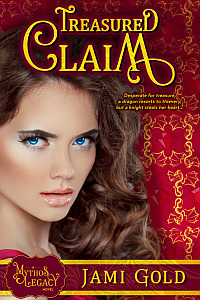
In Treasured Claim, my debut paranormal romance novel releasing next week, the paranormal being of the couple is the heroine. Not only is the hero a “mere” human, but Elaina—a shapeshifting dragon—is also physically stronger than the hero. In addition, she has attitude to spare, to the point that the strength of her voice helped me discover my author voice.
However, when I first started entering contests with the story, I received feedback that some found her unlikable. They didn’t like that she starts off the story as a jewel thief with a callous attitude.
The key to unlocking her character from a reader perspective was to show her vulnerability. In other words, I had to balance her strengths with her vulnerabilities.
- Strengths: Her physical strength alone shouldn’t define who she is. She has other admirable traits, such as being comfortable in her own skin and not letting others shame her. She also has a strength of will and character and makes the hard decisions because they’re the right thing to do.
- Vulnerabilities: There’s a reason she’s stealing jewels—she’s on the verge of death and needs them to stay alive. And yes, she’s flippant, but she also has a strong sense of right and wrong and is weak because she refuses to murder humans for their treasure (unlike other dragons). And to top it off, she’s on the run from her father, who’s trying to kill her.
A mix of strong admirable traits and vulnerabilities brought the character—and the story—up to the level it needed to be to win over readers. After making those changes, Treasured Claim won First Place in three contests and was a finalist in six other contests. *smile*
A Closer Look a Strong Heroes
In paranormal romance, for better or worse, the norm for that subgenre is often extreme alpha male/alpha-hole heroes. But I don't write alpha-holes, and some of my heroes have some downright beta traits (along with their alpha traits).
I don't want to write jerks. I don't want to read jerks. I want romances where the characters grow in a partnership based on respect that I can believe will last for the "ever after" part of the happy ending. That's just my preference.
Alpha Males vs. Alpha-Holes
Heroes can be dominant without being domineering. They can be protective without being controlling. And they can be confident without being overly arrogant.
To me, those positive traits, along with others like leadership, focus, decision making, and problem solving, are an alpha male. The term came from wolf packs, where the alpha male was simply the leader, not a jerk.
On the other hand, when I look at a domineering, controlling, arrogant male, I don't see a leader. I don't see an alpha male. I don't see a hero.
I see a poseur, a male who's so insecure that they put on an act to hide who they really are and who's so afraid that they need to control everything. Their jerky behavior is all about posturing and overcompensating for their weaknesses.
A couple of months ago, I shared a quote on Facebook:
“Confidence isn’t walking into a room and thinking you’re better than everyone. It’s walking in not having to compare yourself to anyone at all. — Unknown”
To me, the real alpha heroes are the ones so confident they're not afraid of revealing their vulnerabilities. The ones so confident they can be nice and not fear that will erase their assertiveness or power. In other words, the ones we might actually like if we met them in real life. *smile*
Case Study: Alex in Treasured Claim
In many ways, Alex is the typical romance hero: He’s a billionaire business guy who’s used to getting what he wants. But through his father, he also grew up with first-hand insight into the dark side of what domineering, controlling alpha-holes are like in real life.
Unfortunately (for him), while Elaina intrigues Alex, she also brings out his dominating side more than anyone else. With her, he’s more aggressive, more controlling, and more disrespectful, and he doesn’t like it.
His struggle was fun for me to write because I got to play with the expectations of the genre in a way that fits the character. And just like with my heroine, I worked to give him a mix of strengths and vulnerabilities:
- Strengths: He excels with the (good) alpha male traits of focus, decision making, and problem solving. Beyond being a gorgeous billionaire, he’s admirable (and relatable) for his desire to rise above his history and for his goal to build a healthy partnership with Elaina. He just happens to make a lot of mistakes along the way. *smile*
- Vulnerabilities: At the same time, he’s terrified of turning out like his father, and he worries about how much he seems to be sliding in that direction. He’s also willing to admit to himself how much he’s obsessed with Elaina. He doesn’t play the stand-off-ish game with her, and that means she knows exactly how to hurt him.
In other words, unlike the stereotypical alpha-hole, he consciously tries to be kind (he throws a charity fundraiser for a cause close to his heart, and he treats his employees exceptionally well), and he also allows himself to show emotions. He’s not implacable or untouchable. He’s relatable.
Again, I'm not saying that no heroes should ever be arrogant, controlling, domineering playboys or that no heroines should be butt-kicking Ripleys. But I reject the idea that characters must conform to narrow stereotypes to be considered "strong."
I want to read stories with more diverse characters than that. That's why I'm not going to change the kinds of characters I write. I'll continue writing both heroes and heroines who are strong and vulnerable. And I'll just hope that others are looking for the same. *smile*
Do you struggle with writing characters who are strong yet likable? Have you ever experienced pushback for making your characters vulnerable? Do you think characters can be strong and vulnerable? How do you think genre affects that possibility? How would you define a strong character? What heroes or heroines have you liked that follow or break the stereotypes?
* * * * * *
About Treasured Claim:
A shapeshifting dragon on the verge of starvation…
For Elaina Drake, sparkling jewels aren’t a frivolous matter. Without more treasure for her hoard, she’ll starve. On the run from her murderous father, she’s desperate enough to steal—er, acquire.
A modern-day knight seeking redemption…
Disgusted by his father’s immorality, Alexander Wyatt, Chicago’s biggest corporate titan, is determined to be a man of honor. Yet the theft of a necklace, stolen by an exotic beauty at his latest fundraiser, threatens to destroy all his charitable work.
A predator made prey…
Passion ignites between thief and philanthropist, sparking a game of temptation where jewelry is the prize. But when Elaina’s exposure jeopardizes Alex’s life, she must choose: run again to evade her father—or risk both their lives for love.
Available at Amazon, iTunes, B&N, and Kobo, or go to Jami’s website for more information.
* * * * * *
About Jami

After triggering the vampire/werewolf feud with an errant typo, Jami Gold moved to Arizona and decided to become a writer, where she could put her talent for making up stuff to good use. Fortunately, her muse, an arrogant male who delights in making her sound as insane as possible, rewards her with unique and rich story ideas.
Fueled by chocolate, she writes paranormal romance and urban fantasy tales that range from dark to humorous, but one thing remains the same: Normal need not apply. Just ask her family—and zombie cat.
Find Jami at her blog, Twitter, Facebook, Pinterest, and Goodreads.