
What I Lost When I Stopped Telling the Truth
By Jaime Buckley
I want to tell you something I'm not proud of.
There was a point in my writing career where things were actually working. Books selling. An audience growing. A community of readers who showed up because they genuinely loved the story I was telling.
And I threw it away.
Not in one dramatic moment. Not because of a single bad decision. I threw it away slowly, quietly, one small compromise at a time...until the thing I was writing had almost nothing to do with why I started.
It took me years to understand what happened. Now I think it's one of the most important things a writer can know before they build an audience.
Because if you build one the wrong way, losing it is the best thing that can happen to you.
When the Money Showed Up
Let me back up.
I started writing because I had a story that wouldn't leave me alone.
A character.
A world.
Something I believed kids needed to read.
I wasn't chasing a career.
I wasn't thinking about platforms or algorithms or revenue streams.
I was just trying to get this thing out of my head and into the world.
And it worked.
Readers found me. Tens of thousands of them. I still don't entirely know how. I hadn't done anything clever. I just showed up and told the truth about a boy trying to figure out who he was...and apparently, a lot of people needed that story.
Then I started paying attention to what sold.
Not in an obvious way. I didn't sit down and say, "I'm going to sell out now." That's not how it happens.
It's quieter than that.
You notice what gets the most response. You nudge the next piece in that direction. You make decisions based on what the market seems to want, instead of what the story actually needs.
Before long...it wasn't my story anymore.
The Slow Drift
The hardest part about this kind of drift is that every individual decision seems reasonable.
Bring in a real person as a character...because it'll help sell more copies. Shift the tone here...because readers responded better to this. Change the arc there...because this is what the genre expects.
Each one makes sense in isolation.
Taken together, they add up to a betrayal.
Not of your readers.
Of yourself.
And your readers can feel it, even when they can't name it.
The comments thin out.
The energy shifts.
People who loved your early work start to drift away...and you can't figure out why, because you've been working harder than ever.
Here's why: they came for you. The real you. The honest, unpolished, slightly-weird-and-entirely-genuine you.
The moment you started optimizing, you started disappearing.
I'd sold around 24,000 copies of my first novel. It stayed in the top 20 of its category on Amazon for over three years.
Then I stopped telling the truth.
...and everything started to fall apart.
The Moment It Broke
I won't pretend I saw it coming.
I didn't.
A single person came into my life and told me I couldn't write.
He was calm about it.
Polite, even.
And I believed him.
Weeks later I still couldn't take a full breath without pressure on my chest.
It still hurts to say this out loud…but I pulled everything I'd written offline. Books. Blog posts. Short stories. A decade of work...gone. Because one man's opinion confirmed the fear I'd been carrying for years.
Here's what I know now that I didn't know then.
I was already weakened.
Let me say this again, and listen carefully:
I had already done the damage to myself, slowly, over time.
The slow drift away from truth had left me hollow. I didn't have anything solid to stand on, because I'd spent years building on sand. Chasing what sold, what performed, what pleased...instead of what was real.
The real, original story I'd planned back in 1990.
When you write from truth, criticism lands differently. Sure, it might sting…but it doesn't shatter you, because you know what you made is real. You were there. You put something honest into the world.
When you write for performance...one bad review can take the whole thing down. Because deep down, you already knew it wasn't quite true.
What Truth Actually Costs
Here's the thing nobody tells you about writing honestly.
It's slower.
You can't just produce content. You have to sit with things. You have to be willing to write the part that makes you uncomfortable, not just the part that makes you look good. You have to trust that the reader will meet you there.
That takes patience. And it takes a platform that rewards depth over volume.
That's why Substack changed things for me.
Not because it's magic. Not because it solved the drift problem automatically. But because the model itself asks you to build a direct relationship with real readers who chose to show up for you specifically.
Not an algorithm.
Not a trending topic.
You.
That kind of accountability is uncomfortable...and it's exactly what I needed. It's harder to drift into performance when the person reading your work knows your name and pays for a subscription because they trust your voice.
It keeps you honest.
Start With the True Thing
If you're building a writing practice right now...or trying to rebuild one...here's the only advice that actually helped me.
Start with the true thing.
That's it.
Not the marketable thing.
Not the thing you think people want.
Not the version of you that's been sanded down and optimized for engagement.
The thing that's been sitting in you, a little uncomfortable, that you haven't said yet because you weren't sure anyone needed to hear it.
That's the one.
Write that. Publish that.
Let the readers who need it find it.
The audience you build from that place is durable. They're not there for the trend or the topic or the packaging. They're there because you told them something true...and they recognized themselves in it.
That's the only kind of audience worth having.
The true thing is waiting to be written.
What is your one true thing?
* * * * * *
If you want help building your audience, that's exactly what we work on inside Substack for Authors. How to set up your publication the right way, so you can find your true voice, build the right audience, and create a writing practice that doesn't ask you to disappear in the process.
Come find us.
About Jaime
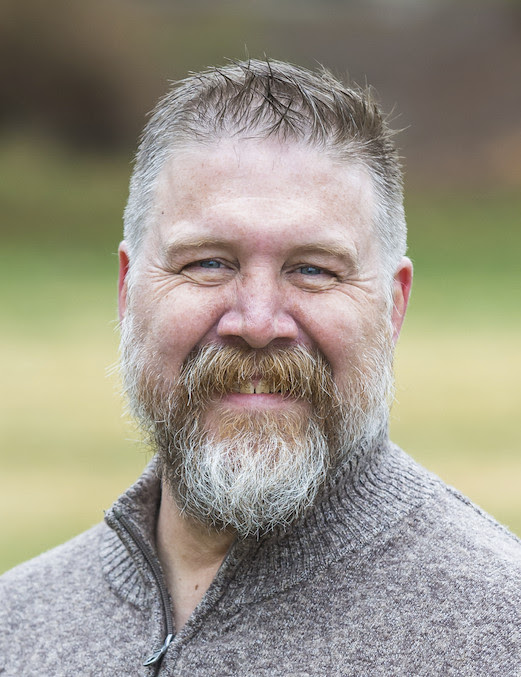
Jaime Buckley is the author of the Chronicles of a Hero series and the founder of LifeofFiction.com on Substack. He teaches writers how to build a sustainable publishing practice at JaimeBuckley.com and through the online course Substack for Authors.
Featured image purchased from DepositPhotos.
Leave a Reply
58 comments on “What I Lost When I Stopped Telling the Truth”
Tagged as:
Subscribe to WITS



Recent Posts
- The Mirror Is Not Your Friend
- How to Write Powerful Scenes that Engage Your Readers
- What Does Your Swag Say?
- Don’t Just Sit There. Do Something with Dialogue Beats!
- Writing Without Following the Rules Too Closely
Thank you, Jaime, for this excellent post. It puts me in mind of Hemingway's "All you have to do is write one true sentence.”
I pulled a quote from your post for future use as a Quote of the Day in TNDJ ("When you write from the truth ... into the world"), a blog about writing for serious writers on Substack. You can find it [at]thenewdailyjournal.
I have a feeling you might like today's post.
Hi Jaime. I've been taking a break from writing because I'm tired of all the work needed to be a writer in today's world. I've started second guessing what I write. What does the reader want from me? How do I get reader's interested in what I have to say? So, I ask this question sincerely, because I really want to know the answer. What are some examples of a "One true thing?" I'd like to explore it further as it applies to me. I guess I'm looking for my reason to return to my writing.
Gillian, I think it boils down to "write for yourself." If you are true to yourself and post what you write on a public platform, readers interested in your perspective will find you. It won't happen fast, but it will happen. (In the writing world, patience is a virtue. In every world, for that matter ...)
I am fortunate, or unfortunate, to have a Muse that pesters me if I don't write what it wants. I've learned not to ignore it. What I have written and what I have published I'm happy with, although I have not become a best-seller by any stretch. I'm more interested in my writing projects than I am in what someone else thinks of them. It's nice to get positive comments, and I gain so much from the comments of my critique group and beta readers.
But I will never let someone else dictate to me what I should or shouldn't write, what I'm allowed or not allowed to write. Who died and made them God? I write what I'm passionate about, regardless of how long it takes for the story to "percolate."
If something is poking at you from inside you, Gillian, you don't need a reason to return to writing, except perhaps this: Write because you must, because it is an inherent part of your nature. That's as good a reason as any, and better than most.
Great advice!
I am the same way. I may never be a famous writer, but I like what I write and I enjoy writing it.
That's a healthier definition of success than fame, Gina.
If you enjoy the work, you're growing as a writer.
If your stories are honest, you're already building something worthwhile.
Everything else...sales, recognition, popularity...is outside our control.
Keep protecting that joy.
In my experience, it's one of the most valuable things a writer has.
Sally, I really appreciate this, especially about not letting someone else dictate what you're allowed to write.
Agree 104.27%
The only thing I'd add is a small distinction.
I don't think it's just about writing for ourselves. If that were true, we'd never have to publish.
I think it's about writing from a place that's honest with ourselves first, and then offering that honestly to others.
That's different than writing to satisfy the market or to earn approval.
When that happens, readers don't just consume the story...they connect with it.
I also smiled at your line about the Muse pestering you. I know that feeling well.
Some stories are remarkably patient...but they also have a way of refusing to leave us alone until we've finally told them.
Thank you for adding a thoughtful perspective to the conversation.
Gillian, I think it's where a lot of writers get stuck.
When I say "the one true thing," I don't mean a genre or a plot. I mean the thing you can't seem to let go of.
For me, it was a boy trying to discover who he was in a world that kept telling him who he should be.
Everything else in my stories grows out of that.
For someone else, it might be:
• Love is worth risking everything for.
• Forgiveness is harder than revenge—but more powerful.
• Broken people can still become heroes.
• Family isn't always who you're born to.
If you read those again, you'll notice they aren't marketing hooks...
They're convictions.
So instead of asking, "What do readers want?" try asking, "What truth keeps showing up in my stories, whether I invite it or not?"
If you look back over everything you've written, I suspect you'll find a thread that's been there all along.
Follow that thread.
That's where your voice lives.
I have a feeling it's also where you'll find your way back to writing.
Harvey, thank you.
That means a great deal coming from someone who's spent so much time thinking deeply about the craft of writing.
I love that quote. Don't know much of Hemingway. I'm not a very 'cultured' writer...I just do my thing.
It feels like one of those simple truths that takes a lifetime to actually understand.
I think I spent years trying to write good sentences when what I really needed was the courage to write a true one.
And thank you for sharing a quote from the article with your readers. I'm genuinely honored by that.
I'll make a point of stopping by to read today's post. I'm always interested in hearing how other writers wrestle with this strange, wonderful calling.
Thanks again for taking the time to encourage me.
No worries at all, and you're welcome. I'm not so "cultured" a writer either. I just stumbled on some Hemingway quotes after reading and learning so much from his fiction.
I also recommend Lifeofwriting and Jaimebuckley (both dot com) to my readers. You have a great deal to offer, and from what I've seen it's all valuable.
This is a great commentary on what I often see today. I think it's sad. I definitely cannot write well if my heart isn't in it.
I may not sell a lot of books, but I write what I want to read (it's time travel with a heart, by the way) and that works fine for me. This way I enjoy writing, and take a break from it when I'm not having fun.
Gina, I love your philosophy.
I think that's a healthier compass than chasing whatever happens to be selling this month.
And "time travel with a heart" immediately caught my attention.
That's the kind of description that tells me you're writing from something genuine instead of trying to fit a mold.
I also smiled when you said you take a break when you're not having fun. We sometimes forget that joy is part of the creative process.
Not every writing day is magical, of course, BUT if we lose sight of WHY we fell in love with storytelling in the first place, it's worth stopping long enough to find it again.
Very smart. Thank you for sharing that.
I hope you keep writing the stories you want to read, because those are usually the ones someone else has been quietly hoping to find.
"Not every writing day is magical, of course, BUT if we lose sight of WHY we fell in love with storytelling in the first place, it's worth stopping long enough to find it again."
This is exactly where I've been lately. I just started picking up my writing again after a several months hiatus. The pressure just got to be too much, and your post helped me figure out where that pressure is coming from and how I need to respond to it.
Dawn,
I'm really glad the article helped you put a name to what you've been feeling.
Once we recognize where that pressure is coming from, it loses a lot of its power.
Welcome back to your stories.
Don't worry about catching up or making up for lost time. Just enjoy being with your characters again.
They'll remind you of the WHY with storytelling.
Jaime, this is a brave sharing and something we all need to embrace, not only as writers, but as people.
It may sound narcissistic, but my one true thing is me. And if I do not attend to that first, anyone who follows will have been mislead in some way. I prefer that not to happen. 🙂
Again, your story here is important. Thank you for sharing.
Jennifer, I don't think that sounds narcissistic at all.
In fact, I think it's the opposite.
If we don't knowWHO WE ARE...or if we're constantly editing ourselves to fit someone else's expectations...we end up offering people a version of us that isn't real.
That doesn't help ANYone.
One of the hardest lessons I'm learning is that authenticity isn't about drawing attention to ourselves...
I'm starting to believe that it's about removing everything that keeps people from seeing the truth.
Especially when that truth might be painful.
Does that make sense?
(Sometimes replies to comments sound SO much better in my own brain...LOL)
Thank you for seeing the heart behind what I wrote. And thank you for adding your own perspective.
These conversations matter far beyond writing.
They touch how we choose to live. ❤️
Wow. That's terrifyingly honest. Thank you.
Thank you, Moya. ❤️
It was a little terrifying to write.
There were moments I almost softened parts of it or left them out entirely. But then I realized that would have been repeating the very mistake I was writing about.
If being this honest helps even ONE writer avoid the detour I took, then sharing it was worth every uncomfortable word.
Trust me...don't go down that road.
Firstly, congratulations on actually "making it" to start with. You are way ahead of the game. The realization about telling the truth and keeping the reason for writing to the forefront is imperative. Thank you for sharing!
Thank you, Jan.
Appreciate that.
Looking back, I realize that "making it" isn't a destination so much as a season.
I was incredibly grateful for that success, but I also learned that success by itself doesn't keep you grounded.
In some ways, it can amplify the temptation to chase what worked instead of staying faithful to why you started.
That's the lesson I wish someone had sat me down and shared with me years ago.
Gratefully I have a supportive family and friends who continued to encourage me, and I picked myself back up in 2023. Moved all my work to Substack.
Last week I hit chapter 100 in my serial series. In two weeks, that will be book 7 complete in my main series, and a total of 11 books published in three years.
Was able to finally share with my readers the new podcast series launching soon, with 104 weeks already written and edited...short stories from my fictional world.
Remembering my WHY put me back on course, with a fire in my belly.
I'm delighted to say that I'm doing better than ever. =)
Thank you for reading, Jan...and for taking the time.
All we have is our own truths. Everything else slips through our fingers like dust. We may be able to clutch some and even use it, but it won't mix with water to make the clay we need.
My YA in progress is based on a story I started telling myself in high school. I do not need to write it. I have never needed to write. I need the story. Writing it just gives me a way to share it with the world in case someone else also needs it. Writing it has also changed it. For myself, I do not have to worry about consistency (so what if I age someone up like an 80s soap opera when the story is only for me). I have to be very careful that any changes represent the truth the story needs to be whole in writing. Sometimes it can be very hard to cut the darlings an be honest with ourselves or to just put the characters through hell so they can grow (I love them so). I am 57 years old and I am still telling their stories to myself.
Debbie, that resonates with me deeply.
You may not know this about me, but 100% of my stories come from a desire to provide good stories for my own children.
Wendell and Chuck and Dax were simple 'episodes' I jotted down on scraps of paper, then performed them at night, often by candlelight. Every night those stories grew. My kids had questions...so I answered them.
They had struggles, so I helped them solve them through those same stories.
...that was over 30 years ago.
I think that's where stories begin...not because we HAVE to write them, but because they REFUSE TO LET GO of us. They've become part of who we are, and over time they begin shaping US as much as we shape THEM.
I smiled when you admitted you're still telling those characters' stories after all these years.
Uhhhhh,...ditto.
To me, that's not a sign of being unable to let go...it's a sign that you've found something worth staying faithful to! Some stories take decades to become what they were always meant to be.
And you're absolutely right about the hard part: making the changes the story needs instead of the changes we want. Loving our characters sometimes means letting them suffer enough to become who they were created to be.
Just ask Wendell.
...or, maybe you shouldn't.
(He needs to stay focused.)
Thank you for sharing something so personal.
I have a feeling those characters have been very patient with you...and maybe you've been just as patient with them.
KEEP telling their story until it says everything it came to say.
"Loving our characters sometimes means letting them suffer enough to become who they were created to be."
That's so perfect, and I'd add, that writing them HONESTLY honors their struggle and who they were, are, and become. No matter how hard it is to write it sometimes.
Our job isn't to protect our characters from hardship...it's to walk with them through it truthfully.
If we soften every blow because we love them, we may also rob them of the very transformation they were created for.
And somehow, readers know the difference.
They can tell when a character has earned who they've become.
We are, all of us, writers and characters, constantly becoming after all. Life is change.
Excellent post. Saving and sharing. It helped me realize I can do this and it takes time.
Winona Bennett Cross
Thank you, Winona. That means a lot. ❤️
Yes—you can do this. Give yourself permission to take the time your story needs. The readers who are meant to find it will appreciate that you did.
Why does this whole thing look and sound like AI-written?
That's actually an interesting question, Lanny.
Let me ask one in return: what specifically made it feel AI-written to you?
Was it the pacing? The structure? The vulnerability?
I'm genuinely curious.
Here's the irony, though:
AI learned to write by reading millions of words written by humans.
So maybe the better question isn't, "Why does this sound like AI?" but "Why does AI sound like this?"
Every sentence in this article came from my own experience...the successes, the mistakes, the embarrassment of admitting where I drifted, and the lessons it took years to learn.
If it feels polished, that's because I've been writing professionally for decades. If it feels personal, that's because it is.
I'd much rather talk about the ideas in the article than whether a machine can imitate a style. The real question is: did anything in it ring true for you?
That's the conversation I'm most interested in having.
Absolutely spot-on. And nothing in your articles 'felt' fabricated and fake to me.
This is a much more useful conversation than if a machine touched it. I agree, Jaime!
What an honest revelation. A revelation that no doubt is true of many writers.
I have a couple true things, but the main one is that I stopped doing paid ads. All the ads in the world aren't anywhere as powerful as the readers themselves and their word-of-mouth proclamations. Eventually, the readers will find me. Until then, I keeping writing and build my backlist.
Diana, I think that's a wonderful perspective...and it's one of my favorite subjects!
Word of mouth has always been the most meaningful kind of recommendation because it can't be bought.
It has to be earned.
When a reader tells a friend, "You need to read this," it provides a level of trust no ad campaign can touch.
In my company, we call it 'Excitable Value'.
We strive to create such an immersive experience that readers can't wait to share with others. If it doesn't provide that level of response, it's not ready yet.
Also, what you said about building your backlist?
Spot on.
Every book is another door for a reader to walk through. Some may discover your latest work first, while others may stumble across something you wrote years ago.
Stories have a funny way of finding people when they're ready for them.
TIP: Make sure you create multiple 'on ramps' to help them find your stories.
Thank you for sharing your "true thing." I think staying focused on the work itself, rather than constantly trying to force the outcome, is a healthier path
Not just for writers, but for the stories we tell.
This really spoke to me. I am not in any way shape or form as successful as you are, never will be, but I have found I like my "voice" and the way I present my characters. Having fun is a huge part (even giggling out loud) and know if I'm getting bogged down, research is generally the way out. Your post is even more relevant since - and this is only my opinion - I wonder why some of the most successful authors keep churning out book after book in a series when perhaps they shouldn't have. Of course, when they're offered those million $$$ advances, well, enough said.
Vicki, first, I'd gently push back on the comparison. 😊
I don't actually measure success by book sales anymore, and I'm not sure I ever should have.
These days, success looks a lot more like having the freedom to spend time with my family, being able to keep telling stories I believe in, and having enough for our needs. With a family of fifteen, "enough" is a pretty meaningful benchmark.
I wouldn't trade that for a bigger royalty check.
I also smiled when you mentioned giggling at your own characters. I think that's a wonderful sign that you're still connected to the story (and I do that myself...often).
When our characters surprise us or make us laugh, they're still alive.
As for long-running series...I try to give authors the benefit of the doubt.
Sometimes a story really isn't finished yet. Other times, maybe outside pressures start steering the ship. It's hard to know from the outside. I suppose the readers eventually decide whether the story still has somewhere meaningful to go.
Thank you for sharing your thoughts.
I especially love that you're enjoying your own voice! That's a rarer gift than many writers realize, and it's worth protecting.
Thank you, Jaime, for reinforcing my philosophy about the book I'm working on. These paragraphs in particular confirmed it for me:
"It's slower. You can't just produce content. You have to sit with things. You have to be willing to write the part that makes you uncomfortable, not just the part that makes you look good. You have to trust that the reader will meet you there. That takes patience."
I realized last night that it might take me another full year to complete this project, which has already taken 2.5 years. There are scenes coming up that are going to be very difficult to write, but there are things that need to be said that I can't compromise. It's military space fantasy with a purpose, the final volume in a series, and all the previous books point to this conclusion.
Thank you again for this wisdom.
I don't hear discouragement, Diann,...I hear conviction!
If the story is asking for another year, then maybe another year is exactly what it needs.
That's not the answer our impatient side wants to hear, especially after already investing 2½ years (good for you, BTW...). But if the previous books have all been leading to this conclusion, then the ending DESERVES the time it needs to become the truth of the story.
...not just the "end" of the manuscript.
"There are things that need to be said that I can't compromise."
That's it, right there. Hold onto that. That's your compass. Those are the moments readers remember years after they've forgotten the plot.
I'm cheering for you.
Take the time.
Write the difficult scenes.
TRUST your readers to walk through them with you.
If they're the right readers, they will.
And I have a feeling they'll be grateful that you didn't rush the ending just to get to the finish line.
Wishing you all the success in the world, Diann!!
Thank you. I actually began this series shortly after retiring from the Air Force in 2009, so the whole series has been 18 years in the writing. David Farland was my mentor then.
I miss David very much.
So do I.
I do think some stories just fly, but others need time to percolate, so to speak. I've had a story on the back burner for a while now. Couldn't figure out what the holdup was, just knew it wasn't time yet to work on it. One of the missing pieces suddenly and unexpectedly fell into place for me just yesterday. The pieces I need aren't all there yet, but I realized this morning as I pondered it that particular story will come when it's time. Until then, there are others needing to be revealed.
Love this.
I've learned not to force a story that's still becoming. Sometimes what feels like writer's block (which, I'm sorry, but that's not a thing...) is actually the story asking for patience.
That missing piece you found yesterday is a perfect example.
You couldn't have manufactured it...you had to live long enough to discover it.
I think stories have their own timing.
While one is quietly percolating, another is ready to be told. Trusting that process has become one of the hardest...AND most rewarding...lessons I've learned as a writer.
AFTER worldbuilding and testing.
That's #1 for me.
Keep listening.
Your story will let you know when it's ready.
My one true thing is Pride's Children, and it hasn't deviated from what I wanted since 2000, when the story was vouchsafed to me and fell in my lap as a single idea - what if, in a world where things like illness are distributed unevenly, an unknown competition went to what, to all appearances, was the weaker competitor.
Except that she wasn't - morally, she stood on solid ground and didn't give in, while her invisible competitor had everything and used it to further her own aims because she could.
It reminded me of The Book of Job in the Old Testament: Job refused to curse his luck even though he was tested severely - because he hewed to what was right.
It still does. I'm working on the last third of the story, Pride's Children: LIMBO, and making those moral distinctions as I go. The first two parts of the story were well received, though not in the tens of thousands you enjoyed. How do I get that?
Alicia,
You've been faithful to the same story for over twenty-five years. That tells me you're serving the story instead of asking it to serve you.
I have a lot of respect for that.
As for your question...I wish I had a formula for tens of thousands of readers, but I don't. 😊
I've been very blessed in all I've done. One thing most writers hate that I tell them is this:
No one can guarantee your success. What you CAN do is better the odds that you WILL succeed, by showing up, planting seeds, and the biggest factor of all...DON'T SUCK.
I know, I know,...not the wisest of advice, but that's what I live by. This is a long game, and none of it appeared overnight. I've made a living with consistent trickles.
When you know how to create a consistent trickle, all you have to do is create more trickles, until you have a stream, then a river...
Readers who are meant for your story are far more valuable than a large audience that never really connects with it. My mistake was thinking growth was the goal.
It isn't.
Faithfulness is.
Ironically, I think that's often what attracts readers in the first place.
So I'd encourage you to finish LIMBO the way only you can.
Let it say what it came to say.
Build relationships with readers one at a time.
If the audience grows, wonderful.
If it grows slowly, that's wonderful too.
Because at the end of the day, the only thing we really control is whether we told the truth.
Everything else is a gift.
I'm telling the truth - nothing else is worth the effort it has cost to learn to write well, and tackle each challenge until it is overcome.
God willing, I'll finish. But it has been unbelievably harder than I thought.
Thanks for the advice - if it isn't read, it isn't worth that effort.
...and yet, no one CAN read it, unless we make the effort.
It's funny, Alicia, but your reply made me think of Peggy Rowe, Mike Rowe's (Dirty Jobs) mom.
I've done two book covers for her, and I was just hired to help with a third.
Here's a woman who wrote every day for 60+ years and never had so much as a nibble from agents or publishers. Yet faithfully, every day, she wrote.
Then she wrote one story, that made her son laugh so hard, he posted it on Facebook, and it gets...I think it was over three million reads? (I know I got that wrong, but it was a huge number).
Then she writes a book, at 80....NYTimes Bestseller.
Writes another at 82...NYTimes Bestseller
Writes another at 84...NYTimes Bestseller
Writes another at 86...top seller, but gets drowned out by the Trump election media...
Now she's publishing her 5th book...
My point?
...you never know.
BUT, you always know what'll happen if you don't write it.
I LOVE Peggy Rowe's work. She's a hoot!
She's quite the inspiration.
The thing I love about working for the Rowe's and the Rowe's is that I get a case of hardback books to give to friends (win Peggy new readers, of course...)..
...and a couple years ago, Mike's crew sent me 4 bottles of his Knoble Whiskey for my birthday! LOL
I'm not a drinker, so they are gorgeous book ends in my office...
So I write - because if I don't, no one will know how the story ends, and I really like how it ends.
Now, if I just had a son like Mike Rowe...
I need one good solid break like that - but have to keep writing so I'll be ready when it happens.
Thanks for the encouragement.
Thank you for this! Not only are you describing what I've seen with so many authors I USED to read, but what I've been seeing in the internal pressure in myself. Instead of writing "to market" as the pressure says I should, though, my writing has just dropped way off. I've been struggling to figure out exactly what that pressure was and why it was hindering me, but I think you totally nailed it with this post! I enjoy writing the characters, stories, and themes that come to me. The moment I start feeling like I MUST please someone, the pressure starts. I just hadn't realized how much that was getting internalized instead of shrugged off. So time for me to take a deep breath and write what I love without allowing outside pressure to be a stumbling block.
Dawn, I think you just described the trap better than I did.
The pressure doesn't usually show up as someone standing over your shoulder.
It slowly becomes your own voice, and before long you're second-guessing every scene, wondering if it's "marketable" instead of asking whether it's true.
I don't think we should write to the market.
Yes, I realize that may not be a popular choice for some, but for myself, it's against my nature.
I think we should write what we genuinely love and let the market find us.
That path is slower, but I also believe it's more sustainable.
...and a lot more enjoyable IMHO.
I'm excited for you! Go spend time with those characters that first made you want to write.
They brought you this far for a reason.
I have a feeling they'll remind you why you started.
That's actually a sound idea - going back to spend time with the characters that first made me write. It's been a couple of years since I read any of my old work. Too "busy". I think you're right about that being a good place to restart.
😁
Jaime, the raw honesty and power in your post touched me deeply. For many years, I kept apologizing for taking "so long" to complete my series. But it was a story that I had to write and I had to share in case other people needed to hear that they could survive abuse and thrive. That despite it being painfully difficult and slow, they could make choices and learn to change their lives.
Telling those kinds of truths can be more than a little uncomfortable. A lot of people (writers included), can never face their own truths. It’s up to the people who _can_ face those things, who _can_ write from their truth to do so. I’m so glad you found your way back, Jaime. Your writing is beautiful. (BTW, I don’t apologize any longer. I learned that I cannot write as well as I’d like unless I write from that place of honesty.)
Thank you for sharing such a deeply personal story, Jaime. I was especially inspired by your reply to another commenter: "I hope you keep writing the stories you want to read, because those are usually the ones someone else has been quietly hoping to find." That sentiment has kept me going even though I've been struggling with my current project for some time. And that struggle has stemmed, I think, in large part because I have lost touch with the truth of this particular story - why I wanted to write it, why it matters to me. It's the third (and likely the last) of a series that I've been plugging away at for the past eight years, and burnout is certainly a factor, but these characters just aren't going to leave me alone until I finish telling their story. So, I have to find a way to do so, and do them justice.
Your article has given me much to consider as far as what the truth of this story is for me right now in my life, and how I might re-connect with it. Thank you for such an insightful post.
I understand what you're saying, but to be clear, Substack does have an algorithm and trending items, and while reader supported, those items are in play, especially for those who monetize.
Thank you so much for this article,
My WIP is a personal story explored fictitiously with a rawness and honesty I want to keep for future projects, exploring the themes I want to and not what trends ask for - and if anything, if I chased a trend, I'd end up hitting publish when the trend is dying out.
Wish me luck
This is so awesome, Jaime. This whole post is true as well as a difficult thing to share. Thank you for your courage!
Thanks for the kick in the pants, Jaime. Just what this bruised procrastinator needed. Yep. This writer who got bad feedback from a crit partner and sabotaged her self-belief.... and the belief others had in me. Months ago... maybe a year now. Many have shown belief and confidence in my writing/creativity.. course lecturers, peers and publishers. And I let it go because of one person giving out insensitive critique.
Well, now I arise! The hundreds of pages - most triple edited after peer crits and tutor feedback, are still here calling my name. Thank you.