
Storytelling Secrets: How to Write Authentic Fear

by Angela Ackerman
Fear is a universal emotion, something almost everyone experiences, and yet no two people respond to it in the exact same way. One person might rush toward danger, while another runs from it. A third shuts down, paralyzed, while a fourth attempts to smooth things over. Understanding why is the key to writing authentic fear.
Fear exists to alert us to potential harm. When a threat is perceived, it kicks off a survival response: stress hormones flood the body, heartrate increases, attention and the senses sharpen, and the body prepares to overcome, escape, endure, or deescalate through fight, flight, freeze, or fawn.
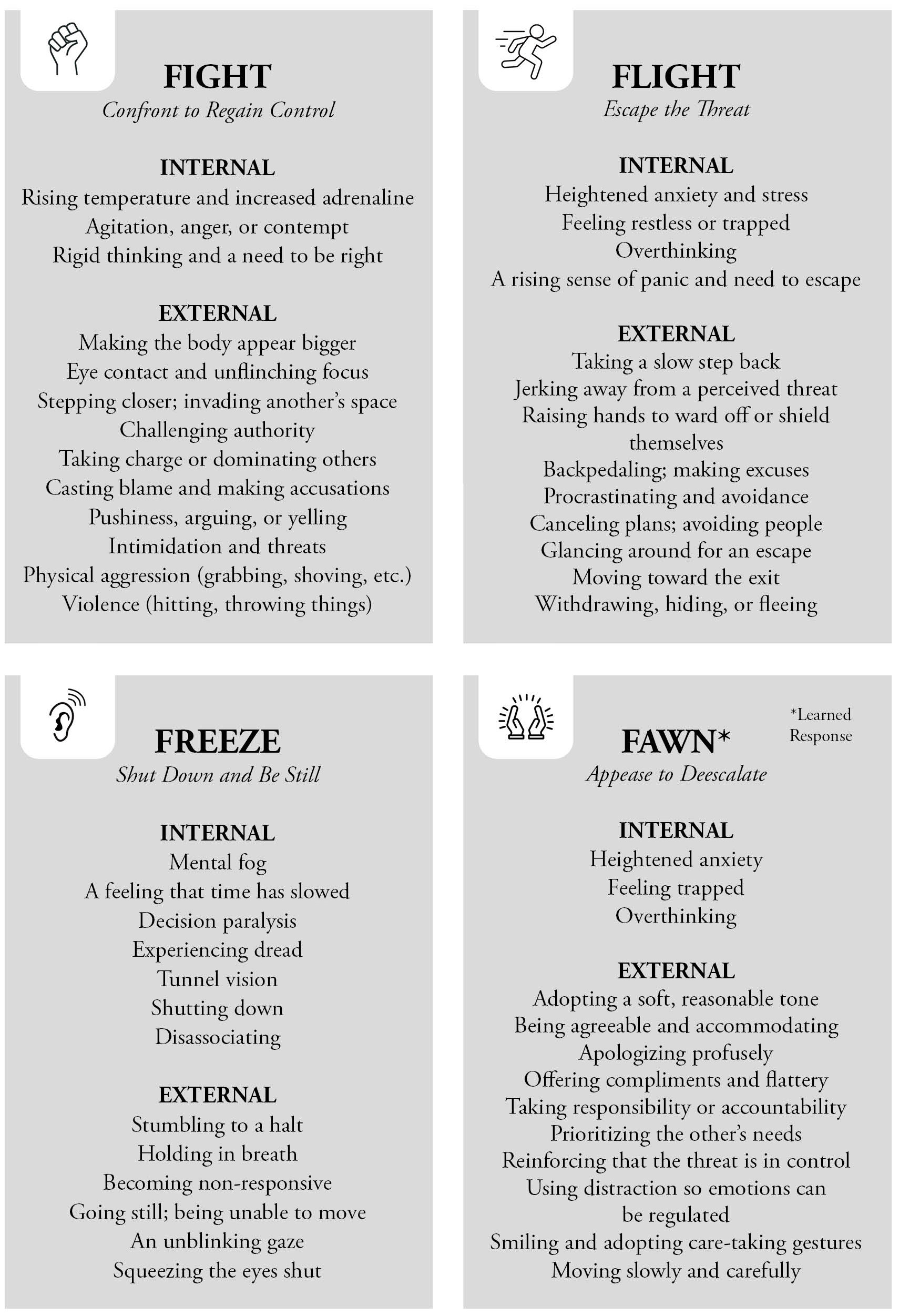
While everyone experiences this same biological chain of events, the survival response chosen—and the form it takes—is unique to the individual.
Why? Because fear is filtered through the many layers that make up a person—their personality, priorities, experiences, ways of coping, and more. As a result, no two fear responses will be exactly alike.
Personalizing your character’s responses to threatening situations not only elevates the scene, it also builds trust with readers. When a character reacts in ways that are true to who they are, readers instinctively invest more deeply in them and the story.
To make a fear response feel authentic, consider these factors:
Perceived Threat
Not everyone finds a situation threatening. Someone secure in their relationship won’t worry about their partner going on a girl’s trip, while a person with trust issues might. Even when danger is real, people don’t experience the same level of concern. So, to write believable fear, focus on how your character feels about the threat rather than the threat itself.
Questions to ask:
- In this situation, what feels dangerous to my character?
- Is this threat physical, emotional, relational, or does it target their identity/reputation?
- What specific fear is involved?
Risk and Urgency
Fear is about survival, so when the risk is great, characters choose the strategy that gives them the best chance of successfully handling a threat.This is why an alpha character used to battling things head on (fight), may freeze, flee, or fawn. When they realize a fight response will end badly, they reject it for one that helps them navigate the situation safely.
Questions to ask:
- Does my character have time to assess the situation, or must they respond immediately?
- What information do they have that they can act on?
- Is my character able to apply logic or are they in a state of panic?
- What happens if they choose the wrong strategy?
Personality and Tendency
A character’s primary traits influence how they think and behave. A decisive, courageous, and bold person will make choices and act differently from one who is cautious, analytical, and pessimistic.
Questions to ask:
- How does my character handle pressure?
- What personality attributes will help them navigate this crisis?
- What flaws will cause them to struggle in this situation?
- Are they more likely to take charge, observe, negotiate, or withdraw?
Priorities
Some things matter more than others. Whatever a character seeks to protect most is what’s at stake and will steer how they’ll respond when it’s threatened.
Questions to ask:
- What matters most to my character in this situation?
- What are they most afraid of losing?
- What’s important enough to sacrifice for?
Past Experiences
Life can be a painful teacher. Threats that remind a character of something they endured (especially an emotional wound) can cause fear to spike and erode their ability to cope. Desperation to avoid it happening again may affect their judgment and behavior.
Questions to ask:
- Has my character faced a situation like this before?
- What survival strategy worked (or didn’t) back then?
- How will lessons of the past influence their choices and behavior now?
Coping Mechanisms
Everyone has go-to methods of dealing with stress, both healthy and unhealthy. One character might seek advice; another might head straight to the bar. Coping mechanisms are a core part of a character’s psychological makeup, so knowing what they are helps you write authentic responses.
Questions to ask:
- How does my character deal with pressure?
- Do they have habits that intensify when stressed?
- What do they do when they feel overwhelmed?
Bringing It All Together
When you consider the perceived threat, what’s at stake, and who your character is, it becomes easier to write a response that feels authentic and believable. But there’s a lot more to how to show, not tell your character’s fear, so bookmark these for future reading:
- How Fear Affects Your Characters in Real Time
- 8+ Ways to Signal Fear to Readers
- 5 Ways to Take Advantage of Your Character’s Fears
- How Fear Shrinks Your Character’s World Over Time
- Fear Survival Response Sheet (Download)
And don’t forget to check out the Fear Thesaurus at One Stop for Writers® – it dives into 80+ deep fears that your character may be struggling with, and how to write about them.
Does your character tend to choose Fight, Flight, Freeze, or Fawn, and if so, why is that? Let me know in the comments!
About Angela:

Angela Ackerman is a story coach, international speaker, and co-author of the bestselling book, The Emotion Thesaurus: A Writer’s Guide to Character Expression, and its many sequels. Available in nine languages, her guides are sourced by US universities, recommended by agents and editors, and are used by novelists, screenwriters, and psychologists around the world. To date, this book collection has sold over a million copies.
Angela is also the co-founder of the popular site Writers Helping Writers®, as well as One Stop for Writers®, a portal to game-changing tools and resources that enable writers to craft powerful fiction. Find her on Facebook, Twitter, and Instagram.
Featured photo purchased from Depositphotos
Leave a Reply
20 comments on “Storytelling Secrets: How to Write Authentic Fear”
Tagged as:
Subscribe to WITS



Recent Posts
- Querying Is Not a Verdict on Your Book
- What Ten Years Did to My Publishing Process
- World Anvil: Make Readers Fall in Love With Your World
- The One Book Marketing Strategy I'd Use Again
- Common Publishing Scams to Watch Out For
On my way to purchase The Fear Thesaurus. It's the only one of your books I don't have.
Great article!
Ah, you are lovely, Sally! I hope it helps you a ton! Happy writing!
Sarah, not Sally - doh!
Sarah is the legal and writing name, Sally is what my friends call me. So, please call me Sally!
Okay whew - will do! 🙂
What a great reminder on a vital way to avoid "this happened, and then that happened." This article is one I will file in my "library" of resources - I can refer to it both in my own work and to my editing clients as they develop their stories.
Ah yes, definitely, that's a problem when it's just a staircase of events that tumble out one after the other. I'm so glad this one is helpful to you and will trigger ideas down the road. Woot!
My character does all four over the course of the book. Freezing is most common, but he can't stay frozen. He freezes, then instinct or assessment takes over.
And I think this is very realistic. People do whatever is the best course of action in the moment. Even in the Hunger Games, Katniss flees when Peeta and the Careers chase her up a tree, then she taunts Cale as he tries (and fails) to hit her with an arrow. Katniss is geared toward fight because that's always meant survival for her - taking charge. But when fleeing makes sense, that's what she does.
You make some very good points. One of the problems I struggle with is avoiding using internal descriptions that have become clichés. Of course, when one perceives danger, their heart speeds up, but it has become a cliché—because it is true—and has lost its impact.
I know what you mean, and this can happen when we stack on those viscerals. But this is why thoughts are so helpful (when we're in the character's perspective) ot their behavior and actions otherwise - all these things work together and we don't need to lean too heavily on those internal sensations. Less is often more when we find the perfect one to show that spike of fear. And fear, more than any other emotion, causes those internal sensations, and so we really should show something happening within because it is so true to real-life experience.
Excellent information, Angela! - I also have your emotion thesaurus book- love it. Thanks for sharing such important and comprehensive information! I'll check out the Fear Thesaurus.
Very glad this was helpful to you! I think fear really illustrates how we can (and should) personalize what happens to a character, as it results in their own decisions, actions, and behavior, which is exactly what readers want and expect, as it's true-to-life.
You had me at Secrets! 🙂
I was one of those who had your Fear Thesaurus on my shelf within the first week. I have a lot of emotional fear in my books. I feel like it's one of the most heroic things a character can overcome...plus it makes for a great story.
I can't agree more! Fear is so relatable - every reader has fear. Every reader knows some things trigger them and even hold them back. Every reader wishes they could overcome certain fears, too. Showing fear is a great way to pull readers into the character's perspective!
And thank you, Jenny! I hope this book is a help to you! <3
I'm positive it will be. Plus, we have a cool equation:
You & Becca + Me = Mad love and respect + Fun
<3 <3 <3 I wish we all lived closer!!
great post.
Thank you, Denise! Happy writing!
A wonderful and informative article, thank you, Angela. I have many of your books and find them invaluable in my writing. Fear is one I haven't seen, and I will definitely add it to my resource collection.