Writers in the Storm

A blog about writing

storm moving across a field
Why Writing Conferences Matter For Writers

by Penny C. Sansevieri

I’m a huge fan of author education, and there’s no better way to further your book marketing and publicity success than attending a writers’ conference. The connections you make at these events are tremendous.

With writers’ conferences finally returning to in-person, now is an excellent time to start planning for your next event. Virtual conferences were a great option, but in my opinion, there’s nothing like meeting other writers and industry professionals in person.

A word about goals...

Unfortunately, I find many authors attend writers' conferences for the wrong reasons. I’ve heard authors say things like, “I’m going to land an agent!” While it does happen that an author may find an agent at a writers’ conference, it’s rare and should not be your absolute goal.

What Should You Expect?

This really depends on the event. When you first come across an event, I recommend you review all the classes offered before deciding to commit. Some conferences focus only on craft, while others are more heavily marketing-focused, so it depends on the event itself.

Planning Considerations

Don’t get pulled in by some flashy headline if the speaker tracks and content aren’t appealing to you. I suggest finding at least four classes that you feel are worthwhile before registering. Of course, you’ll probably want to attend more sessions, but four is a good start. That’ll give you enough time to network, maybe take in an agent meeting or two (if that’s something you want to do), as well as attend keynotes and luncheon speakers.

If you’re attending an event just to meet an agent (or two), make sure that agents are attending the event who handle your genre. That can be a big disappointment if you base going to the event solely on finding an agent, only to discover that none of them work in your particular genre.

Types of Conferences

As I mentioned above, there are literally as many writers' conferences as there are genres (well, almost). There are romance-specific events, mystery and thriller events, and even writers' conferences geared to lawyers who write fiction- you’d be surprised how many attorneys we’ve worked with over the years who write fiction!

So, I always suggest digging through some events and maybe even consider attending events outside your genre. Let me explain.

Attending Outside Your Genre

I’ve spoken for Romance Writers of America multiple times, which always puts on a great conference. And though I write in non-fiction, I always find their classes helpful. I know a lot of authors who attend events outside of their genre, like fantasy authors who go to Thriller Fest and on and on. 

Though the sessions will be specific for a certain genre, you still can learn a lot from attending these events if the tracks seem appealing to you.

Finding the Right Conference for You

Google is a great place to start, but magazines like The Writer always have a monthly listing of events (and it’s pretty extensive). Also, many local writer's groups may be linked to events that appeal to you. Ask around, you may just find your new favorite event!

(See below for some of my recommendations.)

What Are Your Book Marketing and Publicity Goals?

A big piece of deciding on what kind of events to go to will depend on your goals. If you’re looking to sell your manuscript to a publisher, you’ll want an event with many agent appointments. But if education is your interest, you’ll want to identify what you want to learn and make sure the conference offers related sessions.

Do you need to get more versed in social media? Are you interested in getting more influencers to review your book? Want to know more about how to work the Amazon algorithm? Knowing what you’d like to learn will help you decide which writers’ conference to attend.

In-Person vs. Virtual Conferences

Some events offer a blend of in-person and virtual, though not all – and some have gone all virtual for the foreseeable future. So if attending virtually is more your thing, that’s definitely another option. Though I have to say, it’s such a great investment to participate in person.

Why you should always purchase conference recordings

Most conferences record sessions, and I always encourage authors to get a set of recordings. Why? You’re not going to be able to attend everything, even when you attend sessions in person. Also, you may hear of sessions that you didn’t get to attend after the event, so it’s always good to have recordings to listen to later!

Be Prepared!

Now that you’ve booked your writer's conference let’s get ready to make the most of it.

  • Join the conference Facebook group: This is a great way to start networking early and get to know some of the speakers, topics, and attendees.
  • Bring business cards: You don’t have to spend a lot of money creating these, but bring something professional looking that you can hand out.
  • Collect business cards: Also, note where you met the person on the back and briefly take down what you discussed.
  • Be prepared to talk about yourself: I know this is tricky for many authors. We live in our world, and networking is hard, but the better prepared you can be, the easier this will flow. Here are a few things you should be ready to talk about:
    • What kinds of books do you write? Get very clear on your genre; not knowing what genre you write in is the #1 way to look like an amateur.
    • Describe them in one brief sentence.
    • If you’re writing non-fiction, what are your qualifications?
  • Bring swag if you have it: Swag can be anything from bookmarks to character trading cards – swag is optional but if you have it, bring it.
  • Hit the bar: Some of the best conversations happen after the last session, so be sure and stop by the hotel bar and don’t be afraid to tee up a conversation or two while you’re there – just don’t, you know, partake too heavily. This is a work event, not a vacation.
  • Never sit alone: It’s easy to want to sit alone during lunch or dinner but don’t, and most events won’t let you anyway. You’ll be seated at a table of eight or ten, generally. Also, don’t sit with the same people all the time. Get to know as many other writers and speakers as you can.
  • Don’t hog a speaker's time: This is from personal experience. As a speaker attending events, I can tell you that being courteous to others who want to chat with a speaker, whether after a session or during a meal, will be greatly appreciated by not just the speaker but other writers who want a chance to ask some questions.

Final Thoughts

Writers’ Conferences can be a fantastic way to network with other authors, learn more about your craft, and dig into more book marketing and publicity. It can be both inspiring and career-building if done right! I hope to see you at one very soon.

Also, here’s a list of a few conferences I love:

What conferences are your favorites? What are some positives that have come from writing conferences you've attended? Please share down in the comments so we can all trade information.

About Penny

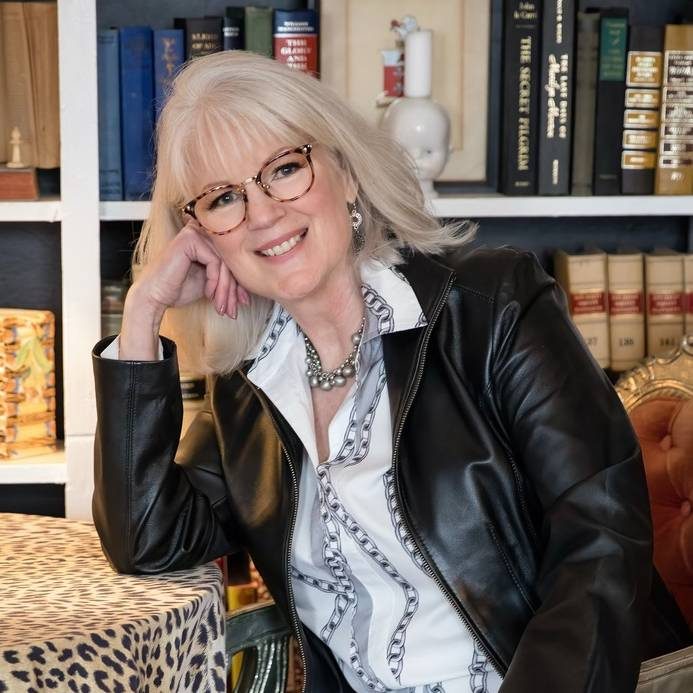
Penny C. Sansevieri, Founder and CEO of Author Marketing Experts, Inc., is a bestselling author and internationally recognized book marketing and media relations expert. She is an Adjunct Professor teaching Self-Publishing for NYU. She was named one of the top influencers of 2019 by New York Metropolitan Magazine. 

Her company is one of the leaders in the publishing industry and has developed some of the most innovative Amazon visibility campaigns as well offering national media pitching, online book marketing, author events, and other strategies designed to build the author/book visibility. 

She is the author of 18 books, including How to Sell Your Books by the Truckload on Amazon, Revise and Re-Release Your Book, 5-Minute Book Marketing for Authors, and From Book to Bestseller. She also hosts the top ranking podcast Book Marketing Tips and Author Success.

AME has had dozens of books on top bestseller lists, including those of the New York Times, USA Today, and Wall Street Journal. 

To learn more about Penny’s books or her promotional services, visit www.amarketingexpert.com.  

Read More
Welcome to the Future, Part 1

by Lisa Norman

Story time

I learned to type on a manual typewriter. In my advanced typing class at a small private school, the teacher promised that anyone who finished all the lessons in the book could work one-on-one with her to learn how to use the school's new computer. People often comment about how fast I type. That promise is why. I worked to get my speed up, and I finished every lesson in the book. I took the stack of completed work to the teacher and eagerly asked when I could start computer lessons. She looked me over and said, "That offer does not include you."

Why? I've never known for sure, but I suspect it had to do with my family's perceived status in the school. Looking back, there were probably other students whose parents had paid for that computer. I don't know.

I went home and told my parents that I wanted to go to public school.

Shockingly, they said yes, probably because it would save them a fortune.

One condition: I wanted computer lessons.

Problem: even in Silicon Valley, most high schools didn't have computers back then.

My parents searched and found a school that had one. We had to be a little sneaky and cross district lines, but the principal allowed it.

There were no official computer classes. If I wanted to learn computers, I would have to befriend Mr. Wilson, the chemistry teacher and the only one allowed to touch the computer.

Fine. I needed a science class anyway, so I signed up for chemistry.

Mr. Wilson was one of the best teachers in the United States. He even went to the White House to receive an award from the president. He was also terrifying and deliberately hard on students, especially mousy little girls who wanted him to take time after school to teach her computers! The Wilson didn't waste time with anyone who didn't really want to put their heart into learning.

Our first meeting went badly, ending with him telling me to get out and come back after doing some impossible task. I forget what it was, something like memorizing the chemistry book, probably.

After all the work to get into this school and into a class with this teacher, I found myself standing outside, wondering what had just happened.

No.

I'd put in too much work.

He was just a scary, mean man. I lived with one of those. I would just have to convince him I would not give up.

With a deep breath, I went back into the classroom. I walked up to his desk and told him I was willing to help after school or do whatever was needed to get those computer lessons, but that I'd gone through too much to get there and I would not accept a "no."

His grimace slowly morphed into a not-so-nice smile. "Well, I could use a putz frau. You know what that is?"

"No."

"It's German for ‘low maid.’ I need someone to clean up around here. Someone to put grades into my computer gradebook."

"I'll do it."

"It won't be easy."

"I'll do it."

Test tubes and technology

I washed a lot of lab equipment for those early lessons. He also made sure I learned chemistry. For two years, he taught me how to use a computer after school every day. I also learned that he was one of the kindest people you could imagine. He just didn't want people to know.

I got very fast at data entry after I accidentally deleted his gradebook during one of my lessons.

Even back then, I was good at beta testing and breaking computers.

Mr. Wilson believed that to be the best in his career, he needed to know not only how things had always been done but also how things might change in the future.

One day he let me borrow a teacher training magazine that contained a fictional account of the classroom of the future and the role computers would play. I still remember that vision. We're almost there.

While my college degree is in creative writing, I also have a minor in Anthropology and the equivalent of an Electrical Engineering and Computer Science minor. Why "equivalent?" Because my fancy Silicon Valley university would not offer that minor until the year after I graduated.

Why am I telling you this?

My life has been filled with technological change and upheaval, much like many of yours have been.

And we're just entering another wave of change.

If we're going to be at the top of our writing profession, we want to pay attention to trends and changes: both obvious ones and subtle ones.

In my next couple of posts, I'll be talking about changes in our industry.

Let's start with a big controversy in the art world right now. My goal is to leave you encouraged and hopeful.

Just like the music industry was ahead of writing in digital rights and downloads, the visual arts industry is ahead of us in artificial intelligence. We're not far behind, though.

The rise of Artificial Intelligence

https://www.amazon.com/Stargazer-Episode-Zero-Ring-Fire-ebook/dp/B0BCDN9X58/

As I write this, the #1 Science Fiction Graphic Novel on Amazon was illustrated by an AI named Midjourney. I've met the author, Adam Rodriguez, in an online forum, and I've worked with Midjourney. (The featured image on this post was generated by the Midjourney AI*.)

The author created this graphic novel as an experiment. Don't think this was easy. It wasn't. But imagine an author sitting around dreaming of a graphic novel. Let's say our author is fairly old school. They use words. It's overwhelming to find an artist, communicate the vision, and then create a working partnership. Let's not get into copyright and royalty splits. (Note: I'm NOT against authors and artists collaborating. I think it is necessary and valuable. My daughter is an artist. I support artists in any medium, whether more visual or more word-based.)

There's also been a huge controversy about the artist who won an art competition at the Colorado State Fair using the same Midjourney AI.

Before you become too enraged, please note that the artist spent over 80 hours creating those winning images.

Can AI-generated art BE art?

I say that it can, because these are artists who use words to bring their vision to life. More gifted visual artists are also embellishing the AI's initial offering with other digital and physical tools. They report AIs are helping them prototype and design new works faster than before and that their income is increasing because of this collaboration.

Let's work through some stages in the history of art for a moment:

  • artists use paint brushes
  • artists use other tools like air brushes
  • artists use digital tools like Adobe Illustrator
  • artists use AI tools like Midjourney

Where can you separate and draw a line and say that this is no longer art?

When an artist spends 80 hours crafting the prompt to generate a stunning piece of art that captures feeling and emotion, how is that not art?

AIs like Midjourney aren't putting artists out of business. They're just making art more accessible to those of us not gifted in that area. Think the difference between taking a photo with your phone vs an old-school camera with all of the lenses and manual settings.

Artists aren't going away, but many of them are beginning a very profitable relationship with their favorite AI.

But what does this have to do with story?

It applies in two ways: authors can use AI images to bring their words to life for their more visually inclined fans, and AI is coming to the area of the written word as well.

Adam Rodriguez is a writer. He used words to craft that graphic novel: both the words in the story and the words that created the images. It wasn't easy. But the result is fascinating and getting the appreciation it is due.

I'll be doing a future post about using an AI to generate words, but the short version is: don't worry, the AI won't be taking over your job as a writer. Much like using a word processor is easier than writing your novels by hand, the AI can make your first draft process easier. And much like using a word processor can be frustrating, don't expect working with an AI to be a smooth process.

I spent about 2 hours arguing with Midjourney to get the featured image for this post.

*Note: when using an AI, just like working with a human collaborator, check the licensing and copyrights. I'm not entirely happy with Midjourney's rights yet, but if you are on a paid version of the program (which I am), you own the rights to the images you create. Crediting Midjourney is still required. The paid version allows you commercial ownership of what you create. So yes, that means that I own the featured image at the top of this post. No one else may use it without my permission. Some people believe AI generated art is public domain. It is not.

What do you think? Would you ever consider collaborating with an AI?

About Lisa

head shot of smiling Lisa Norman

Lisa Norman's passion has been writing since she could hold a pencil. While that is a cliché, she is unique in that her first novel was written on gum wrappers. As a young woman, she learned to program and discovered she has a talent for helping people and computers learn to work together and play nice. When she's not playing with her daughter, writing, or designing for the web, she can be found wandering the local beaches.

Lisa writes as Deleyna Marr and is the owner of Deleyna's Dynamic Designs, a web development company focused on helping writers, and Heart Ally Books LLC, an indie publishing firm. She teaches for Lawson Writer's Academy.

Interested in learning more from Lisa? See her teaching schedule below.

Classes:

Top Image by Deleyna using MidJourney.

Read More
How Your Author Platform Helps You Do More Than Sell Books

by Colleen M. Story

If you’re like most writers, the word “platform” may inspire visions of soul-draining promotional activities that you wish you could pawn off on a full-time publicity department.

But the reality is that most of us are “stuck” tackling this marketing beast on our own.

I used to drag myself to the computer to do “platform-building” activities until I realized an author platform can do a lot more than help you sell books—though it can do that, too.

Below are five other reasons why you might want to adopt a new point of view when it comes to your platform, for the benefit of your books and your writing career as a whole.

What is an Author Platform?

Jane Friedman has a great definition on her blog, stating that an author platform is your “ability to sell books because of who you are or who you can reach.” In other words, your ability to attract readers.

If you’re a celebrity, you have a built-in platform as your fame gives you a ready-made audience. The rest of us have to find a way to create a readership.

That’s what you’re doing with your author platform—allowing people to get to know you and your reputation. The thing is you have to do this over and over again before your readers start to trust you.

Sometimes as writers we think that if we’ve written a good story—and there are a lot of really good stories published every year—that we deserve to have people read it. But you’ve got to put on your marketing hat and remember that to your customers out there, your book is a product just like that pair of shoes at Zappos or the new bicycle at your local bike shop.

Before readers will agree to part with their money in exchange for your work, they have to have a reason to trust that what they’ll be getting will be worth the money and the time it will take to read it.

You establish that trust through your author platform and through the repeated contacts you make with readers through that platform. But your platform can actually do a lot more for you than that.

5 Ways Your Author Platform Can Help Your Author Career

In addition to providing you with a way to make repeated memorable contacts with your potential readers, here are five other ways your platform works to help you establish a successful writing career.

1. An Author Platform Can Help You Establish Your Niche

You decide what your niche is, then build an author platform around it. Right?

Sometimes, but more often, the process goes something like this: you come up with a niche, then give it a try on your various platform outlets—your blog, your social media, your podcast, etc. Over time, you gather information on what’s working and what’s not.

On your blog, for example, you use Google Analytics or another similar program to determine what posts are getting the most attention. Then you start creating more posts around those topic areas.

Gradually, you find out more about what your audience needs and wants and you adjust and change until your niche not only fits you and your creativity, but it also serves your readers and regularly brings more of them your way.

2. An Author Platform Can Create New Opportunities

Before I built my author platform (which I consider to be a work in progress even now), the thought of speaking at writer’s conferences never even occurred to me. Now it’s a regular part of what I do.

It started when one of my platform connections invited me to speak on a topic I often cover on Writing and Wellness—productivity. The workshop went really well—I enjoyed it, and I got a lot of really good feedback on it. More invitations followed, and now I speak on a wide variety of topics that all fit within my niche.

Without my blog, which is the largest part of my platform, I never would have gotten this opportunity.

Yes, a blog takes a lot of work. You have to be consistent with it, and you probably won’t see results for a long time. But stay with it, carve out your niche, and you could be pleasantly surprised at what it might do for you and your career.

3. An Author Platform Can Take You in New Directions

If you’re a fiction writer, have you ever considered non-fiction? Have you thought about offering some online courses? Considered coaching services?

“But I just want to write!” you may say, and if so, that’s fine. If you want to build a career with your writing, though, it’s wise to consider what else you may be able to offer your readers and potential clients.

Most writers add other money-making activities to their resumes. Maybe you’re not sure what other services you might be able to offer.

This is where your platform can really help you. If you use it to find where you excel—what posts or videos your audience enjoys most, for instance—you’ll naturally evolve to the point of offering more of those types of products to your customers.

4. An Author Platform Can Encourage You When You Need It

Children’s writer Sandy Fussell talked about this in her Writing and Wellness feature. When health problems in her family kept her from writing, she was able to keep her head in the business because of her platform.

She had established a reputation as a welcome visitor and mentor in schools, so even though she had to put off writing her next story, she was still able to encourage her creative self by enjoying feedback from her fans.

“With family support,” she wrote, “I focused instead on social media, workshops and school visits, which kept my writer profile active. Kids and their teachers and librarians are particularly wonderful inspiration and motivation. They made me feel like I was still an author, even if there wasn’t a new book in sight. That helped me get through the tough times.”

5. An Author Platform Can Add Purpose to Your Writing Career

When we start out writing, we think mostly about the stories we want to share. But then we can come up against discouragement when the rejections pour in, the sales turn disappointing, or the recognition we hoped for fails to arrive.

When you start connecting with people through your platform, something special happens—your thinking expands. You want to help those people, or simply find more ways to be a positive presence in their lives. You realize that you have more to offer than you thought, and that you can truly benefit others with your efforts.

Your platform can give you this feeling if you are patient with it, and continue to put the time into it. Little by little, it will reveal more about where you belong as an artist, and what sort of rewarding career you may be able to fashion for yourself.

To Build An Author Platform, Consistency is Key

What is building an author platform? It’s making regular contact with readers. You can do that in all the following ways and more—the only limit is your imagination.

  • Blog
  • Website (one or more)
  • YouTube site
  • In-person events (workshops, readings)
  • Free materials you offer on your site
  • Newsletter
  • Reports
  • E-books
  • Social Media
  • Workshops and courses
  • Podcast
  • Guest posts
  • Charity events
  • Joint activities with other authors

NOTE: For more help on building an author platform that works for you, see Writer Get Noticed! Get your free chapters from the book here.

Colleen M. Story is a novelist, freelance writer, writing coach, and speaker with over 20 years in the creative writing industry. Her latest release, The Beached Ones, was released with CamCat Books on July 26, 2022. Her novel, Loreena’s Gift, was a Foreword Reviews’ INDIES Book of the Year Awards winner, among others.

Colleen has written three books to help writers succeed. Your Writing Matters was a bronze medal winner in the Reader Views Literary Awards (2022). Other award-winning titles include Writer Get Noticed! and Overwhelmed Writer Rescue. Get free chapters of these books here.

Find more at her author website (colleenmstory.com) or connect with her on Twitter (@colleen_m_story) and YouTube.

Top Image by Welcome to All ! ツ from Pixabay 

Read More

Subscribe to WITS

Recent Posts

Search

WITS Team

Categories

Archives

Copyright © 2026 Writers In The Storm - All Rights Reserved