Character, voice, conflict, and some of the setting is a lot to get in upfront, but this is where to hook your readers with a compelling first line.
Recently, I attended a webinar where writers submitted their first lines for review by an editor. The editor was straightforward and no-nonsense. She gave several suggestions to help make the first lines better.
I reviewed the first lines I submitted after the webinar ended, keeping in mind all that was said. The more recent manuscript had a reasonably good first line. But the other one, written a few years ago and set aside...good grief. That first line is a sad wispy creature in need of beefing up.
Below are some of the suggestions I gleaned, all of which I plan to use.
3 Must-Have First Line Elements
Character
Great first lines weave an interesting character. An important rule of writing is to bring out your character and the situation right away. If your main characters are intriguing, the readers will keep turning those pages to find out what they do next.
“Many years later, as he faced the firing squad, Colonel Aureliano Buendía was to remember that distant afternoon when his father took him to discover ice.”
This next first line gives a lot of information. The narrator is likely an angsty teenager who is well read and somewhat cynical.
“If you really want to hear about it, the first thing you’ll probably want to know is where I was born, and what my lousy childhood was like, and how my parents were occupied and all before they had me, and all that David Copperfield kind of crap, but I don’t feel like going into it, if you want to know the truth.”
“It was a bright cold day in April, and the clocks were striking thirteen” –1984 George Orwell
George Orwell’s 1984, written in 1949, presents a dystopian setting with the use of clocks “striking thirteen,” showing the readers that the story happens in a world with different rules.
Think about the first line as a close up to the action. If you’re stuck for a first line, fast forward five minutes into the story and write the first sentence from that perspective. This first line feels like it’s starting smack in the middle of the action.
“There was a hand in the darkness, and it held a knife.” — The Graveyard Book, Neil Gaiman
Tone
The tone of the first line gives the reader a sense of genre and the age group for which the book is meant. “The green cigarette smoke thwacked Ashley’s brain through the bandages of a broken nose.” A first line that mentions green cigarette smoke fits fantasy, perhaps science fiction, and hints at YA or older readers.
A short first line can be as good as a lengthy one. It may not include a lot of detail, but can pack a mighty punch. Here, the main character is already in a hot mess. “I’m pretty much fucked.”
Further Reading: here are some great opening lines in literature.
Other suggestions from the editor
Don’t have too many things happening in the sentence.
Boring is bad.
Forget the mundane and make the first line interesting.
Instead of focusing on looking inside a refrigerator concentrate on what’s in it and why.
Steer clear of passive construction and purple prose—overwritten.
Be personal, specific.
Get rid of parenthetical phrases.
Include a character to connect with the reader otherwise it’s hard to get invested in the story.
Beware of redundancies such as back-to-back prepositional phrases.
If it’s 4 AM and early morning, we already know that 4 AM is early.
Don’t wake up in the first line. Waking up isn’t interesting.
Too many facial expressions as these are awkward.
Avoid cliches and exclamation points.
Don’t write a first line that gives the reader an excuse to put down your book such as, “If you are proper, strait-laced person, stop reading this book.” Even if you’re writing this line to be funny, it may not come off that way.
Instead of writing your opening line with reams of gorgeous sentences about the landscape and the character’s backstory, dig into a scene that starts with a bang, beginning with a compelling first line.
What are your favorite first lines? How do you like to start your stories? Please share your insights with us -- including your first line if you wish -- below in the comments!
* * * * * *
About Ellen
Author, speaker, and former teacher, Ellen L. Buikema has written non-fiction for parents and a series of chapter books for children with stories encouraging the development of empathy—sprinkling humor wherever possible. Her Works In Progress are The Hobo Code, YA historical fiction and Crystal Memories, YA paranormal fantasy.
For those of us who write espionage or crime novels, knowledge of crime is essential. My writing partner, Jay Holmes, is a 45+ year veteran of field intelligence operations, and he has learned a thing or two about criminal activities over the years. Since many crimes that occur in real life and in fiction happen in driveways, today we will be addressing two of the most common driveway crimes–carjacking and kidnapping.
Carjacking
Carjacking is a crime that has always been popular, but the crime has skyrocketed since Covid. For example, Chicago reported over 1800 carjackings last year.
In most cities, the arrest rate of carjackers is extremely low. Again to pick on Chicago, less than 5% of their carjackers are ever charged with the crime, so unless the victim shoots the carjacker, carjacking is a low-risk crime with high rewards. Because the arrest and conviction rate is so dismal, the biggest threat to carjackers is picking the wrong victim.
Intriguing Facts About Carjacking
Carjackers often work in teams. One of the most common places for them to strike is in the car owner’s driveway, and the most common time for a carjacking is between 10 p.m. and 2 a.m.
Increasingly, these teams involve children, some of them as young as ten years old. In DC, a 12-year-old was arrested and charged with four carjackings. An entire carjacking gang could be teenagers and pre-teens, so involving youth in this crime in books would be quite realistic fiction.
Carjacker’s Approach
Most carjackers target random cars that present opportunities at intersections and gas stations. In contrast, if they are looking in a neighborhood, they likely will have cased that neighborhood and made notes of the comings and goings of the residents.
Carjackers are most likely to target a vehicle at a home with good hiding places near the driveway, such as shrubs, trees, or other cars, preferably with no security cameras or motion-sensing lights in the area.
Plenty of good places to hide.
Once the driver opens the car door, they are most vulnerable when they have one foot in the car and one foot out on the ground as they are entering or exiting the vehicle. That is the sweet spot for a carjacker.
The carjacker can then rush forward, slam the driver’s leg in the door, grab them, and throw them hard to the ground.
If the keys are in the driver’s hand, the carjacker can easily grab them. If the driver has a keyless fob, the carjacker can grab their purse or make a quick search of pockets to find it.
If the carjacker slams the driver in the door and then throws them to the ground, the carjacker will want to do this so hard that the driver is too hurt and/or stunned to fight back. On the downside, when carjackers do this, keys can fly in any direction.
Writing a Plausible Carjacking Scene
When writing such scenes, this is a great opportunity to create a problem for an antagonist if they don’t see where the keys go. It could also give a bright protagonist an opportunity to throw their keys, making it difficult for the carjacker to accomplish their goal.
Though it is sometimes seen in fiction, it is rare that a carjacker would hide in a backseat and wait for the driver to get into the car. Most carjackers target random cars because they want . . . a car.
If they wait in a car for a person to get in, they then have a person and a car. The carjacker must then kidnap the person, creating its own set of problems. Plus, they have to then figure out how to get the driver out of the car. One way would be to order them out at knifepoint or gunpoint. Most people will get out of a car when threatened that way, leaving the car to the carjacker.
If the carjacker just wants a car, there are easier ways.
Car Owner’s Defenses
All of a car owner’s best defenses happen before they ever get near the car. See nine steps you can take for greater driveway safety.
Don't be this soft target.
Clear away any good hiding places near the driveway.
Install good lighting in the driveway. Any kind of lighting will do.
If the driver parks in the garage, keep the garage clean so that no one can easily hide in it.
Scan the front yard and driveway for anything amiss while still in the safety of the doorway or, if just pulling in, in the safety of the car.
Pay extra attention when approaching the car while holding packages, children, or anything that keeps your hands occupied.
If exiting the vehicle with packages, look around first, then get out and look around again before reaching into the car for the packages. Remember that it is better to make multiple trips than to be incapacitated by being overloaded.
Do not text or talk on the phone between the doorway and the vehicle.
Keep your purse strapped across the body, making it more difficult for a carjacker to grab it with the key fob inside.
If expecting trouble, have a weapon in hand and be ready to use it. To do this without freaking out the neighbors, hold it inside a loose pocket or drape a sweater over the hand.
Preventative measures to avoid an attack are always the best defense against carjacking and other crimes in the driveway.
Kidnapping
The most common way to pull off a snatch, or kidnapping, is for a team of assailants to pull up in a panel van and quickly grab the target off the street. This can be accomplished in seconds. However, a snatch from a driveway is also a viable option.
As a general rule, kidnappers work in teams of at least two and rarely more than three. If they are smart, one of their team is a woman, because women are disarming for most people.
Kidnapper’s Approach
If a kidnapping team is going to make a snatch in a driveway, they will likely have a woman who looks harmless to approach the target and an armed partner to subdue the target. They will also probably have a third person to drive the getaway vehicle.
This little old lady doesn't stand a chance.
The woman on the team would, like the carjacker, approach when the driver has the door open but has not yet stepped into the vehicle. She would come up the driveway with a story about a lost child, misdelivered mail, or some other normal reason to approach a neighbor. Meanwhile, the partner is hiding nearby around the edge of the house, in some bushes, on the other side of the car, etc.
When the driver is distracted by the woman, the partner rushes up, tasers or otherwise subdues the target, and tosses them in the car. The woman jumps in with them, and they drive the target’s car a couple blocks away to the getaway vehicle. While driving, they drug the target. Then they park the target’s car, make the transfer, and make their escape.
It is also possible that a kidnapper would wait in the back seat of a car until the target gets in. This is far less common, and they would most likely be someone who is working alone.
Driver’s Defenses
Again, the best defenses are those listed above. By the time someone is in a vehicle with a kidnapper, there are not many options left to them. However, “not many” is not the same as “nothing.”
Kubatons by Kantas Products Co., LTD
1. Carry pepper spray and/or have it handy in the car.
The downside of this is that one must be very careful where they spray it, or they could hurt themselves more than the attacker.
2. Carry a perfume spray bottle with ammonia.
Again, one must be careful where they spray it, but on the upside, such a thing in a car or a purse will likely go undetected and unchallenged in areas with strict weapons control.
3. Carry a kubaton keychain to assist in a fight.
4. Make a fist with a key protruding forward between the fingers and punch the attacker in the eyes, throat, groin, or anywhere else that presents itself.
If the attacker is in the front or the back with the target, the target can punch for the attacker’s throat with the near hand, and when the attacker blocks, jab them in the groin with the other hand. A key between the fingers with that jab could do some real damage. A word of caution, though. Do not use the car key for this move. It could break off, and then it’s real trouble.
5. If possible, get out and run.
This may seem like it should have been at the top of the list, but it isn’t because sometimes, a car is blocked in a secluded location, or the surrounding threats are worse than what’s happening in the vehicle.
Pro Tip:
If someone is in your car and running is an option, the target should run toward the back of the car if possible, especially if the assailant has a firearm. The assailant would have to turn around to shoot the target and they would probably miss. Even if they hit the target, the person would most likely survive. Few people actually shoot like my writing partner.
Final Thoughts
If a person is approached by an armed assailant and told to get in the car, whether in the driveway or any other location, the target should always run, fight, or both, even if the assailant has a firearm. That is because inevitably, whatever the attacker would do once the target got in the car would be far worse than what they would do in a driveway.
Any questions about carjacking or kidnapping in the driveway? What about other crimes that can occur in the driveway? Are there other crime locations you would like us to address?
About Piper
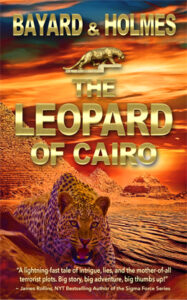
Piper Bayard is an author and recovering attorney who works with 45+ year veteran of field intelligence operations, Jay Holmes. Their first full-length fiction release, The Leopard of Cairo, is now available in both eBook and Print at Bayard & Holmes.
About Leopard of Cairo
John Viera left his CIA fieldwork hoping for a “normal” occupation and a long-awaited family, but when a Pakistani engineer is kidnapped from a top-secret US project and diplomatic entanglements tie the government’s hands, the Intelligence Community turns to John and his team of ex-operatives to investigate — strictly off the books. They uncover a plot of unprecedented magnitude that will precipitate the slaughter of millions.
From the corporate skyscrapers of Montreal to the treacherous alleys of Baluchistan, these formidable enemies strike, determined to create a regional apocalypse and permanently alter the balance of world power. Isolated in their knowledge of the impending devastation, John and his network stand alone between total destruction and the Leopard of Cairo.
What People Are Saying About Leopard of Cairo
“A lightning-fast tale of intrigue, lies, and the mother-of-all terrorist plots. Big story, big adventure, big thumbs up!"
~ JAMES ROLLINS, New York Times Bestselling Author of the Sigma Force Series
When the publisher for my latest novel, The Beached Ones, asked me about getting blurbs for my book, I replied, “Sure!”
Inside, I was thinking, “Oh no!”
Though I’ve published five books so far—two novels traditionally published and three nonfiction books self-published—I had never asked for blurbs. I hate to bother people. I know how busy everyone is. Plus it’s just plain awkward to cold-ask someone to read your book and give you a blurb.
But this is the best traditional publisher I’ve worked with to date, and I wanted to do everything I could to help The Beached Ones succeed. So I got to work.
Turns out the whole experience was extremely positive. I wrote about the process on my motivational blog, Writing and Wellness, in case you’d like some tips on how to do it.
But then there’s the question of where to find these people. Who has the credentials that would help your book succeed? And which of those might be willing to take the time to read your book and give you a blurb?
Here, based on my results, are the best places to find qualified people who would be happy to do just that.
1. Writer’s Conferences
You know how the experts are always telling you to do your best to make connections at writer’s conferences? It’s not enough to just go, attend the classes, pitch your book, and go home. Much better if you reach out and talk to some people while you’re there. You never know who you might meet.
I’ve been fortunate enough to meet some very nice writing mentors, teachers, and other authors while attending writer’s conferences. This group yielded more blurb writers for me than any of the others listed here.
To make more of these connections, sign up for a workshop near you. Then it’s just a matter of introducing yourself and asking questions. (Are you a writer? What type of writing do you do? Are you enjoying the conference?) Sharing a coffee or a few laughs can go a long way toward cementing a connection.
Follow up when you return by connecting with these people online. Support their posts by “liking” or “retweeting.” Sustain these connections and you’re likely to have people who would be willing to help you out when the time comes.
Avoid: Making it all about you and your writing. You’ll make more friends at a conference if you are interested in what others are doing.
2. Social Media
Social media can be a good place to make connections. Interact with other writers and readers by supporting their work, making comments on their blogs, and of course, posting your own content so they can do the same.
As you build your network, pay attention to the people who most frequently interact with you. Then when it comes time to find those who might be willing to blurb your book, you’ll know whether your book would be one they might like and whether they are the type of person willing to help you out.
Avoid: Engaging in reciprocal blurb requests: “I’ll blurb your book if you blurb/review mine.” Some authors are fine doing this, but it doesn’t feel right to me.
If I admire the author’s work, all is well, but what if I feel it wasn’t a five-star read? Then I’m in trouble. If I give an honest review, the author may feel betrayed. If I give a dishonest review, I feel like I’ve betrayed myself.
If someone isn’t willing to read/review your book without you giving them something in return, feel free to thank them and move on. You can find others who will be willing to do so without tying you to some return favor.
3. Writers of Books Like Yours
When my publisher first asked me about blurbs, they told me to create a “wish list” of names I’d love to have on my cover. This is a great way to start, as it gets your wheels turning in terms of possible readers.
You may have big names on your list like Margaret Atwood, Lee Child, Steven King, and the like. I've found that these big authors rarely respond to blurb requests from authors they don't know. Most don't even offer their contact information anywhere online, as they're inundated with requests as it is.
Many other bestselling authors, on the other hand, haven't become celebrities yet. If you're regularly reading books like yours, you're likely to know who these authors are. Who are the breakthrough writers in your genre? Who are the newcomers?
I approached one bestselling author who had written a book that had a lot of similarities to mine. When I asked her for a quote, I included everything I loved about her book and briefly pointed out the similarities I saw in our stories. I was thrilled when I heard back from her. Unfortunately, she had a conflict and couldn’t get to my story in time for printing, but she still wanted to read it.
Consider: I found many of my “similar” authors when gathering examples for covers for my book. During the cover design phase, my publisher asked me to share some samples of covers I liked. The process of researching these helped me find books that were much like mine. After all, if the cover appeals to you, it’s likely the story is similar to yours as well.
4. Editors
Over the years, you've probably gained several editor contacts. These may be editors who helped you early on in your writing career, those you hired to help edit your books or even editors you met at conferences.
Many will have great credentials, which can give your book the social proof that it needs. Most are busy but reach out anyway. You may find one who believes in your writing enough to help out.
Avoid: Of course, it doesn’t work to ask the editor who worked on the book you’re launching to write a blurb. Even if you didn’t mention this person in the acknowledgments (which you should), this could come back to bite you if someone reveals the relationship.
5. Writers you've featured or interviewed.
If you make a regular practice of interviewing and featuring other authors—whether on your website, blog, podcast, or YouTube channel—you’ll have a ready-made list of people who may want to read your book.
It’s not about doing someone a favor so they’ll do one in return. It’s about meeting more people and growing your network list. Then when it comes time to ask for blurbs, you’ll have a group of people within which you may find some who may truly enjoy your new book.
Avoid: Again, it’s best to avoid the tit-for-tat type of arrangement, where you feature them so they should blurb you. Instead, think about those authors who may truly enjoy your book. Pay attention to the types of books they write and read. Consider too that some writers are also regular book reviewers. They may be ideal people to add to your list.
6. Teachers and Mentors
Writing instructors are typically wonderful people. They dedicate their lives to helping other writers succeed. If you were lucky enough to work with such a person—in college, in a workshop, or in some other type of educational setting—reach out and ask if they might be willing to give you a blurb.
Most writing instructors have impressive credentials themselves—ones that will look good on your book—and their helpful personalities make them accommodating. Just be sure to give them enough advanced notice so they can fit your book into their busy schedules. (That goes for everyone—aim for at least four months before your book will be published.)
7. Writing Group Members
If you belong to a writing group—or even if you belonged to one in the past—this may be a source of potential blurb writers for you.
Those who read your early work may have an invested interest in seeing your book succeed. Plus they may just plain love your writing! Think of people in your group who fit that description, then consider asking them for a blurb.
Remember: You’re looking for people who are “qualified” to give your book a blurb. That means they have credentials that readers will trust. Though any good early review may be helpful, when looking for blurbs (that will be printed in the book when it’s published), you’re looking for people that, because of their credentials, seem like “authoritative” voices readers can trust.
Example: “Ah, well if a Pushcart-Prize winner liked this book, then I probably will too.”
Note:The Beached Ones is forthcoming from CamCat books on June 14, 2022. Get your FREE excerpt here, or preorder now! (Buy links and book trailer here.) Get FREE chapters of Colleen’s books for writers here.
* * * * * *
About Colleen
Colleen M. Story is a novelist, freelance writer, writing coach, and speaker with over 20 years in the creative writing industry. Her latest release, The Beached Ones, is forthcoming from CamCat Books in June 2022. Her novel, Loreena’s Gift, was a Foreword Reviews’ INDIES Book of the Year Awards winner, among others.