

By James R. Preston
Her name was Enheduanna and she was a writer. We’ll talk more about her later.
Welcome to another installment of Writers in the Storm. This one’s going to be a little different. But with any luck, we’ll be On the Road Again. Come with me.
The most traveling I’ve done is to go downstairs to get a cup of coffee.
I’ve been home, and so have you. But we’ll get out of this, sooner or later, all of us with our lives touched in one way or another, and when that happens there will be opportunities. If you’re like me, you’re thinking about things you want to do when the masks are dropped.
Meanwhile, I’ve got an essay due.
So I thought... Technical article? Revisit adapting screenplay structure to the genre novel? Stretching the boundaries of first-person? How to keep track of all those electronic documents? Maybe it’s time for a break, for something different.
My face mask is hanging on it’s hook. We have canceled this year’s vacation. My cat is happy — I’m home.
I don’t know about you, but I’m storing up things to do once COVID-19 has been defeated. What about visiting "writer" spots that will remind you of the thread that links you to those who have gone before? Moments you can remember when you’re sitting at the keyboard wondering where the story went.
And, of course, you’ll be thinking about writing as I am. Traveling – yes traveling. Traveling and writing. Those two can go together.
Her name was Enheduanna and she was a writer. She lived 2,300 years B.C.E., in Uruk, what is now Iraq.
Once upon a time I went to Great Britain. I’ve told that story here so I’ll just talk about the end.
We visited Stratford-on-Avon and I stood outside Shakespeare’s birthplace. Very cool, but then I saw a framed poster advertising a performance of The Merry Wives of Windsor, and Charles Dickens was one of the volunteer actors, putting on the play to raise money for the restoration of the building. I still remember the chill I got. Shakespeare, Dickens, and me. In a very, very small way, me. I was part of that stream.

When you travel as a writer it’s a bit different. You look at 221B Baker Street and think, yeah, Doyle told some good stories and maybe it pumps you up just a bit to know you’re following in his footsteps.
So pack a bag, make sure the laptop’s battery is charged and away we go!
Vegas, baby!
Tim Powers, Last Call.
On the way to Vegas on Highway 15 you’ll see The Mad Greek Cafe. As of this writing it’s closed due to COVID-19, but the owner says they are counting the days till they reopen. Stop in, get a gyro, and think about Scott Crane and his friends in Tim Powers’ amazing Last Call. It’s a thriller, it’s a travelogue, it’s a story of Jungian archetypes battling for supremacy through Tarot cards. I’m not making this up. It’s a great read!
Hunter Thompson, Fear and Loathing in Las Vegas.
"We were somewhere around Barstow, on the edge of the desert, when the drugs began to take hold."
I have read that the merry-go-round bar in Circus Circus no longer serves alcohol, but still if you sit there can’t you just feel Thompson and his 300-lb Samoan attorney slugging down drinks? And the attorney loses it and is afraid to get off the merry-go-round? And the guests in their hotel are starting to look, uh, reptilian. Check out the merry-go-round bar and flash back to the 70’s. Skip the peyote.
San Francisco
Dashiell Hammett, The Maltese Falcon. There are — or were — walking tours so you can see some of the locales. The last time I looked there was actually one of the restaurants where Spade got his chops and baked potatoes. The tour can take up to four hours, so wear comfortable shoes.
Los Angeles
Ross Macdonald, The Lew Archer books. Lew Archer looked down at the city lights and saw the seedy underside...
Forget that — let’s go out to eat! The Musso and Frank Grill, open since 1919, is still going strong. When they reopen, have a seat and order Archer’s steak with mushrooms and onion rings. (Take-out, anyone?) And if you’re doing Tinseltown, see about a Warner Brothers Studio tour.
Ross Macdonald weaves the movie business into many of the novels. As you walk the streets you can almost sense the comforting feel of your gat snug and ready in its worn shoulder holster.
Colorado
Stephen King's The Shining. This is a good one.
Visit the Stanley Hotel at the entrance to Rocky Mountain National Park. Not only is the hotel the main setting, Room 217 is where Stephen King drafted The Shining. He renamed the hotel The Overlook and moved it to a somewhat more inaccessible location but this is the place. In 1997, it’s where King shot his own version of the novel.
As a bonus, check out the Country Boy Mine, setting for Michener’s Centennial.
North Carolina
Delia Owens, Where the Crawdads Sing. This one comes with a caveat: Famous novel, millions of copies sold, and the setting of marshes and swamps is a big part of the story. However, one source says those swamps and marshes are more like Georgia or South Carolina. My guess is, if you love the book and visit North Carolina, the differences won’t matter. You’ll just soak it up and understand what Owens was writing about.
Louisiana
James Lee Burke, The Dave Robicheaux books. If you are heading to New Orleans or Louisiana, you can’t do better than to read some of these fine novels. You can taste the gumbo, feel the breeze off the gulf and you will understand the powerful influence the setting has on his work. You’ll want to sit in the Cafe DuMonde with a beignet and a coffee.
Florida
John D. McDonald, the Travis McGee books. Slip F18 Bahia Mar. This would not be complete without mentioning the home of Travis McGee, that knight in rusty armor, that slayer of savage fish.
As far as great settings, McDonald nailed it. And yes, there really was a slip F18. But remodeling killed it, and the literary landmark plaque has been moved. Nevertheless, it can be found and standing there you can feel the client approaching, looking for a “salvage consultant.”
You stand in each of these settings and feel that connection.
While We’re Waiting . . .
My mask is still on the hook. Despite all of these inspiring places to visit and to think about stories and their creators, as of now we’re still locked down. Never fear! Here are a couple of virtual tours with literary associations.
Dan Brown, The DaVinci Code. emember how the story opens in The Louvre? With the horrific murder? Brown is a great researcher and he got it right. You can take a look online at the Louvre virtual tour site and study the results — there are usually multiple things going on.
Preston and Child, Relic. Very creepy story (and an underrated movie) set in a museum based on The American Museum of Natural History. Click that link for virtual tours and take your pick. There are also guided events. Yes, human contact through your keyboard! Postscript: The AMNH is reopening in September. Check their website for details.
Her name was Enheduanna. She lived 2,300 B.C.E., and she was a writer. She wrote poetry and hymns and she was, in fact, the very first writer to sign her work. She said, “My King, something has been created that no one has created before.”
Final Thoughts
“Ars longa, vita brevis,”
— Hippocrates.
Translation: Life is short, art eternal.
I think that says it all. And the tradition that you and I are part of goes on.
Now it’s your turn. While our pets are happy because we’re always around, we need as much contact with other members of our species as possible, even if it’s electronic. I hope you have started thinking about inspirational places that connect to your work, or to the work of writers you love.
I hope you are looking forward to once again getting on the road. Keep reading and keep writing.
Have you perhaps been to Maui to see how Jayne Ann Krentz nailed it, despite changing the names? Or Sue Grafton’s twin-by-another-name for Santa Barbara? Share those experiences with us!
About James
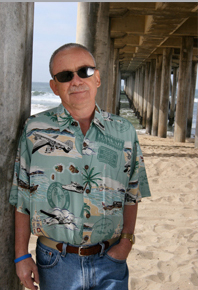
James R. Preston is the author of the multiple-award-winning Surf City Mysteries. He is currently at work on the sixth, called Remains To Be Seen. His most recent works are Crashpad and Buzzkill, two historical novellas set in the 1960’s at Cal State Long Beach. Kirkus Reviews called Buzzkill “A historical thriller enriched by characters who sparkle And refuse to be forgotten.”
His webpage is www.jamesrpreston.com. He can be reached at james@jamesrpreston.com.
Image Credits:
- Top Image by Rudy and Peter Skitterians from Pixabay
- 221 Baker Street Image by Hulki Okan Tabak from Pixabay




