Writers in the Storm

A blog about writing

storm moving across a field
Social Media Throwdown: Facebook Groups

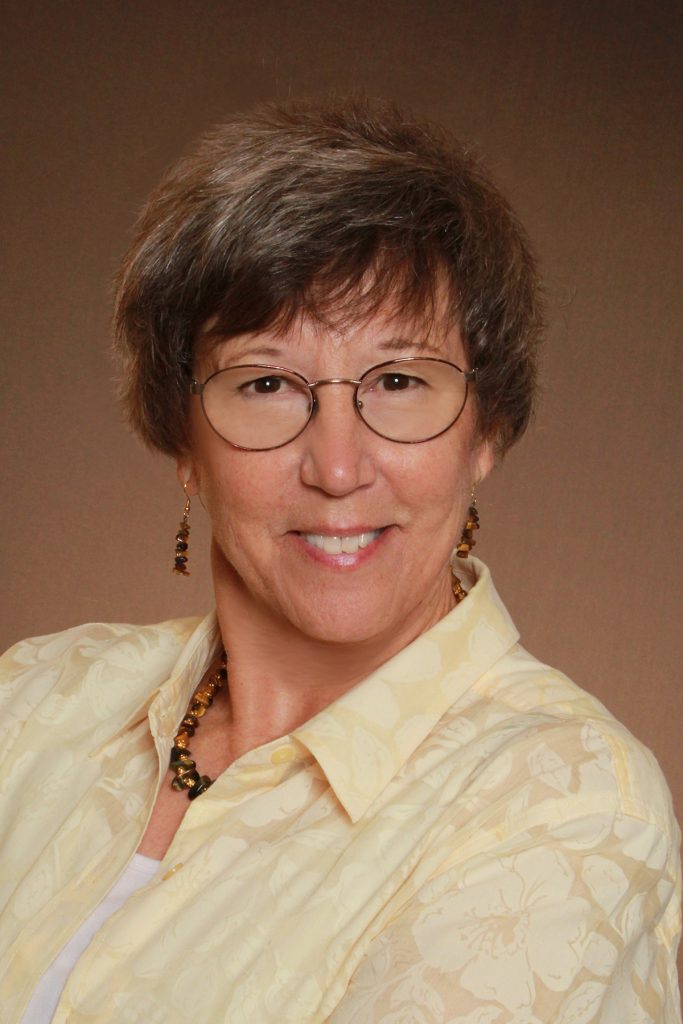
Julie Glover

This month, we're doing a social media throwdown, where each of us give our take on how we address social media. You can read Fae's post here.

My Love/Hate Relationship

I have a love/hate relationship with all social media. As someone whose half-century mark flew by more than a year ago, I'm still astounded by a free system of information sharing in which I can post something about my life and seconds later a friend in Australia can like or share it. Through social media, I've built and/or maintained friendships across many miles.

However, social media also allows people to obsess about small stuff, rant their opinions, criticize people without having to face them—not to mention that the providers of such technological magic are hardly wizards the likes of Dumbledore. They are far more cold and conniving with the information we share, using it to control what we see and market to us accordingly. But I digress...

And then there's my personal quirk of being far more of a word person than a visual one. Any social media that relies heavily on images is not my cup of tea. So Instagram, Pinterest, and Snapchat? Sorry, but we will always be acquaintances more than close friends.

How Do I Use Social Media?

So where I have landed in the scheme of social media? Once I passed about a thousand followers on Twitter and followed as many, that platform became overwhelming. I really only use it to share articles, check in on current events, and track certain hashtags.

The rest of the time, I default to Facebook. Even then, Facebook has this annoying habit of not showing you what you elected to see, tailoring ads to you based on any internet activity you've done, and changing perfectly good features for no good reason while not correcting issues they should have fixed back in 2013.

Thankfully, Facebook added a feature I genuinely, truly love: Groups. While I certainly look through my feed, post to my regular profile, and comment on other's posts, the biggest benefit I've gotten lately is from being in groups that congregate around some shared goal, interest, or experience.

Unlike your regular feed, Facebook doesn't keep you from seeing group activity. If you opted into the group, you will get notified of new posts.

Groups also appeals to my introverted side, since groups can be anywhere from two to thousands, but you tend to see certain names again and again. So you can develop real relationships.

Let's just look at few of the groups I'm in to see how this feature can be used.

Local Writing Chapter

Many writing chapters maintain a group where they make announcements, provide inspiration and encouragement, and get to know one another better. Yes, email loops are also active places for writing groups, but Facebook has the added advantage of being able to easily post images, videos, and links with a preview. Also, if settings allow, members can share announcements to their wider audiences, like when you're having a special speaker come in or hosting a conference.

Book Cover Designer

When choosing a book cover designer, I joined a few designer's groups, which allowed me first peeks at their portfolio and any premade covers they were releasing. More importantly, I had the opportunity to watch how they interacted with their clients and potential buyers and learn about their process. When it came time to order my next cover, my Facebook group experience helped me know just who I wanted.

Software Support

I'm in two groups that provide software support, for Scrivener and for Dragon Naturally Speaking. Oh, the free information that comes from these groups! Just watching the questions and answers that come up provide many helpful tips from experts and users who know how to do things I don't yet. But if/when you're stumped, you can also ask a question and will usually get a much faster answer than if you went through official support channels.

Event-Based Group

Within a group, an administrator can set up a separate page for an event. So a writing chapter could have a page for a conference, an author could have one for a signing, and a business could have one for an event. Cruising Writers maintains event pages for each of its cruises; once you place a deposit, you're invited to the page for that particular trip, and it's been an invaluable benefit! Event pages provide a place to make announcements, field questions from members, and encourage bonding among attendees.

Close Circle

Remember how I said you could have a Facebook group with only two people? My critique partner and I set up a group where we share about a specific topic. You could easily set up a group for you and one other or a small critique or even a friend circle. It's helpful to have a place where you can share ideas, images, and links and revisit them. You can also pin posts to the top to easily find what's most important for the time being.

Et Cetera

I'm also in groups that address the topic of book marketing, that keep my Golden Heart finalist class in touch, and that provide writer camaraderie and inspiration. You can use groups for anything you want.

So a quick last list of benefits with Facebook Groups:

  • It's a contained space with parameters based on the group's goals.
  • A group can be anywhere from two to thousands.
  • You can easily share information, images, and links with previews.
  • If you opt to receive group notifications, Facebook will show you all of them.
  • The administrator(s) can moderate who gets in the group and what gets posted (as well as kick someone out if they misbehave).
  • A group can establish an event page for specific events and moderate that membership as well.
  • Group have a search option so you can go back and look for particular posts.

You'll still find me on regular Facebook and on Twitter at times. I try to say hello on Instagram now and then as well. But my favorite social media spot lately has simply been Facebook Groups.

Have you used Facebook groups? What other benefits or drawbacks have you experienced?

About Julie

Julie Glover often gets mistaken for an extrovert, but she is an introvert through and through—known for reading novels in her closet as a child. Julie writes mysteries and young adult fiction. Her YA contemporary novel, SHARING HUNTER, finaled in the 2015 RWA® Golden Heart®. She is represented by Louise Fury of The Bent Agency.

You can visit her website here and also follow her on Twitter and Facebook.

Read More
Want Authorly Superpowers? Build a Street Team!

Angela Ackerman

Can we all agree that launching a book can be…a bit terrifying?

I’ve released six with co-author Becca Puglisi and we’re about to launch book seven. Those figurative butterflies? Yeah, they never go away. But guess what--this is actually a good thing! A touch of nerves keeps us alert, more apt to be prepared, and will cause us to think deeper about marketing methods that make a book launch easier.

On that note, one of the smartest marketing moves is to build a Street Team. This group of excited and highly motivated individuals have one important mission: to help you, the author, succeed.

Here’s a few things they might do:

  • Help brainstorm a marketing launch plan for a book
  • Mention any influential connections they have and offer to be the go-between
  • Share links, graphics, and content tied to the book to interest potential readers
  • Reach out to a library they use to bring in the book (and then reserve and read it)
  • Offer up their own blog for a “takeover,” pointing their visitors to the author’s launch event
  • Be an early ARC reader (to find any last-minute typos that may need fixing)
  • Be an ARC reviewer, ensuring online reviews are building up quickly at release
  • Blog a book review (that can then be shared by the author now and in the future)
  • Offer to help organize and host marketing initiatives (like host a Twitter chat)
  • Interview the author on a blog or have them as a guest on their podcast
  • Vlog a book review (so the video can be shared)
  • Purchase the book at a strategic time/date so it will most benefit the author
  • Review the book at key online sites (Goodreads, Amazon, etc.)
  • Offer a guest post spot to the author to blog on a topic that ties into the book
  • Share the author’s site, interviews, blog content, etc. to help raise their profile
  • Mention the book’s release to newsletter subscribers or even offer a giveaway
  • Promote launch event festivities and encourage others to participate (entering giveaways, joining discussions that are topic-focused, etc.)
  • Use a specific hashtag for the launch that will draw attention to the event
  • Be a champion for the book, recommending it and adding it to relevant lists for discoverability
  • Help with coordinating real-world launch activities (a launch party, book signings, etc.)
  • And much more. What a Street Team can do is only limited by an author’s imagination!

Building a team is a great idea for so many reasons. The most obvious is that an author can only do so much and create only so large of an impression on their own. But, with an enthusiastic group, they can do much more and reach a greater circle of potential readers.

Each team member is also unique and collectively will have a range of connections, experiences, knowledge, and abilities. They may offer new marketing ideas to try and point the author toward influencers, tools, resources, and sites that may also help.

Finally, the Street Team is the author’s secret weapon when it comes to visibility and discoverability. In our promotion-saturated world, potential readers are bombarded with buy my book! messaging and will have little patience for more of it. Having others promote the book respectfully means doing less self-promotion. 

Let’s Talk About Impostor’s Syndrome, Shall We?

The idea of gathering a street team can seem intimidating. In our brains we think, Gosh, who would want to help me? It’s a lot of work, people are already short on time, I’m not a big name author or anything...and on and on it goes. Freaking Impostor’s Syndrome!

FACT: there are people who care, who want to help us, and who are willing to be our book champions. Ask yourself these questions:

Are there writers you’ve become friendly with that you want to succeed?

Do you have family, friends, and online connections that you’d help if it meant they could follow their passions?

Have you loved a book so much that if an opportunity arose to help the author launch the next one, you’d jump at it?

I’m betting you answered yes to at least two of these which means you’re building authentic relationships with others. Relationships go both ways, so I bet if you ask, people will join your Street Team.

If you’re like me, asking is always the hard part. I love to help others but asking for it in turn? So hard. I have some wounds in this department but I refuse to let that stop me so I ask. You should too.

Build It and They Will Come (2 Steps)

Step 1: Well in advance of a book launch (2-3 months), put out a call for help. Becca and I do this on our blog. We explain we’re launching a book and could really use help. I give some information and provide a sign-up form. Here’s a link to my latest Will You Help? post so you can see how I set this up.

TIP: Click on the form to see what I ask people and how I request permission to use their emails to communicate to comply with GDPR. (And hey, if you like, feel free to sign up. I’d love that!)

ANGELA’S BIG TIP: In the form you’ll notice I ask an optional question about marketing ideas. Do this. It is a great way to find out who has unique talents or connections and to discover new marketing ideas.

WARNING: You’ll notice in the post link above that I don’t give information about the book we’re releasing. Don’t do this UNLESS you have a good reason for doing so AND you have a strong established base of readers. (In our case, the mystery element of the book release is important, but for most launches it won’t be. You will absolutely want people to know about the book you are releasing!) For reference, here’s another Will You Help Us? post for a different launch and we do share information.

Step 2: After you announce you’re creating a street team, share the link on your social channels, wherever you interact with people who love and support what you do. Becca and I share links on Twitter, Facebook, in our newsletter, etc. If you like, ask friends and family to help because the people closest to us are often the most excited to help. Share off and on leading up to your launch because even if people join later, they can still help.

TIP:  Offer your street team members something for helping like a free book copy, a fun street team prize draw, or something else that they can use or will appreciate. Becca and I give away free education via a “Street Team only” writing webinar. 

ANGELA’S BIG TIP: Join someone else’s street team before starting your own. Managing a team effectively is a post in its own and you can learn much by doing. Pay attention to how another author utilizes their team’s superpowers. It will give you ideas on how to work with your own team.

Interested in learning more about street teams and how to run a successful event?

Visit this resource page at Writers Helping Writers. Under the marketing section you’ll find an Insider webinar interview where Jennie Nash of Author Accelerator and I deconstruct a book launch for the Rural and Urban Setting Thesaurus she took part in. We also have a powerful SWIPE FILE that shares our Street Team email communication, marketing strategy for the launch, and examples of graphics and content I asked my team to share. It’s basically a window into street teams and successful book launches. I hope it helps!

Have you ever created a street team to launch a book, or participated in another’s team for their launch?

Angela Ackerman is a writing coach, international speaker, and co-author of the bestselling book, The Emotion Thesaurus: A Writer’s Guide to Character Expression, as well as five others. Her books are available in six languages, are sourced by US universities, and are used by novelists, screenwriters, editors, and psychologists around the world. Angela is also the co-founder of the popular site Writers Helping Writers, as well as One Stop for Writers, an innovative online library built to help writers elevate their storytelling. Find her on Facebook, Twitter, and Instagram.

Read More
9 Tips for Creating Successful Antagonists in Any Genre

Lisa Hall-Wilson

There’s a pretty basic storytelling flaw that trips up many writers and that’s creating villains/antagonists who aren’t successful. Let’s define what I mean by successful. A successful antagonist moves the story ahead, directly challenges the protagonist, and has a better than 50% chance of success. Without a powerful antagonist, your protagonist has nothing substantial to fight against—there’s little reason to cheer for them.

3 Pillars for a Successful Antagonist

  • Does
    the antagonist/villain directly oppose your protagonist’s main plot goal?
  • Does
    the antagonist/villain have a head start?
  • Are
    there aspects of the villain/antagonist we agree with or can even love?

4 Ways to Make Your Antagonist Menacing

Backstory – Your antagonist needs a past and a history. Evil is grown not born. Even if it never comes out in the story, YOU need to know what made them like this.

Justified – Your antagonist is the hero of their own story and can rationally justify their thoughts and actions. Their actions and motivations are not random or nonsensical.

A Moral Code – Your antagonist can’t be completely bad all the time. Let them rescue kittens, love their moms, never break their word, whatever. Some antagonists have a moral framework they restrict themselves to—they only kidnap and murder men who abuse children, for instance. Other people can fall in love with the antagonist. Anyone can fall in love, but is there something in your antagonist worth loving?

Heighten Tension – I recently binged all 7 seasons of Game of Thrones (the last season has been out for over a year now—so there are spoilers ahead). You know what this TV show does really really well? George Martin has crafted some serious underdogs and overwhelming villains and antagonists. It’s an epic, so there are several protagonists and antagonists.

The Lannisters rule everything pretty much, they are fairly formidable, right. They’re already the richest family and in political power when our story opens—and they have a future game plan for longevity. There’s a steady stream of good guys to cheer for and many of them die trying to defeat the Lannisters. As the series progressed, we see the Lannister power base dwindle, die off, get scattered—loyalties are tested and broken.

But just as we begin to yawn because the chink in the Lannister armor is too big to compensate for, the antagonist who’s lurked in the background for several seasons suddenly emerges and forces the board to rearrange itself. So, the protag team begins season 7 with the numbers to defeat the Lannisters, new allies, and three dragons. By the end of the season, their allies are dwindled and they’re down a dragon. What happened to the third dragon? The white walkers have turned it into a zombie dragon and it fights for them now. BOOM! The board always remains in the favor of the bad guys—the pieces on the board rearrange themselves according to the actions of the antagonist.

If there’s no struggle, if the threat of loss for the main character isn’t imminent and devastating, there’s no underdog to cheer for.

The Problem with Protags who Start Strong

Remember that however strong you make your hero/protagonist, your antagonist needs to be bigger, badder, more threatening, etc.  

Superman is a fabulous hero, but his only weaknesses are kryptonite and his love for Lois. My son argues that Zod is a convincing threat (yes, my 16yo son talks plot and story arc with me if it involves superheroes or comic book movies), but in the first Justice League movie, the bad guys don’t show up until the Kyrptonian leaves and when Superman returns it’s game over. Even the bad guys know it’s over at that point.

You need a villain who’s more powerful, influential, smarter, etc. than your protagonist. The antagonist needs a head start on their evil plans.

Look at Daredevil and Wilson Fisk. Fisk has already got a criminal enterprise and a grand plan before Daredevil ever emerges in Hell’s Kitchen. Fisk has the money, the corrupt cops, the alliances, the influence, the larger-than-life persona to win it all and he very nearly does.

Look at Thanos (at least, what we know of him so far). Infinity War begins with Thanos having defeated the most powerful of the Avengers—Hulk. Thanos has a plan that was begun long long ago. The audience is primed already to know who he is, what he’s about, and how much closer he gets to his goal with each movie. And when Gamora believes she’s killed Thanos, she weeps despite the fact that she hates him.

“As an antagonist, Thanos surprises us with his many 'good' qualities, including his patience, his dignity, his compassion, and the 'philanthropic' motives behind so evil a mission as wiping out half the universe.” – K.M. Weiland

Be Sure You Have an Antagonist and Not Just a Story Obstacle

Sometimes things can get really muddled in story land, and as the writer it's hard to know exactly who or what is the main antagonist. Flip to the beginning of your story. What's the inciting incident? Whatever problem is caused by the inciting incident is the main story problem and whatever is causing or in opposition to the main story problem is the antagonist—generally.

A man is marooned on a mountain in a snow storm. What’s his main story goal? If his main story goal is to survive and get off the mountain, the snow storm (nature) could be a valid antagonist. If his main story goal is to survive the storm, get off the mountain, and kill the person who left him stranded on the mountain, then the snow storm (nature) is merely an obstacle to his goal. Do you see the difference?

An antagonist actively works to prevent the protagonist from reaching their main story goal.

The Difference between a Villain and an Antagonist

The antagonist is the source of the opposing plot movement, and they get to win quite a bit right up until the end of your story. The antagonist is a role. The villain is any character who opposes your protagonist. (Consider Disney’s The Lion King. Scar is the antagonist and the hyenas Shenzi, Banzai, and Ed are villains. The hyenas oppose Simba but don’t move the plot ahead. Do you see the difference?)

This construction happens in genres like romance a lot. In romance, often you have a hero and heroine who are at odds but must end up together. The antagonist must lose so neither the hero or heroine can serve that role. Instead, there are obstacles to the hero and heroine getting together, so who/what is the antagonist?

In Patricia Brigg’s novel Cry Wolf the main story problem is that Charles knows Anna is fated to be his mate, but she’s terrified of him. It doesn’t really matter what force is keeping your hero and heroine apart—that force becomes the antagonist, but there’s often an ancillary story problem that can have a villain.

Anna’s suffered past abuse and that experience and fear is what keeps her from committing to Charles. There’s a witch trying to kill Charles and his father, and Anna is central to the solution to the witch problem, but the witch isn’t the antagonist. The witch is the villain, but the witch doesn’t directly oppose the main story problem—the witch isn’t preventing Charles and Anna from getting together. Anna’s fear and anxiety are the main antagonists—this is the main story problem that must be overcome, the witch is a story obstacle.

So, for the story to have a satisfying ending, Charles and Anna must defeat both the witch AND Anna’s fear.

Is there an antagonist or villain that you love to hate? I think Loki definitely makes my top 5. Who’s your favorite antagonist or villain?

You can get a copy of my book Method Acting For Writers: Learn Deep Point of View Using Emotional Layers here.

About Lisa

Lisa Hall-Wilson

Lisa Hall-Wilson was a national award-winning freelance journalist and author who loves mentoring writers. Fascinated by history, fantasy, romance, and faith, Lisa blends those passions into historical and historical-fantasy novels.

Find Lisa’s blog, Beyond Basics for intermediate writers,  at www.lisahallwilson.com.

Read More

Subscribe to WITS

Recent Posts

Search

WITS Team

Categories

Archives

Copyright © 2026 Writers In The Storm - All Rights Reserved