Writers in the Storm

A blog about writing

storm moving across a field
Writing a book takes HOW LONG NOW?

Kelly Harms

Small harms photo

“But Kelly, why did you wait three years between books?”

Three. Long. Years.

That’s how long I went between publishing my first book, THE GOOD LUCK GIRLS OF SHIPWRECK LANE, and the one coming out now, THE MATCHMAKERS OF MINNOW BAY.

Not because my publisher jerked me around—they’ve been wonderful. Not because of an agent switch—do not be crazy. Not because I wasn’t writing. I was writing. Because three years is how long it took to bring my absolute best to press. And I’m here to tell you, no amount of self-flagellation was going to change that. Trust me, I tried.
In that time I wrote two really really crappy first drafts of other books. The ideas had no legs, the characters had no eyes, and the settings had no heart. I was writing, and I was learning, but I wasn’t making a book.

In that time I got divorced from a very sad marriage. I cried a lot; I tried to put on a brave face. I gave myself pep talks about being better off on my own that I didn’t quite believe. I was surviving, but I wasn’t making a book.

I took care of a beautiful baby who became a beautiful toddler and then a beautiful kid. I showed him enough love for seven parents. I fed him organic quinoa which was probably unnecessary. I was a making a great human, but I wasn’t making a book.

I said goodbye to my father, who died of liver cancer. I cried a lot and didn’t even try for a brave face. I kept my mom close and hurt when she hurt, and then over time started to feel better. But I wasn’t making a book.

But these events, and there were a lot of events, are not the real reason this book took so long. The reason this book took so long is because the whole time I was doing all these things, I was also yelling at myself. “Write more! Write faster! Write better!” And my self looked back at me and rolled its eyes and simply said, No. I fought and I fought and I fought but nothing good came out. I couldn’t fake it. I couldn’t push through. I gave myself lots of strong talks about how other writers COULD push through, but this did not actually help, it turns out.

FullSizeRender

Finally, at some point, a friend told me to write something on a post-it and put it by my bed. It said, “It takes as long as it takes.” I made lots of protesting noises about tautologies. But of course she was right. When I gave myself permission to take as long as I needed—not to quit, not to slack, not to go work at the Home Depot as I often fantasize about—but to just to settle in for the long haul, a book came along. And as I wrote, the book got better and better and better, until one day, I was proud enough to share it with my amazing agent, and my wonderful publisher and my incredible readers.

And when will my next book come out after all this?

I guess it will take as long as it takes.

Hopefully it takes fewer than three years.

What's your default self-talk when your life and your writing stop getting along? Do you have any useful mantras for these moments?

About Kelly

matchmakers cover

Kelly Harms is celebrating the $2.99 promotion of her first book, is halfway through a new book she’s thrilled about, and is proud mother of a little boy who swims like a fish and fishes like a bassmaster. Her new novel, THE MATCHMAKERS OF MINNOW BAY, comes out August 9th and is available for preorder now.

Find Kelly online at ...

www.kellyharms.com
Facebook @authorkellyharms
Twitter @harmsbooks
Instagram @kelly.harms

Read More
You and the Writing Cave

Christina Delay

You’ve heard about it. You’ve been in it. You may have even gotten lost in it.

The writing cave. The mystical hole we decorate with junk food and tea and bury ourselves in to meet deadlines.

It’s comfortable. We have our favorite, overstuffed chair and a wash-worn blanket we cuddle in. A candle flickers in the corner and soft music drifts around our shoulders like a mesmerizing piece of gauze, fluttering in the breeze that sneaks in through the cave’s opening. It reminds us there’s an outside world, so we turn our back and furiously type away at the keys.

The writing cave is a necessary place. When we have a deadline.

But not for all time.

A cave is not a place for a soul that is living and breathing and thrives in the light.

Because you know what else you find in caves?

Bats, skeletons, moles. Creatures that shrivel and shrink from lack of sun and fresh air. They become deformed and shadowed. Things that crave the darkness and the stillness and the being-alone-all-the-time.

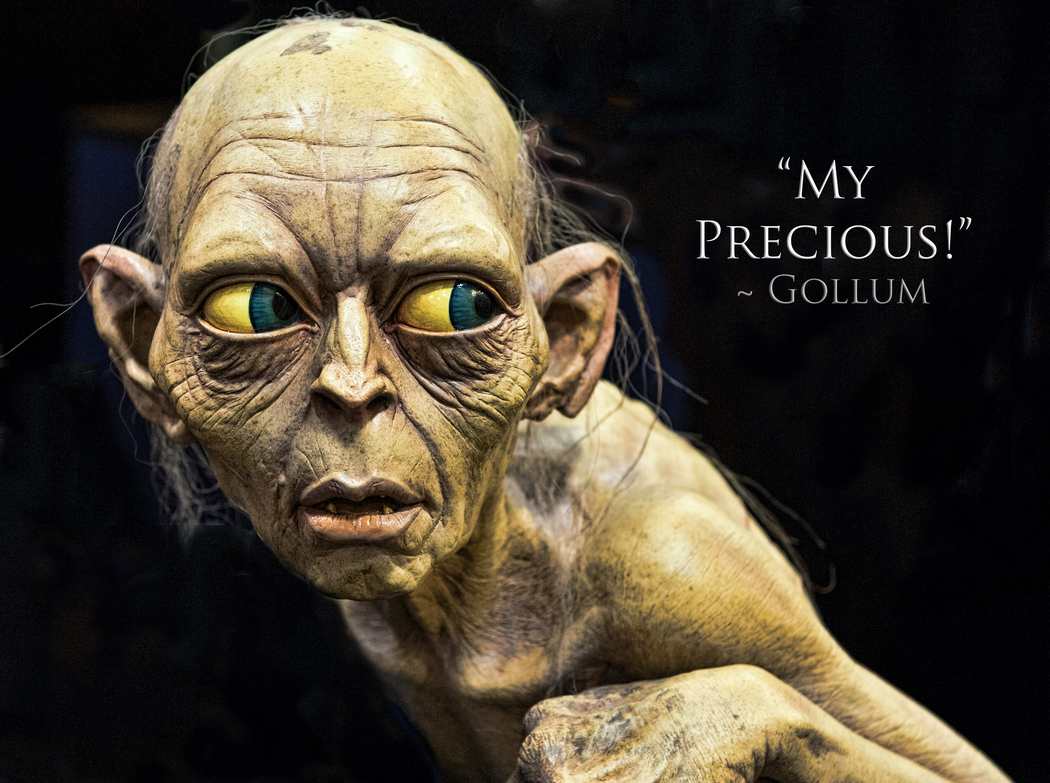
Think about Gollum. He was once a Hobbit-like creature. He loved playing in the sun, being with other creatures, until he found that ring. It was so shiny, so special, and it sent him into the darkness to keep to himself, keep the ring safe, keep the ring hidden. Until the ring was no more than a whisper of a dead tale and Gollum was forgotten and wiped from memory.

Depositphotos_19480133_original
Our stories are like the One Ring.

Our stories are very much like a shiny, magical ring. They call to us, they sing to our minds and hearts and make us want to shout what we have to the world. But we don’t. Because it’s special. Our story is precious. It begs us to crawl into the cave, under the, sometimes very real, guise of a deadline and keep to ourselves to do our creative work. Keep our story safe. Keep our story hidden.

Until our stories are no more than a whisper of the tale it once could have been and we become forgotten within our own community.

Writers are solitary creatures.

Yes, writers crave being alone in our writing space and doing our creative work and it is completely necessary to do so.

But…

(you knew there was a but coming)

…when we stay in our writing space and we don’t experience and interact with the world, we shrivel. Our stories become stagnant and depressed and unoriginal because we don’t have the new experiences to feed the little creative creature that lives inside us.

I could bore you with scientific facts about how creativity thrives in a new environment, but I’ll resist. I could preach proven psychological tidbits about how it is imperative that a creative personality have new experiences to make the synapses fire that feed the creative center in the brain, but I won’t. I could recite lists of innovative thinkers and world-famous authors who attribute their creative problem-solving and master storytelling to their travels around the world, but I’ll refrain.

Because you know this. It’s the whisper on the breeze that sometimes sneaks into your cave. You turn your back, because deadlines! Sacred creativity! Fear.

Ouch.

That breeze is a little warm, compared to the coolness of the cave. Warmer than you’re used to.

It speaks of the outside world. Friends ready to welcome you back to the writing tribe. Cultures you’ve never experienced. A salty sea breeze and the call of a seagull. Sand that begs you to dig your toes in deeper and build a sand castle. The musical sound of native French spoken in a café.

It’s time to come out of your cave.

Don’t be scared. The writing tribe always wants new members. We’re here. Waiting with open arms.

Les-Carrasses-Grounds

You can start with a small tribe. Your local writing chapter, some friends who also write. You can go to a writing conference or even a small writing retreat (on land or on the water - more about that below) where you all experience something new, together. Maybe even go to a place you’ve never been before that will breathe fresh life into your struggling story.

Soon, you’ll slowly stop crouching in a hunched over position. You’ll stand, stretch, and for the first time in a long time, be able to deeply breathe.

And you’ll be with others who are doing the Exact. Same. Thing.

And maybe, that story that is wiggling around inside you will finally break from its cocoon and spread its wings.

Are you a cave dweller or do you get out regularly? Do you attend conferences or retreats? Meet with local groups?

About Christina

Christina Bio Pic Informal

Christina Delay is the hostess of Cruising Writers and an award-winning author represented by Deidre Knight of The Knight Agency. When she's not cruising the Caribbean, she's dreaming up new writing retreats to take talented authors on or writing the stories of the imaginary people that live in her heart.

About Cruising Writers

Cruising Writers brings aspiring authors together with bestselling authors, an agent, an editor, and a world-renowned writing craft instructor together on writing retreats. Cruise with us to Belize this October (almost sold out!) or go to France with us in 2017 and stay in a historic chateau with Margie Lawson, Louise Fury, Shelley Adina, Kobo Writing Life, and Literary Translations.

Read More
Managing Deadline Stress

Kathryn Craft

Turning Whine Into Gold

While the writing life can be full of joy (We make our own hours! We’re doing what we love! We work by dreaming up new possibilities!), I think we can all agree that it is also full of scenarios that can suck us into whirlpools of stress. Many of them have to do with the added pressure of deadlines.

How many times have you read a long editorial letter right before a deadline and emailed back, “This looks doable!” even as your stomach knots? Publishing is a business requiring cold hard deadlines, yet the writing it relies upon requires nurturing whose exact quantity is unknown. It’s like all those times you told your spouse you’d be down for dinner in fifteen minutes, only to descend after an hour or more flew past.

While writing that last paragraph, my sister was sitting behind me using her laptop trying to order something on Amazon Prime that was on flash sale. Ten minutes until the sale ended: pushing herself faster than she would have liked, she hit “send” too soon and had to cancel the order because the item would be automatically sent to her home address while she is visiting me for the summer. Seven minutes till the end of the flash sale: she re-entered all the info and hit “send”—yes!—but the order was rejected because they wouldn’t send to our PO box. Five minutes till the end of the sale—tick, tick, tick—and she could barely navigate the form. She finally found the place to add the street address but had to cancel another time because she typed in her debit card information rather than the desired credit card. Only three minutes to go! She took a deep breath, centered herself, and retyped the order slowly and successfully.

You could almost see the adrenaline coursing through her veins. Her heart rate was elevated. She’d been holding her breath. Her muscles were tense, causing typing errors. She got the job done, yes, but now she’s in the next room doing yoga.

Many of us writers adore deadlines. They inspire us to organize our workload and get things done. Help us prioritize. And let’s face it, without a bit of time squeeze, many writers would surrender to the couch and the bonbons.

But the adrenaline response that can see us through a tight deadline is an emergency measure. If invoked for the long haul, aided by the stress hormones epinephrine and cortisol, it can break down your body (think heart attack, chronic pain, raised blood sugar, weight gain, inability to sleep), frazzle the mind (memory problems, inability to concentrate, poor judgment, anxiety), and lead to self-medication (alcoholism, sleeping pills, other drug use). Add to this the fact that most writers are sensitive in every way, and it’s important to get a handle on stress before it manhandles you.

So what can we do in this uncertain, novel-a-year market, in which so many of us have known the kind of stress that scrambles our brains and clamps down on our problem-solving capabilities?

The answer is obvious: we need to learn how to handle stress better. Right?

Wrong.

To prolong our creative lives, we need to become even more sensitive to stress so we can recognize quicker its deleterious effect in our lives.

Stress is an injury to the soul in the same way that an ankle sprain is an injury to the body. After you sprain an ankle, would you ever think to say, “I think I’ll go out and run a few miles to get rid of this pain?” Of course not. Yet what do we do when a deadline looms and we feel our hearts pounding and our muscles tensing and our creativity floundering? We roll up our sleeves, dig in, and redouble our efforts.

That may not be the way to achieve optimal results.

In times of stress, we need full access to our store of wisdom, creativity, and the optimistic belief that we will prevail. These characteristics are the polar opposite of those exhibited by someone mired within a prolonged stress response.

The lower your tolerance is for stress, the quicker you will nip it in the bud and take restorative action. The simple reminder that you chose to be busy can remind you of the joy writing brings to you. Add a walk outside so the back burner thinking can kick in, a snack with protein to even out your blood sugar, and a glass of water to get the blood flowing, and the answers that seemed so elusive a half hour ago may start flowing through your fingertips—even with a deadline looming.

Everyone’s ability to tolerate stress is different. The main point here is to take the time to tune in and learn what stress feels like in your body and mind. When you see the signs, don’t ignore it. Stop and find a way to relieve it.

What symptoms of extended stress have you noticed, and what have you done to address them? Please share what’s worked for you!

About Kathryn

Kathryn Craft

Kathryn Craft is the award-winning author of two novels from Sourcebooks: The Art of Falling, and The Far End of Happy. Her chapter “A Drop of Imitation: Learn from the Masters” will appear in the forthcoming guide from Writers Digest Books, Author in Progress, available now for pre-order.

Her work as a developmental editor at Writing-Partner.com, specializing in storytelling structure and writing craft, follows a nineteen-year career as a dance critic. Long a leader in the southeastern Pennsylvania writing scene, she leads workshops and speaks often about writing.

Twitter: @kcraftwriter
FB: KathrynCraftAuthor

Read More

Subscribe to WITS

Recent Posts

Search

WITS Team

Categories

Archives

Copyright © 2026 Writers In The Storm - All Rights Reserved