Writers in the Storm

A blog about writing

storm moving across a field
Writing What You Know Is The Best Revenge

Shannon Baker

I write mysteries. I don’t write sci fi/fantasy because my mind is tethered to the real world too tightly to make the great leaps required to build whole new worlds. And by tethered, I mean, I’m not that imaginative. Write what you know, they say. It’s good advice that makes creating fiction so much easier than if you had to make it all up from scratch.

When we moved to Flagstaff in 2007, there was a huge controversy waging over pumping treated waste water onto a ski area on the San Francisco Peaks just outside of town. Those peaks are sacred to several local tribes and feature in their creation stories. It’s where the tribes collect plants and herbs and perform vital ceremonies.

Tainted Mountain

This situation seemed ripe for a murder mystery. I “borrowed” from real life and pretty much used the whole set up for Tainted Mountain. I jumped into it, researching and asking questions. It didn’t take me long to discover the Hopi tribe. Destitute and tiny, this tribe who makes its home on three mesas north of Winslow, believe they are responsible for the balance of the entire world. They view themselves as a microcosm of the world and what happens with them will be played out in full forces over the planet. I swear I didn’t make up any Hopi stuff. All of the weird, magical, amazing bits in my books are from real life research.

I was hooked. I started playing the “what if” game to build the plot. Who would be the most affected by this fight? Aha, the ski resort owner. Write what you know, right? I made Nora a business woman, even though accounting is not exactly a career path littered with excitement and action. I figured we wouldn’t be following our unfortunate heroine, Nora, as she built spreadsheets and created projection analyses.

About this time, I landed a day job in my new town. I was hired as an accountant at The Grand Canyon Trust, an environmental non-profit whose mission is to protect and restore landscapes on the Colorado Plateau. My position, as unlikely as it sounds, was finance manager and administrator of the Trust’s cattle operation on the north rim of the Grand Canyon. Like Nora, my job was dry and boring. Oh, but the perks!

As with any good book, my time at the Trust was full of conflict. I never got used to the ebb and flow of finances at a non-profit. However, I loved working with inspired, passionate, creative people in those amazing landscapes.

At lunchtime, while I reheated my leftover beef stew, and they’d quaff some kind of green, lumpy juice they’d made from CFS shares, we talked and laughed and I learned about botany, biology, hydrology and Native American culture. They introduced me to quinoa, for which I am forever grateful.

They taught me about composting and cold frame gardening. My world view expanded as they shared their travel experiences and knowledge of strange and beautiful places. One woman spent weekends in the southern Arizona desert assisting illegal immigrants. Another woman took me cycling up Snowbowl Road and through Page Springs outside of Sedona. I reached new heights of happy hour accomplishment with another. The ranch manager took me to places on the North Rim that few people ever get to see. Those field trips—breathtaking!

I was in the early stages of plotting Tainted Mountain when I started at the Trust and quickly decided Nora needed to be an environmentalist. That would create big internal conflict for her and I had great examples of earnest and dedicated people I worked with. Using my new work situation, I again followed the “write what you know” advice.

18126437

When book two, Broken Trust, rolled around, Nora was out of a job. By this time, I’d left Flagstaff and was back in my capitalist comfort zone. Sticking with what I know, I let Nora find a position with a non-profit. I got to indulge my writerly urge for revenge on distasteful ex-coworkers. Nora steps into an organization full of characters that sprang from my mind…almost. I changed their genders and positions, mashed up traits and distributed them to various characters. I got to kill off a couple of them, make fun of others, and laud some, all to the background of this quirky world of Other People’s Money. I even set Loving Earth Trust, Nora’s new employer, in a farm house eerily similar to the one in which I worked. Except the fictional one is in Boulder Canyon instead of Flagstaff. That was the handiest part, since I knew the place often smelled like burnt toast, how the heater sounds when it kicks on and off, and the creepiness of being in the rambling structure alone at night.

Am I worried one of my old co-workers will read Broken Trust and be offended or sue me? Not at all. I’ve changed enough details and made stuff up so there’s no issue of libel. As to the people coming after me because I present them in a bad light: They’ll never recognize themselves. That’s the way it works. They don’t see themselves as despicable. But the real reason I’m not worried is that I’m pretty sure none of them will read it.

What about you? Do you write what you know? Have you used real characters or situations in your writing?

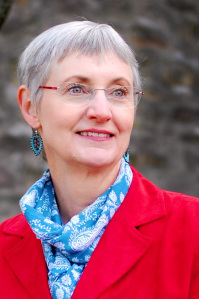
Headshot IMG_3189

Shannon Baker writes the Nora Abbott Mystery Series, a fast-paced mix of murder, environmental issues and Hopi Indians published by Midnight Ink. Broken Trust, released March 2014, takes place in Boulder, CO. A lover of western landscapes, she can often be found backpacking, skiing, kayaking, cycling, or just playing lizard in the desert.  Tainted Mountain, the first in the series is set in Flagstaff, AZ and is a New Mexico/Arizona Book Awards finalist. Shannon is Rocky Mountain Fiction Writers 2014 Writer of the Year. She serves on the board of Rocky Mountain Fiction Writers and is a member of SinC and MWA.

Shannon's Website

Read More
Writer Inspiration: Climbing Over The Brick Wall

My favorite quote is from Randy Pausch’s Last Lecture (if you haven’t read that small book, you should - it’s incredibly inspiring).

“The brick walls are there for a reason. The brick walls are not there to keep us out. The brick walls are there to give us a chance to show how badly we want something. Because the brick walls are there to stop the people who don’t want it badly enough. They’re there to stop the other people.”

If you’ve read this blog for long, you know a bit of my publishing story:

  • 15 years
  • 413 rejections
  • 3 books written before I got an agent and sold.

Last Saturday, I received Romance Writers of America® highest award – A RITA® for my first published book, The Sweet Spot. I don't even have words to describe that experience, but for me it was the pinnacle.

People ask me how I was able to keep going all those years. I usually tell them that I’m too dumb to quit, then I laugh. I don’t talk about the real reason. I’ve decided to share my story here, with you, in hopes that it will help someone else facing challenges.

In my early college years, I was in a challenging RN program. I could handle the bookwork, but being the youngest in my class, I didn’t have the maturity to handle the emotional side of dealing with dying patients. Their suffering terrified me.

I wanted to get out, but I had nowhere to go. My home was a middle-class battleground; my hard-working mother and my loveable alcoholic dad were divorcing. The home I knew was collapsing.

So when I met a guy who liked me, I went with him. We eloped after we'd known each other a total of ten days. He took me to his house – an idyllic log cabin on a river in upper Michigan. We were married in front of a roaring fire, with the snow coming down outside. Sounds romantic huh?

There were other cabins nearby, but summer people owned them. It was January. We had a wood stove for heat, but couldn’t afford propane for the stove or the washer and dryer. The mailbox was five miles away, the town ten. We had one car. No phone. No cell phones back then – no computers. He believed that women shouldn’t work; that was a man’s job. So I stayed home all day, cleaning, teaching myself to cook in a Dutch oven and washing our blue jeans with a floor brush.

When he started hitting me, I thought it was my fault. After all, I didn’t even know how to balance a checkbook. But when I got better at all those things, the hitting didn't stop. For no reason I could discern, at times my sweet husband would disappear, to be replaced by a stranger with angry eyes. I hid bruises, walked lightly and tried very, very hard not to conjure that stranger. I didn’t tell anyone. My family and friends all thought I was blissfully happy. And I worked hard to hide the truth behind pretty curtains.

A book saved my life.

We went to town once a week on Saturday to do grocery shopping and laundry, and every week, I went to the library. I checked out the biggest books I could find, so I wouldn’t run out before the next Saturday. Something clicked when I read Atlas Shrugged, by Ayn Rand. I realized I could take control of my own life.

Suddenly, I saw my paths clearly. I could stay and die, or leave and live. I guess I needed to hit bottom, because it gave me something to push off of. I decided to live.

Don’t call Oprah. That was long ago, and I have a wonderful life and a 27 year-and-still-going-strong marriage to Alpha Dog.

Over the years, I’ve come to cherish the lessons I learned in that cabin. I've kept the vow to never again let things 'just happen' to me. The experience showed me that no matter how many mistakes I made, I knew how to pick myself up and start over. That time in the cabin taught me to meet life, head on.

Five, ten, even fifteen years isn't so long to wait for something you want. If it’s something you really want – don’t let the walls get in your way.

Here's my acceptance speech.

[youtube=http://youtu.be/d641Hq_iZw8]

Write on - Peace out.

~Laura


51o2EYOdqVL

Today is the release of the next in my Widow's Grove series, The Reasons to Stay!

Romantic Times 4 Stars!

Where she belongs?

Free spirit Priscilla Hart doesn't get tied down, to anyone or any place. Then she arrives in Widow's Grove and meets her half brother. The ten-year-old tough guy has no one else but her. So Priss stays—for now.

But her sexy new landlord, Adam Preston, is interfering with her ideas. He's everything Priss normally steers clear of—committed, stable and no rebellious urges in sight. As opposite as they are, each conversation, each touch, each kiss they share feels so right. Can a little gangster-wannabe, an irresistible "nice guy" and an odd assortment of new friends make Priss want to stay for good?


Read More
7 Tips for Keeping Your Author Website Fresh

Sierra Godfrey

It would be nice if we all had a virtual set of Tupperware that allowed us to take out nice fresh pieces of our websites or blogs when things get stale. Let’s face it—even if your website or blog is professionally designed or a straight-off-the-shelf template, and whether you’re promoting a book or just building an audience or community, we all have the same problem after a while.

Websites get stale.

For as long as I’ve been involved with designing or creating websites, it’s always come as an unpleasant surprise to clients that they actually have to put some work into running a site after it’s designed. The web moves fast and you need to adapt to keep your site interesting and visitors coming back. If you’re promoting books, then you need to count your website as an important part of your overall publicity—whether or not you can see the results of people visiting.

Here are seven tips for keeping it real:

1. Make sure your site is up to date with your work. There’s nothing worse than a website that looks like a ghost town. You know, tumble weeds flitting by on your About page. A blog with broken, swinging saloon doors that hasn’t been updated in two years. A cobwebby book page that still says “Stay tuned for the new release, coming October 2009!” Go through and clean it up, sweep away the dust, and get the most current book information on your site, front and center. If you aren’t yet published and aren’t promoting a book, keep your blog front and center.

2. Consider removing features that force you to update too often. Examples include a “What’s new” section that almost every new visitor to your site will click. If your latest news has been “Welcome to my site, I just updated my site from Geocities!” for six years, then it’s a no-go.

3. Look at other author sites. What are other authors doing? How are they presenting their news? How active do their sites look? Are people adding excerpts, recipes, and character sheets with their books? How about digital autograph tools? Playlists?

4. If you do decide to redesign, beware of current fads. It’s tempting to look “techy” with a parallax style website. Parallax is a wide-screen format with vertical scrolling, and it’s the current trend with high tech companies. Parallax can be great for mobile users with websites that tell a story but in most cases, author sites don’t tell stories, you sell them. I hate to see people using parallax because it looks cool in lieu of actual content. By the way, if your reading audience is a bunch of teenage girls, then you might consider updating your site to be more mobile-friendly. There are several ways to do this that are beyond this post, but you can definitely Google that.

downtownart2

A parallax example

5. Update your look to your latest book. It’s great to have a site that looks just like your book cover, like using a background that matches the cover. I’ve worked with several authors on their websites who wanted sites to match the tone of their first release. Inevitably, they write more books! I’m thrilled for them, but then their site needs updating. I always advise sticking with a neutral theme that matches your personality and preferred writing genre. That way you don’t get stuck with the look of your first book.

6. Check your site stats. You should have a basic site statistics tool installed. Google Analytics works with pretty much everything including Wordpress, and I also like the Jetpack site stats tool for Wordpress because it’s easy to use. If people are visiting one section of your site in particular, consider expanding that section to offer more. Rewrite the content, add more pictures. And then consider combining the unused section of your site or deleting it altogether.

7. Finally, kill your darlings. Oh sure, we know this one as it applies to writing, right? But if you’re dead set against changing your menu graphics because you like the way they are, but they no longer serve the right purpose (reminder: that purpose is to get people to read your site content!), then change it! I recently spoke to a friend who knew her links were confusing but she liked how they looked. If she wanted to move forward with the site update, she would have to let go of her darlings.

What about you? What ways have you found to keep your site fresh? Is this is something you’ve heard about before, but haven’t addressed? I’d love to see your websites—put them in with your comment!

About Sierra

Sierra writes fiction that features strong heroines who grow from the challenges they face (and there’s usually a guy involved; you know how that is) A graphic designer by day, she lives in the foggy wastelands of the San Francisco Bay Area with her family. She is a member of the Women’s Fiction Writers Association and a grateful quarterly contributor to the Writers in the Storm. Her non-fiction essays have been featured on Maria Shriver’s Shriver Report and Architects of Change website, and in the anthology, Nothing But The Truth So Help Me God: 73 Women on Life’s Transitions.

You can find more of her sass at www.sierragodfrey.com and she’s pretty mouthy on Twitter (@sierragodfrey), too. Come talk to her, she loves it.


Read More

Subscribe to WITS

Recent Posts

Search

WITS Team

Categories

Archives

Copyright © 2026 Writers In The Storm - All Rights Reserved